
Best Amplified Headphones for Guitar: Silent Practice and Studio Monitoring
Finding the right amplified headphones for guitar helps you practice quietly without sacrificing tone. This guide selects five top options suited for different needs—silent practice, studio monitoring, and on-the-go playing. Ideal buyers include night owls who need quiet practice, home studio users who require accurate monitoring, and players who want easy connectivity with amps, interfaces, or mobile devices.
| Product | |||
|---|---|---|---|
| LEKATO Guitar Headphone Amp | Guitar Headphone Amplifier | Silent practice with built-in effects | Five classic guitar effects; Bluetooth input |
| syndesmons Wired Headphones | Studio Monitor Headphones | Accurate studio monitoring | 50mm drivers; single-side monitoring |
| OneOdio A71 Hi-Res | Studio/Monitoring Headphones | Mixing and DJ work | Hi-res clarity; sharePort |
| DOQAUS Studio Monitor Headphones | Professional DJ/Studio Headphones | Guitar amp and recording | Dual jack options; balanced tone |
| Fender Mustang Micro | Personal Headphone Guitar Amp | On-the-go practice | 12 amp models; Bluetooth streaming |
| Flatsons F1R Mini | Guitar Headphone Amp | Silent practice with distortion | Analog tone; 3.5mm input/output |
Throughout this article, select options that align with your setup—whether you need Bluetooth connectivity, single-ear monitoring, or authentic guitar amp tones through headphones.
LEKATO Guitar Headphone Amp Review
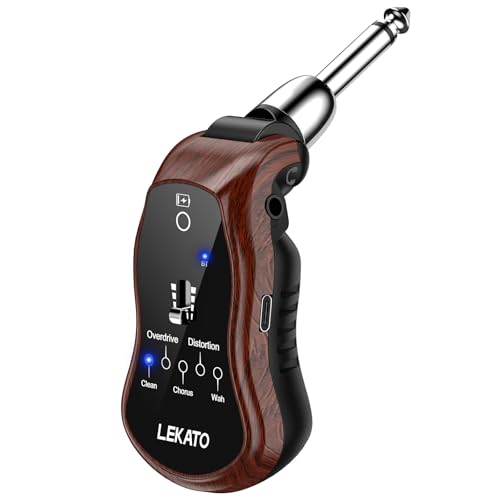
Best for silent practice with built-in effects. This compact amp provides headphone output with adjustable volume and five effects: Clean, Overdrive, Chorus, Distortion, and Wah. It also supports Bluetooth input, enabling background music from a phone or tablet. The device is suitable for electric guitar and bass players who want late-night jam sessions without disturbing others. A potential limitation is Bluetooth compatibility: it works with non-headphone Bluetooth devices, but not with Bluetooth headphones or speakers.
syndesmons Wired Headphones for Studio Monitoring

Best for accurate studio monitoring and vocal/self-monitoring during recordings. These headphones feature 50mm drivers and a wide frequency range for balanced sound, plus a lightweight build for comfort during long sessions. They offer single-side monitoring with swiveling earcups, which is useful for live performances or podcasters who need to hear themselves without turning away. Limitation: some users may prefer a lighter clamp or more extensive bass response depending on their mix style.
OneOdio A71 Hi-Res Studio Headphones

Best for studio monitoring with broad compatibility. These wired over-ear headphones deliver high-resolution sound with 40mm drivers and a detachable, long cord suitable for various devices, including amps and computers. The foldable design enhances portability, and the comfort features reduce fatigue during long sessions. A caution: some listeners may find the bass response slightly boosted for certain genres, so consider your mix needs before relying on them for precise mastering.
DOQAUS Studio Monitor Headphones

Best for professional tone with versatile input options. The DOQAUS headphones provide both 6.35mm and 3.5mm jacks, reducing the need for adapters when connecting to guitars, amps, or audio interfaces. They emphasize an authentic, balanced tone suitable for guitar work and recording. Limitation: as a wired model, they do not offer wireless convenience for mobile practice or quick rig changes.
Fender Mustang Micro Personal Amp

Best for on-the-go practice with built-in amp models and Bluetooth streaming. The Mustang Micro packs 13 amp models and 12 effects into a compact unit with USB-C charging. It’s ideal for players who want a lightweight, portable practice solution and the ability to stream audio from mobile devices. A caveat: being a personal amp, it may not replace a full-capacity amp in a loud rehearsal environment.
Flatsons F1R Mini Guitar Headphone Amp
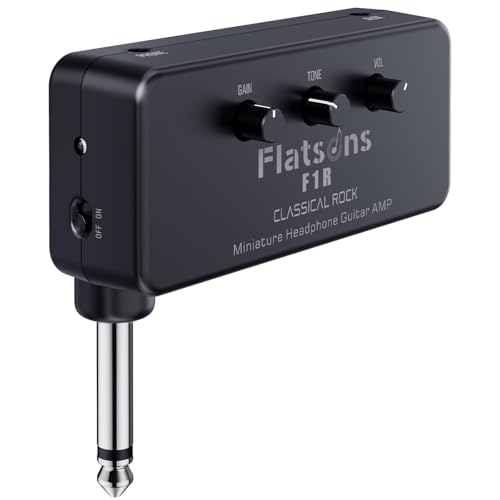
Best for authentic analog tone in a compact package. The F1R uses 16-bit sampling and analog amplification to reproduce classic rock tones, with a 1MΩ input for clean signal transmission. It includes a 3.5mm headphone output for silent practice and a 3.5mm AUX input for backing tracks. Choose this if you value vintage rock coloration and portability. Limitation: the tonal output focuses on distortion timbre, which may not suit players seeking pristine cleans.
Buying Guide
What should I consider when choosing amplified headphones for guitar?
- Use case: Silent practice, studio monitoring, or on-the-go playing.
- Impedance and compatibility: Check 3.5mm vs. 6.35mm jacks and whether adapters are needed.
- Sound signature: Look for flat/neutral monitoring for mixing, or designed guitar-amp tonality for practice.
- Connection options: Wired vs. Bluetooth input, and whether you need background music while playing.
- Comfort and build: Weight, padding, and adjustability affect long sessions.
Phone and device connectivity considerations
- Bluetooth-enabled amps or players can stream audio but may introduce latency; wired connections generally offer lower latency.
- Look for devices with a dedicated 6.35mm (1/4″) adapter for compatibility with guitar amps and interfaces.
Voice and monitoring considerations
- Single-side monitoring is useful for performances or recording where you need one-ear awareness.
- Passive noise isolation helps you stay focused in noisy environments without external bleed into mics.
Which option balances price and performance?
- For precise studio monitoring on a budget, JOYO or syndesmos models offer strong driver performance with practical features.
- For silent practice with built-in amp emulation, LEKATO and Flatsons provide convenient tone options in compact formats.
FAQs
- Do amplified headphones require a separate guitar amp? Not always. Some units include built-in amp models or effects, while others act as passive headphones for direct guitar outputs.
- Are Bluetooth headphones suitable for guitar practice? Bluetooth can work for listening, but may add latency for live playing; wired connections are often preferred for real-time guitar control.
- Can I use studio monitor headphones for guitar practice? Yes, if they provide a flat monitor sound, they’re good for accurate tone and mixing during late-night sessions.
- Is single-sided monitoring better for guitar work? It can be, especially during live monitoring or mic-ing, as it allows you to hear yourself while keeping one ear free for the room.
- Should I buy a headphone amp with distortion? If you want authentic guitar distortion tones during quiet practice, a built-in distortion pathway can be beneficial.
- What’s the best all-around pick for beginners? A versatile wired set with multiple connections and comfortable pads often offers the most straightforward setup for practice and learning.