
The best amplifier for both keyboard and guitar depends on whether you need keyboard-friendly sound, guitar-specific controls, or a portable practice setup. The Donner DKA-20 offers two channels and separate volume controls, while the Peavey KB 2 is a higher-powered keyboard amp option. The GOGHOST and Coolmusic models are aimed at multi-instrument use, and the rechargeable mini amp is suited to guitar practice. Product details vary, so check the listed inputs and controls against your instruments before choosing.
| Product | Best suited for | Key listed detail |
|---|---|---|
| Donner DKA-20 | Keyboard players needing two channels | 20 watts; two speakers |
| Coolmusic DM20 | Personal monitoring and practice | Bluetooth; USB interface listed in the name |
| GOGHOST 20W Amp | Players switching among instruments | Bluetooth, AUX, and three-band EQ |
| 10W Mini Guitar Amp | Portable electric-guitar practice | Rechargeable; clean and drive channels |
| Peavey KB 2 | Keyboard players seeking more wattage | 50-watt, 1×10 keyboard amp |
Donner DKA-20 Two-Channel Keyboard Amplifier
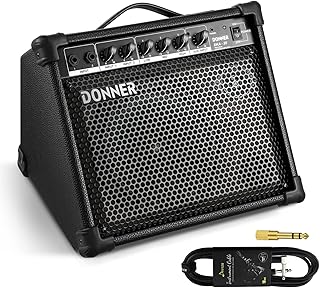
The Donner DKA-20 is a 20-watt keyboard amplifier with two speakers: an 8-inch woofer and a 2-inch tweeter. Its listed frequency response is 50 Hz to 20 kHz. The product description also identifies it for keyboard, bass guitar, piano, electronic drums, and microphone input.
Best for: Keyboard players or multi-instrument households that need two inputs and independent channel volume controls. Its Gain, Boost Select, Volume, Treble, Middle, and Bass controls provide listed options for adjusting the signal and tone.
Why it stands out: The two-channel layout is useful when connecting two sources, and separate volume controls make it easier to balance them. The description also names street performances, karaoke, band performances, and outdoor playing as intended uses.
Limitation: It is a 20-watt amp, and the product details do not establish how it will perform at a particular venue or with a full band. Guitarists seeking a dedicated guitar-amp sound should check whether its listed controls meet their needs.
Coolmusic DM20 Bluetooth Personal Monitor

The Coolmusic DM20 is described in its name as a 20-watt personal monitor amplifier and speaker for electric drums and keyboards. Its title also lists Bluetooth and a USB interface, as well as an included electronic-drum noise-reduction cable.
Best for: Buyers looking for a personal practice or monitoring speaker for keyboard or electronic drums, particularly if Bluetooth playback is useful. It may be relevant to guitar-and-keyboard setups, but the supplied product details do not specifically describe guitar use.
Why it stands out: The listed 20-watt output places it in the same general power category as the Donner and GOGHOST options. Bluetooth and USB are named features, which may suit buyers who want more than a basic instrument input.
Limitation: The available information does not specify its speaker configuration, EQ controls, input count, or guitar compatibility. Verify those details before selecting it for a setup that must connect both a guitar and a keyboard.
GOGHOST 20W Multi-Instrument Amplifier

The GOGHOST is a 20-watt amp listed for electronic drums, keyboard, and acoustic-electric guitar. It has Bluetooth 5.0 and a wired 3.5 mm AUX input for backing tracks. The product description lists a 5.5-inch woofer and 1.5-inch tweeter, plus independent Treble, Mid, and Bass controls.
Best for: Multi-instrumentalists who want a single compact practice amplifier for keyboard and guitar, or who also play electronic drums. The stated instrument compatibility and three-band EQ make it a direct fit for buyers comparing cross-instrument options.
Why it stands out: It includes a 1/4-inch instrument cable, according to the listing, and supports Bluetooth and wired audio playback. The listed frequency response is 20 Hz to 20 kHz.
Limitation: The AUX cable is not included. Its 20-watt rating may not suit every performance setting; the product information does not provide a specific room-size or band-volume recommendation.
Rechargeable 10W Mini Guitar Amplifier

This 10-watt mini amplifier is described as a rechargeable electric-guitar amp with clean and drive channels. Its title lists up to six hours of working time, a 3.5 mm headphone jack for silent practice, and a portable design for practice and travel.
Best for: Guitarists who prioritize portability, headphone practice, and clean or driven guitar tones. It is the most clearly guitar-focused option in this group, based on the product name and listed channel types.
Why it stands out: The rechargeable design and headphone jack address practice away from a standard speaker setup. Buyers who mainly need an electric-guitar practice amp may find those features more relevant than keyboard-oriented inputs or multiple instrument channels.
Limitation: The product details do not list keyboard compatibility, so do not assume it can serve as a shared keyboard-and-guitar amp. Its 10-watt rating is lower than the 20-watt and 50-watt options in this selection.
Peavey KB 2 50-Watt Keyboard Amp

The Peavey KB 2 is identified as a 50-watt keyboard amplifier with a 1×10 speaker configuration. Those details make it the highest-rated wattage model among the five products listed here. The supplied product information does not include additional specifications about inputs, EQ, or connectivity.
Best for: Keyboard players who want a keyboard-oriented amp with a higher stated wattage than the 20-watt models in this selection. It may also interest players comparing keyboard amps for shared instrument use, but the listing details provided do not confirm guitar compatibility.
Why it stands out: The 50-watt rating and 1×10 configuration are clear points for comparison. Buyers can use those specifications to decide whether to investigate it further for their room, instrument, and expected volume requirements.
Limitation: The available details do not say how many inputs it has or whether it includes guitar-specific controls. Check the full listing before choosing it as a single amplifier for both keyboard and guitar.
Buying Guide: How to Choose an Amp for Keyboard and Guitar
Can one amplifier work for both instruments?
Some products are explicitly described for multiple instruments, while others are presented as keyboard or guitar amps. A multi-instrument listing is a useful starting point, but confirm that the amplifier has the right inputs for each instrument. Also consider whether its controls suit the sounds you want. A keyboard amplifier may be designed for a broad range of keyboard sounds, while a guitar player may want channel or tone features associated with guitar practice.
For the clearest stated multi-instrument match in this selection, the GOGHOST listing names keyboard and acoustic-electric guitar compatibility. The Donner description names keyboards, bass guitar, and other sources. The Coolmusic details supplied here mention keyboards and electronic drums but do not specifically name guitar. The Peavey is identified as a keyboard amp, and the mini amp is identified as a guitar amp.
How much power should you look for?
Compare the listed wattage with where and how you plan to play. The products here range from 10 watts to 50 watts. A higher wattage number is a useful specification to compare, but it does not by itself establish the exact loudness, sound coverage, or suitability for a particular band or room. Speaker design, placement, and the sound level of other performers also matter.
The 10-watt mini amp is described for practice and travel. The Donner, Coolmusic, and GOGHOST products are listed at 20 watts. The Peavey KB 2 is listed at 50 watts. If you need an amp for rehearsals or performances, check the complete product specifications and decide whether the stated output fits your setting.
Which inputs and playback features matter?
Count the sources you expect to connect. Two instrument inputs and separate channel controls, as listed for the Donner, can be useful when balancing two sources. Bluetooth can provide wireless playback for backing tracks, while AUX offers a wired playback option. The GOGHOST listing specifies Bluetooth and a 3.5 mm AUX input, and the Coolmusic title lists Bluetooth and USB.
Do not assume an input is included simply because the amplifier supports several instruments. Check connector type, input count, and whether cables are included. The GOGHOST listing says a 1/4-inch instrument cable is included and an AUX cable is not.
Do you need EQ or guitar-specific channels?
EQ controls help adjust tonal balance. The Donner lists Treble, Middle, and Bass controls, and the GOGHOST lists independent Treble, Mid, and Bass controls. The mini guitar amp lists clean and drive channels. Choose based on the instrument and adjustments you need rather than treating any one feature as a guarantee of a particular sound.
What should you check before ordering?
- Instrument fit: Look for explicit compatibility with your keyboard and guitar type.
- Inputs: Confirm that the amplifier accepts the connectors on both instruments.
- Channel controls: Separate volume controls can help balance multiple connected sources.
- Portability: The mini guitar amp is described as rechargeable; check whether portability is a priority.
- Practice features: A headphone jack may be useful for silent practice, while Bluetooth or AUX can support backing tracks.
- Sound adjustments: Compare the listed EQ or channel features with the controls you want to use.
- Performance needs: Match the rated wattage and speaker configuration to your intended practice or performance setting.
Frequently Asked Questions
What is the best amp here for both keyboard and guitar?
The GOGHOST amp is the clearest listed match because its product details name keyboard and acoustic-electric guitar compatibility. The Donner also lists multiple instrument uses, including keyboard and bass guitar. Confirm that the inputs match your instruments before buying.
Can I use a keyboard amp with an electric guitar?
Some keyboard amps may accept guitar signals, but the supplied product details do not confirm that every model here supports every guitar type. Check the specific amp’s compatibility and input requirements. A keyboard amp may not provide the guitar-specific channels you want.
Which option is best for silent guitar practice?
The 10W mini guitar amplifier is the product in this selection whose title specifically lists a 3.5 mm headphone jack for silent practice. Check the complete listing for connection details before use.
Which amplifier has the highest stated wattage?
The Peavey KB 2 is listed as a 50-watt keyboard amp. The other stated ratings are 20 watts for the Donner, Coolmusic, and GOGHOST products, and 10 watts for the mini guitar amp.
Do these amplifiers include cables?
The GOGHOST listing says a 1/4-inch instrument cable is included and that the AUX cable is not included. The Coolmusic title mentions an electronic-drum noise-reduction cable. The supplied details do not confirm cable inclusion for the other products.