
A 6.35mm (1/4-inch) to 3.5mm (1/8-inch) adapter lets you connect many standard headphone plugs to an amplifier’s larger headphone jack. The QAJOPFN set is best for buyers who want both adapter directions, Nicholaus is a practical pick for three identical 1/4-inch-to-3.5mm adapters, and SOLMIMI is better when you need extra cable length. ANDTOBO offers a simple single adapter, while JOYO combines headphones with a 1/4-inch-to-3.5mm jack.
| Product | Best For | Connection Type |
|---|---|---|
| QAJOPFN 4-Pack | Several devices and both adapter directions | Adapters, 1/4-inch and 3.5mm |
| Nicholaus 3-Pack | Multiple headphones or spare adapters | 1/4-inch male to 3.5mm female |
| SOLMIMI 4-Foot Cable | More distance from the amplifier | 1/4-inch male to 3.5mm female cable |
| ANDTOBO Single Adapter | A basic, compact connection | 1/4-inch male to 3.5mm female |
| JOYO Wired Headphones | Buyers who need headphones as well | Wired headphones with 1/4-to-3.5mm jack |
QAJOPFN 4-Pack Adapter Set

Best for: People who connect different audio devices and want adapters for both plug directions. The set includes two 6.35mm male-to-3.5mm female adapters and two 3.5mm male-to-6.35mm female adapters.
For the common amplifier-to-headphones setup, plug the adapter’s 6.35mm male end into the amplifier and connect headphones with a 3.5mm plug to its female end. The reverse adapter serves a different purpose: it connects a 3.5mm source to headphones or equipment with a 6.35mm plug.
The product listing describes metal construction, gold-plated treatment, and a 360-degree plugging slot intended to make insertion and removal easier. Choose this set if you need spares or expect to switch between connection directions. Its main limitation is that the set includes multiple adapter types, so buyers who only need one 1/4-inch-to-3.5mm adapter may not use every piece.
Nicholaus 3-Pack Headphone Adapters

Best for: Buyers who need several adapters of the same type. Each adapter has a 6.35mm male plug and a 3.5mm female jack, the usual arrangement for connecting headphones with a 3.5mm plug to an amplifier with a 6.35mm output.
The listing describes thickened gold plating and a design intended to hold the inserted plug securely. This three-pack can be useful when adapters are shared across instruments, audio equipment, and headphones, or when a spare is useful. It is a better fit than a mixed set if all the connections you need are from a 1/4-inch output to a 3.5mm headphone plug.
Important limitation: The product information says the 3.5mm female jack does not work with TRRS headphones or plugs. It also notes that TS plug devices may produce sound on only one side. Check the plug type before choosing this adapter for a headset with a microphone or a mono device.
SOLMIMI 4-Foot Adapter Cable
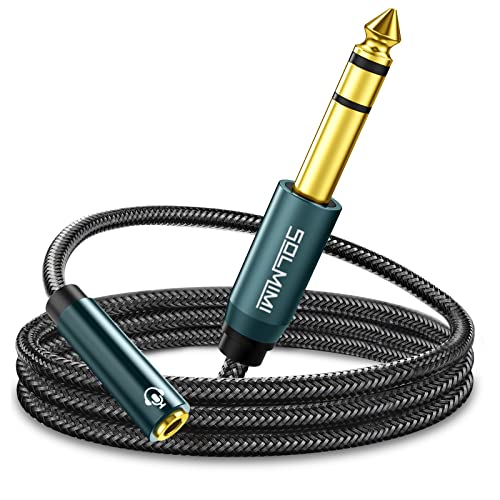
Best for: Listeners who want more room to move than a short plug adapter provides. This product uses a 6.35mm male plug and a 3.5mm female jack, joined by a 4-foot cable.
Connect the 6.35mm end to a compatible stereo output on an amplifier, mixer, piano, or other listed audio equipment. The 3.5mm female end accepts a matching headphone plug. Because the connection extends over a cable, it can keep the headphone plug from sitting directly beside the amplifier jack and offer additional reach for a desk, studio, or stage setup.
The listed construction includes oxygen-free copper, a gold-plated connector, and an aluminum shell. The cable is described as TRS stereo. Choose it when cable length and flexibility matter more than a compact, direct adapter. Avoid it if you want the smallest possible connection or need a different plug configuration.
ANDTOBO 1/4-Inch to 3.5mm Adapter

Best for: Buyers who want one straightforward adapter for standard 3.5mm headphones and a 6.35mm audio jack. It has a 6.35mm male connector and a 3.5mm female socket, so it follows the common amplifier-to-headphone connection direction.
ANDTOBO describes the adapter as pure copper and says it uses a 360-degree grip design. It requires no installation: insert the 1/4-inch end into the appropriate audio jack, then connect a compatible 3.5mm plug. Its single-adapter format is simpler than a multi-piece kit if you have one setup and do not need reverse-direction adapters.
The product listing identifies it as a stereo adapter for headphones or microphones and equipment such as amplifiers, guitars, and pianos. Confirm that your equipment uses a compatible stereo jack and that your headphone plug is 3.5mm. The package is listed as one adapter, so it does not provide spare units.
JOYO JMH-04 Wired Studio Headphones

Best for: Someone who needs headphones as well as a connection option for an amplifier, keyboard, or recording setup. Unlike the standalone adapters above, this product is a pair of over-ear wired headphones with a listed 1/4-to-3.5mm jack.
JOYO lists 40mm drivers, padded ear cushions, a padded headband, and an adjustable headband. The listing also describes the headphones as lightweight and portable. Consider this option if you are buying a complete listening accessory rather than adapting headphones you already own.
The key difference is that this is not simply a small jack adapter. Buyers who already have headphones and only need to connect a 3.5mm plug to an amplifier’s 6.35mm jack should choose a standalone adapter instead. The supplied product information does not specify the connector arrangement in more detail, so check the product listing to confirm it suits your particular setup.
Buying Guide: How to Choose an Amplifier-to-Headphone Adapter
Which jack sizes do you need?
Check the amplifier’s headphone output and the headphone cable plug before purchasing. A 6.35mm jack is commonly called a 1/4-inch jack, while a 3.5mm plug is also called a 1/8-inch or mini plug. To connect 3.5mm headphones to a 6.35mm amplifier output, look for a 6.35mm male-to-3.5mm female adapter.
Connector direction matters. A 6.35mm male-to-3.5mm female adapter is not interchangeable with a 3.5mm male-to-6.35mm female adapter. The first is intended to accept a smaller headphone plug at a larger output. The second accepts a larger plug from a device with a 6.35mm connector and connects it to a 3.5mm jack.
Should you choose a plug adapter or a cable?
A compact plug adapter sits directly between the amplifier output and the headphone plug. It is a good fit when the headphone cable already has enough length and you want a simple connection. QAJOPFN, Nicholaus, and ANDTOBO offer this adapter style in the configurations described above.
A cable adapter adds distance between the amplifier and the headphones. The SOLMIMI option has a listed 4-foot cable, which may be more convenient when the equipment is not close to the listener. A cable adds another length of wire to manage, so a short plug adapter may suit a stationary setup better.
Does the headphone plug need to be stereo?
Look for the correct plug format as well as the correct size. The SOLMIMI listing specifies a TRS stereo cable. The Nicholaus listing warns that its 3.5mm female jack does not work with TRRS headphones or plugs and notes that TS plug devices may produce sound on only one side.
TRS, TRRS, and TS describe the electrical contacts on a plug. A headphone plug with an extra contact for a microphone may not work as expected with an adapter designed for stereo audio only. If you need the microphone function, confirm that the adapter and the amplifier support that use; a basic stereo adapter may carry headphone audio without supporting a headset microphone.
How many adapters should you buy?
Choose a single adapter when you have one listening setup and want to keep the solution simple. A multipack makes more sense if you want spares or connect multiple pieces of equipment. The QAJOPFN set includes both adapter directions, while Nicholaus provides three adapters of the same 6.35mm male-to-3.5mm female type.
Read the listed connector configuration rather than choosing by product name alone. Product names may use “1/4 to 1/8” without making the male and female ends immediately clear. Matching the exact end types prevents ordering an adapter that cannot connect your equipment.
Will an adapter make headphones louder?
A passive jack adapter changes the connector format; it is not the same as a headphone amplifier. It does not, by itself, promise more output power or greater volume. If your headphones are too quiet, the issue may relate to the amplifier’s headphone output, headphone requirements, or device settings. A separate headphone amplifier is a different product category and should not be confused with a jack adapter.
What should you check before connecting?
- Match the amplifier output size to the adapter’s male plug.
- Match the headphone plug size to the adapter’s female socket.
- Check whether the connection needs stereo TRS or another plug type.
- Confirm whether the adapter is a short plug or a cable with added reach.
- Lower the volume before connecting, then raise it gradually to a comfortable level.
Frequently Asked Questions
What adapter connects a 3.5mm headphone plug to an amplifier?
For an amplifier with a 6.35mm (1/4-inch) headphone output, use a 6.35mm male-to-3.5mm female adapter. Insert the male end into the amplifier and plug the headphones into the female socket.
Is a 1/4-inch jack the same as a 6.35mm jack?
Yes. “1/4-inch” and “6.35mm” are common names for the same nominal connector size. Product listings may use either measurement.
Can I use a 3.5mm-to-1/4-inch adapter in either direction?
No. The adapter’s male and female ends determine which devices it can connect. Check the connector direction: a 6.35mm male-to-3.5mm female adapter serves a different arrangement from a 3.5mm male-to-6.35mm female adapter.
Will a headphone jack adapter improve sound quality?
An adapter provides a physical connection between compatible plug sizes. It does not independently upgrade the amplifier, headphones, or audio signal. The selected adapter must match the plug format and intended stereo connection.
Can I connect headphones with a microphone to a basic adapter?
Not always. Headset plugs may use a TRRS connection, while some adapters are specified for stereo TRS plugs. Check the adapter’s stated support and the equipment’s input or output requirements before relying on microphone functionality.
When should I choose a cable adapter instead of a small plug?
Choose a cable adapter when you need extra distance or flexibility between the amplifier and the headphone plug. Choose a compact adapter when you want a direct connection and do not need additional reach.