
Best Antenna Signal Booster Amplifier for Clear HD TV Reception
Answering the search query, this guide compares top antenna signal booster amplifiers to help you maximize over-the-air TV reception. The picks are ideal for viewers with mid-range to weak signals, cord-cutters, and multi-room setups. Best for: small apartments or single rooms with limited signal, better for multi-room homes with distributed antennas, choose this if you want simple plug-in boosts, avoid if you’re in a strong-signal area.
| Product | Brand | Best For | Why It Stands Out |
|---|---|---|---|
| GE Indoor HD Digital TV Antenna Amplifier | GE | General use, HDTV antennas | Built-in 4G/5G LTE filter for reduced interference |
| Channel Master TV Antenna Booster 4-4-Port | Channel Master | Multi-room distribution | Four outputs with boost for four rooms |
| GZMJRD Indoor TV Antenna Amplifier (White) | GZMJRD | Flexible indoor use | Latest LTE filter, adjustable gain |
| CSUXYD Indoor TV Antenna Amplifier (Black) | CSUXYD | Compact, adjustable gain | 4G/5G LTE filter, DB gain range 5–25 dB |
| CSUXYD TV Antenna Amplifier (White) | CSUXYD | Bright, modern look | Similar features with adjustable gain |
Below is a concise overview of the five selected products to help you quickly compare capabilities and intended use cases.
GE Indoor HD Digital TV Antenna Amplifier
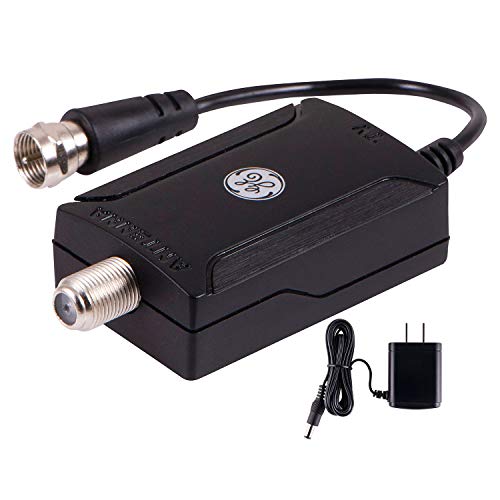
Best for: viewers with universal antenna compatibility and moderate interference. This amplifier supports HDTV, VHF, UHF, and modern broadcast standards like 1080p, 4K, and NEXTGEN TV (ATSC 3.0). The built-in PUREAMP filter reduces cell interference from 4G/5G networks, potentially improving channel reception when signals are marginal. The low-noise design helps offset cable loss and strengthen signals already present. Use when you want a compact, all-in-one boost for a home with mixed-brand antennas.
Caution: Effectiveness depends on local broadcast strength and antenna placement; in areas with extreme signal degradation, results may be limited.
Channel Master TV Antenna Booster 4-4-Port
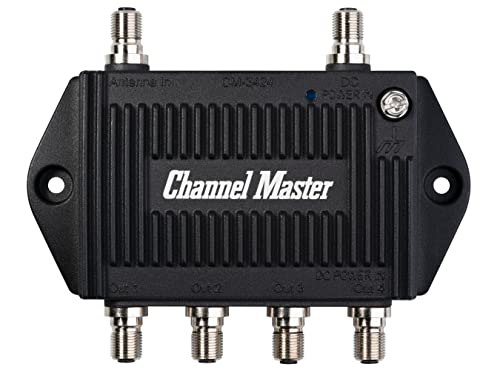
Best for: homes needing to distribute a boosted signal to up to four rooms. This device replaces typical splitters by combining signal boosting with a four-output distribution amplifier, supporting both indoor and outdoor antennas. It’s a strong choice for small homes or apartments with multiple TVs requiring consistent reception across rooms. The rugged housing supports outdoor or attic installation.
Caution: Performance can vary with antenna type and distance to towers; ensure the amplifier is suited to your existing antenna system and cable lengths.
GZMJRD Indoor TV Antenna Amplifier (White)

Best for: users seeking a modern white design with updated LTE filtering and adjustable gain. The 2026 upgrade LTE filter blocks unwanted wireless signals while improving clarity on weak channels. It’s suitable for apartments or rooms where signal strength fluctuates, and placement options are flexible. The amp is designed to work with any antenna, and gain is adjustable to tailor reception to your area.
Caution: Channel availability varies by region; in strong-signal areas, amplification may be unnecessary and could introduce noise if misadjusted.
CSUXYD Indoor TV Antenna Amplifier, Digital (Black)

Best for: households needing a compact, adjustable-gain amplifier with last-mile signal shaping. Equipped with a 4G/5G LTE filter, it blocks interference and helps clear low-strength channels. The adjustable dB gain range (5–25 dB) allows precise tuning for local broadcast conditions. It’s a practical choice when you want to fine-tune reception without relocating the antenna.
Caution: The gain setting should be adjusted carefully; excessive gain can sometimes amplify noise in weak signals rather than improve picture quality.
CSUXYD TV Antenna Amplifier (White)

Best for: users who prefer a white, unobtrusive look with reliable signal boosting. Similar to other CSUXYD models, it features a 2026/26 LTE filter and adjustable gain (5–25 dB). It’s well-suited for apartment living or bedrooms where space for a larger booster is limited. The product favors clear channel reception in mixed environments.
Caution: As with all boosters, placement relative to the antenna and TV matters; test in multiple positions to find the strongest result.
Buying Guide
What to consider when choosing an antenna signal booster amplifier:
- Signal strength in your area: Check local broadcasts and determine whether you need a booster. Use the channel scan results as a guide to decide if amplification is beneficial.
- Number of TVs and distribution: For multi-room setups, a multi-output booster (like a 4-port model) can simplify wiring and maintain signal quality across rooms.
- LTE/5G interference filtering: LTE filters help reduce interference from mobile networks, improving reception for over-the-air channels.
- Gain range and adjustability: Adjustable gain lets you tailor amplification to your specific location and antenna type, reducing the risk of amplifying noise.
- Installation versatility: Indoor vs. outdoor or attic placement can impact performance. Choose a model compatible with your antenna and mounting options.
- Aesthetics and space: Compact designs and neutral finishes help boosters blend into rooms without drawing attention.
Frequently Asked Questions
- Do antenna boosters improve every signal? Not always. They help when the signal is weak or has dropout issues due to distance, interference, or cable loss.
- Will a booster fix a bad antenna? A booster can improve reception in some cases, but underlying issues like a damaged antenna, misalignment, or unsuitable antenna type may require replacement.
- Is more gain always better? Higher gain can help, but it can also amplify noise if the signal is already weak. Start with moderate gain and adjust.
- Can I use multiple boosters in a system? It’s generally not recommended to cascade boosters; use a distribution amplifier for multi-TV setups instead.
- How do I know if LTE interference is a problem? If you notice pixelation or frozen channels alongside strong signals, LTE interference might be an issue and a built-in LTE filter can help.
- How should I place the antenna for best results? Elevate the antenna, point toward the broadcast towers, and experiment with different heights and rooms to find the strongest signal.