
Best Mid Boost Guitar Pedal: Elevate Your Tone With Clean, Transparent Boosts
Answering a common guitar-query, a mid-boost pedal enhances your core signal without muddying your tone. This guide rounds up five mid-boost options that suit players who want clean headroom, clearer solos, or a push to their amp without altering the fundamental character of their guitar. Each pick targets a different playing style, from studio-clean boosts to live-stage bite. The table below highlights the five products most relevant to mid-boost needs, showing who they’re best for and why they stand out.
| Product | Best For | Key Benefit |
|---|---|---|
| SONICAKE Clean Boost | Clean tones with buffer for long cables | 0-12 dB gain with transparent color |
| TC Electronic Spark Mini Booster | Compact board with momentary and standard boost | Up to 20 dB clean boost, PrimeTime switch |
| IOppWin Pure Boost | Versatile tone shaping with EQ | 20 dB boost plus ±15 dB 2-band EQ |
| Caline CP-514 Santa Carla Boost | Stealthy, wide-range boost | 2–20 dB selectable boost levels |
| SORAN JBS-01 Booster | Dual-mode clean/overdrive-like boost | Two modes for clean and overdrive-esque feel |
SONICAKE Clean Boost Pedal With Buffer

Overview: This is a compact boost pedal with a built-in buffer and 0–12 dB gain range. It preserves your tone’s brightness and transients with a transparent boost. Best for players who need a simple, reliable pedal to push an amp without altering core tone. The buffer helps maintain signal integrity on longer cable runs.
Who it’s best for and why: Ideal for studio and stage players who want a clear, uncolored boost that maintains your guitar’s natural character. The 0–12 dB range makes it suitable for both rhythm enhancement and solo pushes without adding extra coloration.
Cautions/limitations: As a pure clean boost, it won’t add midrange character or drive—useful for transparency, but not for creating overdrive tones.
TC Electronic SPARK MINI BOOSTER

Overview: The Spark Mini Booster is an ultra-compact, fully analog booster with PrimeTime switching. It delivers up to 20 dB of clean boost, designed to make your core tone shine through a mix or on stage. The PrimeTime footswitch supports classic on/off or momentary boosts based on hold duration.
Who it’s best for and why: Best for players seeking a tiny footprint with a flexible switching option and a solid clean boost that preserves dynamics. The 20 dB headroom helps solos cut through without changing your character.
Cautions/limitations: Being a pure boost, it does not add color or grit; avoid if you want overdrive or midrange sculpting from the pedal itself.
J. Rockett Tour Series Lenny Boost

Overview: A high-end boost inspired by classic tone shaping, this pedal adds color and texture beyond a plain volume lift. It’s described as musical and expressive, offering a boost that colors the signal in an inspiring way rather than simply turning up the volume.
Who it’s best for and why: Best for players who want a boost that interactively colors their tone, adding musical character that can complement midrange warmer amps or vintage-inspired rigs.
Cautions/limitations: This is more than a clean boost; it imparts tonal coloration. If you need a completely transparent lift, consider a dedicated clean boost instead.
IOppWin Pure Boost 20dB+ With EQ

Overview: This boost pairs a clean 20 dB lift with a ±15 dB 2-band EQ. It preserves core tone while letting you tailor highs and lows to fit the mix or stage environment. It’s a robust option for players who want both volume and some tonal shaping in one pedal.
Who it’s best for and why: Ideal for players who need to push amp breakup with precise tone shaping, particularly soloists who want extra top-end clarity or warmth on the bass/low guitar range. The EQ adds versatility for live and studio work.
Cautions/limitations: The added EQ requires a bit more adjustment to avoid midrange masking in dense mixes.
Caline CP-514 Santa Carla Boost
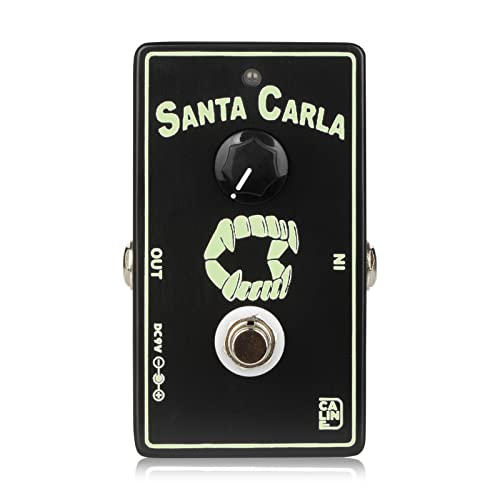
Overview: A mini booster with true bypass, offering wide boost options from +2 dB to +20 dB in selectable steps. The green LED matches its branding and helps visibility on dark boards. This pedal is straightforward and practical for tone shaping without extra complexity.
Who it’s best for and why: Choose this if you want a compact, easy-to-use boost with solid headroom and clear, direct control over boost levels. It’s a good fit for players who value a simple, reliable signal lift without coloration.
Cautions/limitations: The fixed boost steps may feel less flexible for nuanced adjustments compared to continuous knobs.
SORAN JBS-01 Booster Mini Pedal

Overview: A compact booster with two selectable modes: Clean Boost and TS (overdrive-style) Booster. It’s built in a sturdy metal case and provides true bypass for transparent signal routing. It’s designed to be simple and effective on crowded pedalboards.
Who it’s best for and why: Best for players who want a versatile mini pedal capable of pushing clean and a slight overdrive-like boost, depending on the mode selected. It’s suitable for both guitar and bass applications where a portable boost is needed.
Cautions/limitations: The TS mode imitates a grit-leaning punch rather than a pure clean boost. If you want a strictly clean lift, use the Clean mode only.
Buying Guide: How to Choose the Right Mid-Boost Pedal
What level of boost do you need? Decide whether you want a transparent lift (0–12 dB) or more headroom (up to 20 dB). For subtle push, a smaller range is enough; for driving an amp, aim higher.
Do you need tonal shaping or coloration? Some boosts are neutral, while others color the tone for drive-like effects. If you want midrange emphasis, look for an EQ-boost option or a pedal with mid controls.
How important is size and routing? For compact boards, ultra-lean designs (mini pedals) save space. If you run long cables, a buffer inside the boost can preserve tone. Check true bypass vs buffered paths based on your setup.
Is switching versatility a factor? Momentary boosts or programmable switching (like PrimeTime) can change how you use boosts during performance. Consider whether you need on/off only or a pedal that can hold a boost for solos.
What instrument and context will you use it with? For guitar, consider whether you want to push a clean amp, drive a pedal platform, or blend with other effects. Bass players may seek different headroom or EQ behavior.
Frequently Asked Questions
- What is a mid-boost pedal best used for? It primarily adds clean headroom and presence, helping solos cut through a mix without coloring the tone.
- Can a mid-boost replace a distortion pedal? No. Boost pedals raise signal level; they do not create heavy distortion by themselves unless paired with an overdriven amp or pedal.
- Do boosts affect tone when used with a high-gain amplifier? Yes, boosts can push an already overdriven amp harder, but a transparent boost preserves the amp’s character.
- Is buffer vs true bypass important for a boost? Buffers preserve signal over long cables, whereas true bypass minimizes signal interaction when the pedal is off. Choose based on your signal chain and length of cables.
- Should I pair a boost with an EQ pedal? Yes, combining a boost with an EQ can tailor the tone further for specific live or studio contexts.
- What’s the difference between clean boost and overdrive boosts? Clean boosts lift level without intentional clipping; overdrive-like boosts introduce harmonic saturation and color.