
The best audio cassette-to-USB option depends on whether you want a standalone recorder or a computer-based conversion setup. ClearClick is best suited to buyers who want to save recordings directly to a USB flash drive, while the SEMIER player offers USB-C or SD card recording. Reshow and the two audio capture cards are better fits for people who plan to use a laptop or computer. Compare the connection method, included storage, and stated system support before choosing.
| Product | Best For | Stated Conversion Method |
|---|---|---|
| ClearClick Cassette Tape to USB | Direct USB recording | USB flash drive |
| SEMIER Small Cassette Tape Player | USB-C or SD card flexibility | USB-C or SD card |
| Reshow Cassette Tape Player | Computer-based conversion | Laptop or personal computer |
| USB 2.0 Audio Capture Card | RCA or 3.5 mm audio connections | Computer-based MP3 capture |
| DIGITNOW USB 2.0 Audio Capture Card | Computer-based conversion | Mac or Windows computer |
ClearClick Cassette Tape To USB

ClearClick is best for buyers who want to transfer cassette audio to a USB flash drive without making a computer the main part of the recording setup. Its listed features include cassette-to-MP3 conversion on a USB drive, a 16 GB USB drive in the package, instant setup, and a file-splitting feature.
The file-splitting feature may be useful when a tape contains several tracks or songs and the buyer wants separate digital files rather than one long recording. The included drive also means buyers do not have to source a USB drive before getting started, according to the product details.
Choose this if direct-to-USB recording and file splitting are priorities. It is a straightforward match for someone who wants to keep the transfer process centered on a flash drive.
Limitation: The listing identifies a USB 2.0 connection and an included 16 GB drive, so buyers who want to record to a different storage type should compare other options. The provided details do not specify supported tape types or additional editing controls.
SEMIER Cassette Player With USB-C Or SD
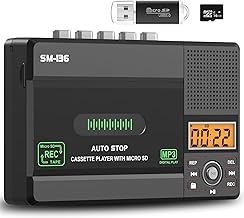
The SEMIER player is best for buyers who want more than one stated recording destination. The product name describes conversion to MP3 through USB-C or an SD card, along with recording to cassette, computer, or SD card via a microphone. It also lists a loudspeaker, headphone jack, and a 16 GB SD card.
This makes it a flexible option for someone comparing removable-card storage with a USB-C connection. The headphone jack provides a listed way to listen privately, while the loudspeaker offers a built-in listening option. Its stated tape compatibility is Type I tapes, so buyers should check their cassette collection before choosing it.
Choose this if SD card recording, USB-C, and listening features are useful in one device. The included 16 GB SD card is a practical consideration for buyers who do not already have storage media.
Limitation: The listing specifies Type I tapes. Avoid choosing it without checking tape type if your collection includes other cassette formulations.
Reshow Portable Cassette Tape Player

Reshow is best for buyers who want a portable cassette player described as compatible with laptops and personal computers for digital conversion. The product name also describes conversion to an iPod format. That wording makes it a candidate for someone planning to use a computer as part of the transfer workflow rather than save recordings directly to a flash drive.
Compared with the ClearClick model, Reshow’s listed emphasis is on connection to a laptop or personal computer, not a standalone USB drive with file splitting. It may suit buyers who are comfortable using a computer during conversion and want a portable tape-player format.
Choose this if computer-based conversion and a portable cassette player are the main requirements. Confirm that the intended computer workflow and output format match your needs before purchase.
Limitation: The provided product details do not state that a USB drive or SD card is included, and they do not describe file-splitting controls. Buyers seeking direct-to-storage recording should compare the ClearClick or SEMIER options.
USB 2.0 Audio Capture Card

This audio capture card is best for buyers who want to connect an audio source through stereo RCA or a 3.5 mm music interface and capture audio on a computer. Its product details describe use with cassette tapes and vinyl records, MP3 conversion, and support for Mac and several Windows versions, including Windows 11, 10, 7, XP, and Vista.
Because this is a capture card rather than a complete cassette player, it is a better fit for someone who already has a cassette playback device and wants a computer-based transfer route. The stated connector choices can help buyers match the capture device to the audio output available from their playback equipment.
Choose this if RCA or 3.5 mm inputs and listed Mac or Windows support align with your setup. It also suits buyers who want to digitize more than cassette audio, since the listing mentions vinyl records.
Limitation: The listing describes a capture card, not a cassette deck. Buyers need to account for a separate way to play their tapes and should confirm software requirements for their computer.
DIGITNOW USB 2.0 Audio Capture Card

The DIGITNOW capture card is best for buyers looking for a computer-connected cassette-to-digital converter with broad stated operating-system support. The product name describes cassette-to-digital and cassette-to-MP3 conversion, with support for Mac and Windows 10, 8.1, 8, 7, Vista, and XP.
Like the other capture card in this list, it is a component for computer-based conversion rather than a listed standalone cassette player. That distinction matters: buyers must have a cassette playback source and should check how the capture card connects to that source before ordering.
Choose this if you want a USB 2.0 capture device and your computer’s operating system appears in the stated support list. Its named purpose is focused on cassette conversion, making it easy to compare with broader audio capture products.
Limitation: The supplied details do not specify included recording software, storage media, or audio input connections. Confirm those points if they are essential to your setup.
Buying Guide: How To Choose An Audio Cassette-To-USB Converter
The right converter depends on how much equipment you already own and where you want the digital files to go. A standalone-style converter can reduce reliance on computer connections, while an audio capture card places more of the workflow on the computer. Start by deciding whether your priority is direct storage, computer control, or compatibility with an existing playback device.
Do you want to record directly to a USB drive or SD card?
Choose a product that explicitly names the storage destination you plan to use. ClearClick lists direct MP3 recording to a USB flash drive and includes a 16 GB drive. SEMIER lists USB-C or SD card conversion and includes a 16 GB SD card. These stated options are more suitable for buyers who want removable storage to be central to the process.
Do not assume that every product with “USB” in its name records directly to a flash drive. A USB capture card may use USB to connect to a computer, while the recording itself is handled through that computer. Check whether the product description names a USB drive as a recording destination or as a computer connection.
Do you already have a cassette player?
If you have a working cassette deck or player, a capture card may be a practical route. The USB 2.0 Audio Capture Card listing identifies stereo RCA and 3.5 mm interfaces, so compare those inputs with the outputs available from your playback device. The DIGITNOW capture card is also described as a USB 2.0 cassette-to-digital converter, but the supplied information does not specify its input connectors.
If you do not already have a cassette playback source, look closely at products described as cassette players, such as the SEMIER or Reshow. The capture cards are not described as cassette decks, so they should not be treated as complete playback-and-conversion systems.
Which computer operating system do you use?
For a computer-based setup, check operating-system support before buying. The USB 2.0 Audio Capture Card listing names Mac and Windows 11, 10, 7, XP, and Vista. DIGITNOW lists Mac and Windows 10, 8.1, 8, 7, Vista, and XP. The Reshow listing says it is compatible with laptops and personal computers, but the provided details do not give a specific operating-system list.
Operating-system support alone may not answer every setup question. Check whether recording software is included or required, and confirm the connection method and desired output format from the full product information.
Do you need separate tracks or simple capture?
ClearClick is the only product in this selection whose listed features explicitly include file splitting. That can be relevant when separating a long recording into smaller files is important. The other supplied product descriptions do not mention file-splitting controls, so buyers should not assume that feature is available.
For basic digitizing, focus first on the recording destination and connection. If you plan to edit or organize files afterward, consider whether your chosen computer-based workflow provides the controls you need; the product details supplied here do not establish specific editing software or capabilities.
What tape and audio connections should you check?
Check cassette type when the product states a limitation. SEMIER’s product name specifies Type I tapes. The other supplied descriptions do not identify supported tape formulations, so confirm suitability if your collection includes tapes that may not be Type I.
For capture cards, compare the listed inputs with your player’s output. One card names stereo RCA and 3.5 mm interfaces. A connector mismatch can require additional equipment, so identify the ports on both devices before choosing a converter.
Which option is the simplest match for your needs?
- Choose ClearClick for listed direct USB-flash-drive recording, an included 16 GB drive, and file splitting.
- Choose SEMIER if USB-C or SD card recording and its listed listening features are relevant, and your tapes are Type I.
- Choose Reshow if you want a portable cassette player described for laptop or personal-computer conversion.
- Choose a capture card if you already have a cassette playback source and want a computer-based transfer method.
Before purchase, verify the storage destination, included media, audio connections, supported computer system, and tape compatibility that matter to your particular collection. Product descriptions vary in detail, so treat unstated features as unconfirmed rather than assuming they are included.
Frequently Asked Questions
Can a cassette-to-USB converter create MP3 files?
Several products here are described as converting cassette audio to MP3, including ClearClick, SEMIER, and the two capture cards. Check the specific product details for its recording destination and computer requirements.
Do I need a computer to convert cassette tapes?
Not necessarily. ClearClick is described as recording to a USB flash drive, and SEMIER lists USB-C or SD card recording. The Reshow player and the capture-card products are described for computer-based conversion or connection.
What is the difference between a cassette converter and an audio capture card?
A cassette converter may combine cassette playback with a digital recording method. An audio capture card is a computer-connected component; the two listed capture cards are not described as cassette players, so a separate tape playback source may be needed.
Which product lists file splitting?
ClearClick’s product description explicitly lists a file-splitting feature. The supplied details for the other products do not mention file splitting.
Which option includes storage media?
ClearClick lists an included 16 GB USB drive. SEMIER lists an included 16 GB SD card. The provided details for the other products do not state that storage media is included.