
Best Audio Interface XLR Output: Top Picks for Pro-Quality Recording
Answering the need for reliable XLR output in an audio interface, this guide highlights five solid options across different budgets and use cases. Best for home studios, podcasters, and musicians who require clean preamps and flexible monitoring, these interfaces deliver clear, low-latency recording via XLR connections. The top picks emphasize strong mic preamps, good dynamic range, and easy USB connectivity. Read on to find the right match for your workflow and equipment. The following comparison table summarizes the key details of each selected product.
| Product | Best For | Key Benefit | Limitations |
|---|---|---|---|
| Focusrite Scarlett Solo 3rd Gen USB-C | Home studios, solo artists | Bright pre-amps with Air mode for clearest vocals/instruments | Limited inputs; only one mic input |
| M-AUDIO M-Track Duo USB | Podcasters, small setups | Two combo XLR/Line/Instrument inputs with zero-latency monitoring | Compact design may limit ceiling for loud live feeds |
| Focusrite Scarlett Solo 4th Gen USB-C | Songwriters, mobile studios | Improved Air mode and high dynamic range for studio-grade tone | Still single mic input, larger models offer more ins |
| PIYONE 2×2 USB-C Audio Interface | Creators needing plug-and-play ease | Class-compliant, USB-C power, 24-bit/192kHz fidelity | May rely on computer drivers in older systems |
| MAONO PS22 Lite USB Audio Interface | Budget-conscious streamers | Entry-level, solid 24-bit/192kHz performance with instrument input | Phantom power and mic features are basic for high-end mics |
Focusrite Scarlett Solo 3rd Gen USB-C Audio Interface

The Focusrite Scarlett Solo 3rd Gen uses high-headroom mic pre-amps with Air mode to add brightness to vocals and acoustic instruments. It includes a single mic input and a dedicated instrument input, making it ideal for solo artists or small project studios. Best for singers and guitarists who want studio-like warmth without complexity. A potential limitation is the single mic input, which may constrain multi-mic setups. The device records up to 24-bit/192kHz and offers high-quality converters for clean, professional-sounding tracks.
M-AUDIO M-Track Duo USB Audio Interface
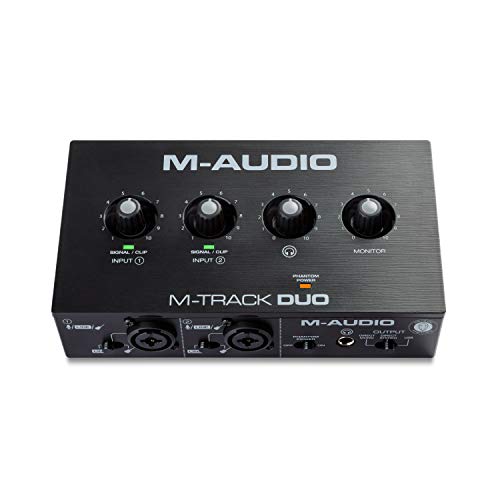
The M-AUDIO M-Track Duo provides two combo XLR/Line/Instrument inputs with 48kHz default resolution, plus a 1/4″ headphone output and stereo outputs for flexible monitoring. This is a strong choice for podcasters and small bands needing straightforward USB connectivity and reliable monitoring. It supports zero-latency monitoring via USB/Direct switch. A note: while versatile, it may not match higher-end models on dynamic range, so it’s best for straightforward recording and streaming tasks.
Focusrite Scarlett Solo 4th Gen USB-C Audio Interface

The Scarlett Solo 4th Gen upgrades to a higher dynamic range (up to 120dB) and preserves the iconic Air mode for vocal presence and guitar bite. This model is well-suited for writers and performers who need a compact, portable interface with the sonic characteristics of the Focusrite family. Choose this if you want studio-like results on a laptop or small desktop. A limitation is the still-one-mic-input format, which means you’ll need a separate mic for a second vocalist or instrument.
PIYONE Audio Interface, 2X2 USB-C

The PIYONE 2×2 USB-C interface offers 24-bit/192kHz fidelity with USB-C bus power and no-driver setup. It is a strong choice for Mac or PC users who want simple plug-and-play operation and reliable two-channel capture with XLR input capability. It includes illuminated gain knobs for easy visibility in dim studios. This model is best for those who need straightforward setup and professional-sounding results without fuss. A potential limitation is reliance on class-compliant operation without advanced driver support on some systems.
MAONO PS22 Lite USB Audio Interface

The MAONO PS22 Lite is a budget-friendly option that supports 24-bit/192kHz, with an instrument input and XLR mic input for simple recording setups. It’s suitable for streamers and basic musical ideas where price matters more than advanced features. It’s best chosen when you need a compact interface for light vocal or instrument work and don’t require extensive I/O or high-end preamps. A caution is that cheaper components may show more noise with sensitive mics, so pair with decently quiet mics for best results.
Buying Guide: Key Considerations for XLR Output Interfaces
What matters most when choosing an audio interface with XLR outputs is preamp quality, latency, and compatibility. For sings and podcasts, prioritize models with clean mic preamps and reliable Air modes or similar vocal enhancements. If you work with guitars or bass, ensure instrument inputs are present with adequate headroom and impedance matching. Consider the software compatibility, driver support, and whether you need USB-C power and portability for mobile recording. For multi-person sessions, look for interfaces with multiple XLR inputs and balanced outputs to reduce noise in longer cable runs.
Interface Type and Connectivity
USB-C interfaces usually offer easier power delivery and broad compatibility. USB-A devices remain widely supported but may require adapters. Look for class-compliant devices for quick setup on Mac and Windows without extra drivers.
Conversion and Preamps
24-bit/192kHz conversion provides higher resolution and better dynamic range. High-quality mic preamps minimize noise and capture more detail in vocals and acoustic instruments. Air or similar enhancement features can add natural brightness to voices and guitars without harshness.
Monitoring and Latency
Zero-latency monitoring via direct Monitor or USB/Direct switches helps you hear your performance without delay. For livestreamers, reliable monitoring is critical to avoid latency-induced performance issues.
Portability and Build
Compact, bus-powered units are ideal for mobile studios and on-the-go recording. Check build quality and knob layout to ensure comfortable use during long sessions.
Which One Should You Choose?
Best for solo artists needing simple workflows: Focusrite Scarlett Solo 3rd Gen or 4th Gen. Best for two-input versatility: PIYONE 2×2 or M-AUDIO M-Track Duo. Best for budget streaming: MAONO PS22 Lite. Each selection balances price, performance, and ease of use for XLR output needs.
FAQ
- What is XLR output used for on these interfaces? – XLR outputs are used to connect the interface to studio monitors or external gear with balanced, low-noise signals.
- Do these interfaces require drivers? – Many modern interfaces are class-compliant and work with no extra drivers on compatible systems, but some may benefit from manufacturer drivers for advanced features.
- Is USB-C necessary for recording? – USB-C offers power and data efficiency; many users prefer it for future compatibility, though USB-A models can work well with adapters.
- Which has the best preamps in this list? – Focusrite Scarlett models are known for high-headroom preamps and Air mode, which adds presence to vocals and instruments.
- Can I record multiple mics at once? – Some models support two inputs or more; if you need more than one mic, choose an interface with at least two mic preamps.
- What is latency, and how can I minimize it? – Latency is the delay between input signal and playback. Use direct monitoring and low-latency drivers, and enable buffer size settings appropriate for your system.