
Best Volume and Expression Pedal for Guitars and Keyboards
The best volume and expression pedals provide seamless control over dynamics and effects without requiring batteries. This guide highlights five top options suited for guitarists, keyboard players, and pedalboard setups. Each pick balances ease of use, reliability, and precise response to fit common performance and studio needs.
Buyer snapshot: The top picks below are ideal for players who want quick on/off volume control, expressive parameter tweaking, and simple integration into a pedalboard or keyboard rig. The table summarizes who each product best serves.
| Product | Brand | Best For |
|---|---|---|
| SONICAKE Passive Volume & Expression EXP | SONICAKE | Guitarists and multi-instrument players needing automatic mode switching |
| Lefiko Volume & Expression Pedal | Lefiko | Players seeking a passive, no-power solution with smooth feel |
| Btuty 2-in-1 Volume Expression Pedal | Btuty | Compact boards needing two-in-one control |
| SONICAKE Volume Expression Pedal FlipVol | SONICAKE | Full-size feel and versatile 2-in-1 control |
| M-AUDIO EX-P Keyboard Expression Pedal | M-AUDIO | Keyboard and controller users needing broad MIDI capability |
SONICAKE Passive Volume & Expression EXP Guitar Pedal, Mini Size – Vexpress
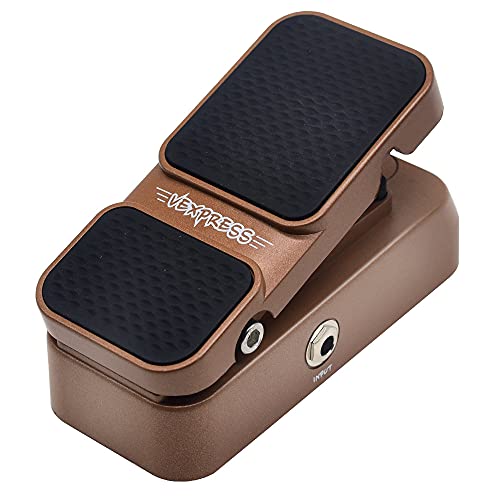
Features: Dual Functionality Design pairs passive volume control with expression control in one compact unit. It uses automatic detection to switch between volume and expression based on the connected device. It supports wide instrument compatibility, including guitar, bass, keyboard, synth, workstation, and other controllers. Best for players who want a single pedal that adapts to both volume swells and real-time parameter changes. Caution: Use a TRS cable to ensure gradual volume control; incorrect cable type may hinder smooth response.
Volume & Expression Pedal for Electric Guitar, Lefiko

Features: A dual-function pedal with passive design and no power supply required. Compact enough for small boards while offering smooth, silent tread movement ideal for studio or live use. Best for guitarists who want a simple, reliable expression and volume pedal without additional power needs. Limitation: Passive design means no internal electronics to boost signals; depending on your rig, you may need appropriate input sensitivity for certain pedals.
Btuty 2-in-1 Volume Expression Pedal for Guitar Bass Stereo TRS EXP

Features: Combines volume and expression in a compact unit, designed for guitar, bass, and synth. Built with a robust metal chassis and silicone non-slip base for stability. Operation aims for near-silent performance with smooth parameter control. Best for players who want to streamline their board with a single pedal and value durability. Caution: Some users may prefer a larger travel range for fine control on very subtle swells.
SONICAKE Volume Expression Pedal, FlipVol
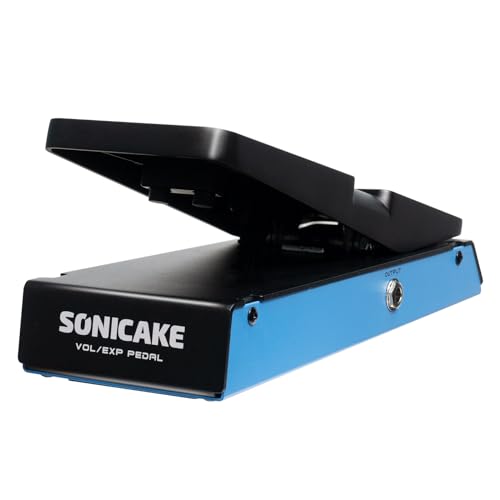
Features: A two-in-one pedal offering expression and passive volume control without requiring external power. This full-size pedal is designed for feet, making it comfortable for longer playing sessions. Best for players who want a traditional pedal footprint with two distinct control modes. Limitation: May be heavier than ultra-compact options, which could affect portability in some setups.
M-AUDIO EX-P Keyboard Expression Pedal

Features: Express Yourself with a universal expression pedal for keyboards and MIDI controllers. It enables manipulation of any MIDI-assignable control or parameter in real time, including volume and modulation. Built-in polarity switch helps compatibility across a wide range of devices. Best for keyboard players and MIDI rigs seeking broad control potential. Caution: Ensure your gear supports expression input for full functionality.
Buying Guide
How to pick the right volume/expression pedal
- Power and signal path: Choose passive pedals if you want simple, battery-free operation. If your rig needs a stronger signal, consider an active design with buffering.
- Control type and compatibility: Ensure the pedal supports volume and/or expression as needed, and check that the input/output uses standard 1/4″ jacks or TRS connections for smooth control.
- Board footprint and feel: Full-size pedals offer a classic feel and stability, while mini or compact designs save space for travel boards. Consider tread smoothness for live performance.
- Use case alignment: For guitars with many time-based effects, a single dual-function pedal (volume + expression) can simplify setup. For keyboard rigs, a pedal with broad MIDI applicability (like M-Audio EX-P) provides versatile control across devices.
- Durability and noise: Look for metal chassis and silent movement if you perform on stage or record in quiet environments.
How to wire and use
Connect a TRS or standard instrument cable according to the pedal’s design. In some cases, you may need to configure polarity or ensure the device accepts a passive input to achieve smooth, gradual changes. Start with subtle adjustments to dial in your preferred response.
Common scenarios
- Live guitar solos with dynamic swells: A dual-function pedal lets you control volume and effect parameters on the fly.
- Ambient keyboard textures: Expression control shapes filter sweeps and modulation in real time.
- Compact touring rigs: Short travel pedals reduce space while maintaining control.
Frequently Asked Questions
- What is the difference between a passive and active expression pedal?
Passive pedals require no power and rely on the connected gear’s input; active pedals include internal electronics or buffering to maintain signal strength.
- Do I need a special cable for smooth volume control?
Yes, some pedals require a TRS cable to enable gradual volume changes rather than stepped values.
- Can a single pedal handle both volume and expression?
Many 2-in-1 or dual-function pedals are designed to perform both roles, but compatibility depends on the board and effects.
- Will a keyboard expression pedal work with a guitar rig?
Expression pedals designed for keyboards can work with guitar rigs if the output type and polarity match the effects’ control input.
- What should I consider when choosing a full-size vs. mini pedal?
Full-size pedals offer better feel and stability for stage use; mini pedals save space and are more portable for travel boards.