
Best Audio Software for Microphone Setup: Top Interfaces and Gear for Clear Recordings
If you’re looking to capture studio-quality sound with your microphone, the right audio interface can dramatically improve clarity, dynamic range, and latency. This guide highlights five top picks that fit a range of needs—from beginner podcasters to home-studio musicians. Best for: podcasters starting out, solo vocalists, and small studios seeking reliable, high-quality preamps and low-latency monitoring. The following table compares the featured products at a glance.
| Product | Best For | Key Benefit |
|---|---|---|
| Focusrite Scarlett Solo 3rd Gen USB-C | Vocalists, solo artists | Air mode preamps and 24-bit/192kHz conversion |
| Focusrite Scarlett Solo 4th Gen USB-C | Songwriters, home studios | Air mode with improved dynamic range |
| XTUGA Q-12 USB Audio Interface | Budget setups, beginners | Low latency, plug-and-play |
| M-AUDIO M-Track Duo USB | Multitrack needs, small bands | Two combo inputs, zero-latency monitoring |
| Brvomussy Podcast Bundle | Podcasters and streaming | All-in-one with mics and noise reduction |
Focusrite Scarlett Solo 3rd Gen USB-C Audio Interface

The Scarlett Solo 3rd Gen offers pro-grade mic pre-amps and Air mode to brighten vocal and acoustic instrument recordings. It is best for solo artists and podcasters who want studio-like results without a complex setup. The unit supports up to 24-bit/192kHz for high-fidelity outputs and features two high-headroom instrument inputs for guitar or bass. Gain halos help avoid clipping, making it easier to capture clean takes. A potential limitation is the single artist input alongside a dedicated instrument input, which may require an external mic if you record multiple vocal tracks simultaneously.
Focusrite Scarlett Solo 4th Gen USB-C Audio Interface

The Scarlett Solo 4th Gen is designed for songwriters and home studios seeking big-studio sound in a compact package. It provides a broad dynamic range and uses the same high-quality converters as Focusrite’s flagship interfaces. The updated Air mode helps push vocals and guitars to the front of the mix, creating a more present, musical signal. This model is a strong choice when you want reliable, studio-grade results with simpler setup and fewer components, though it remains a single-mic channel option.
XTUGA USB Audio Interface Q-12

The XTUGA Q-12 focuses on reliable, budget-friendly performance with two inputs and 16-bit/48kHz resolution. It features switchable 48V phantom power for condenser mics and claims ultra-low latency, which is important for real-time recording and monitoring. This option is best for beginners and casual creators who need straightforward plug-and-play functionality without sacrificing essential input quality. A potential limitation is its lower 16-bit depth compared to higher-end models, which may affect ultra-fine dynamics in some professional contexts.
M-AUDIO M-Track Duo USB Audio Interface
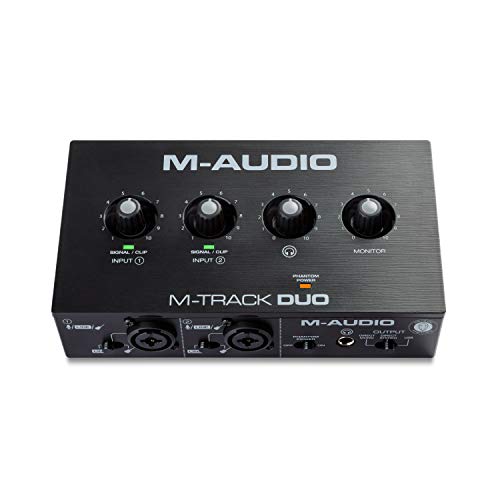
The M-AUDIO M-Track Duo provides two combo XLR/Line/Instrument inputs and 48kHz resolution for versatile recording of vocals, instruments, and podcasts. It includes a dedicated headphone output and stereo monitor outs for easy zero-latency monitoring. This makes it well-suited for small recording setups or live-to-studio sessions where multiple inputs are useful. A limitation to consider is the 48kHz ceiling, which may be a constraint for users requiring higher sample rates for critical projects.
Brvomussy Podcast Equipment Bundle

This bundle targets podcasters and live streamers by combining microphones, a mixer-style interface, and built-in noise reduction features. It emphasizes studio-grade sound quality with a 360° omnidirectional capture and DSP processing for real-time optimization. It also includes user-friendly plug-and-play USB-C connectivity. The caveat is that bundled components vary by listing and may not match premium standalone microphone or interface components in every scenario, so verify each item’s specs before purchasing.
Buying Guide
What should you consider when choosing an audio interface for microphone use?
- Input count: Do you need a single mic input or multiple channels for future expansion?
- Preamps and dynamic range: Look for higher-quality mic preamps and wide dynamic range (e.g., 120 dB) for clean recordings.
- Latency and monitoring: Zero-latency monitoring helps avoid feedback and timing issues during recording.
- Latency-free features: Auto Gain and Clip Safe can prevent clipping and simplify setup for new users.
- Sample rate and bit depth: 24-bit/192kHz delivers greater headroom; 16-bit/48kHz is adequate for most hobbyist projects.
- Air or instrument modes: These features enhance presence and clarity on voice or guitar recordings.
- Compatibility and portability: USB-C interfaces are widely compatible with modern computers and mobile setups.
How many channels do you actually need?
Two-channel interfaces are sufficient for solo vocalists or a single instrument. If you plan to record a small band or podcast with multiple participants, consider four-channel options or a compact mixer-to-interface setup.
Which features justify the investment?
Invest in interfaces with higher dynamic range, robust preamps, low-latency monitoring, and reliable driver support. Features like Air mode and Clip Safe can improve workflow and reduce the need for post-processing.
What about bundles versus standalone gear?
Bundles offer convenience and value for beginners who want a complete setup. For advanced users, selecting individual components may yield better customization and upgrade paths.
FAQ
- What is the difference between 16-bit and 24-bit audio? 24-bit offers greater dynamic range and headroom, reducing noise and clipping in quiet and loud segments.
- Do I need phantom power? Phantom power is required for most condenser microphones; if you use a dynamic mic, it’s often unnecessary.
- Is latency a problem with USB audio interfaces? Latency can occur if monitoring is not set up correctly; choose interfaces with zero-latency monitoring for best results.
- Can I use these interfaces with both PC and Mac? Most listed interfaces are designed for cross-platform use via USB-C; verify driver support for your system.
- What is Air mode? Air mode is a processing feature that adds brightness and air to vocals and acoustic instruments, improving presence in the mix.
- Do bundles compromise on quality? Bundles prioritize convenience and value; always check the specific mic and interface specs to ensure they meet your needs.