
The best automotive electrical short detector for low-voltage vehicle wiring is a circuit tracer designed to locate shorts, opens, or broken wires without relying only on visual inspection. The EM415Pro with a flexible probe is best suited to reaching wiring in tight spaces; the VDIAGTOOL V210 is another clearly specified 6–42V option. The five tools below are all marketed for automotive wire tracing, but their listed features overlap, so confirm the included functions and instructions before choosing.
| Product | Best suited for | Listed focus |
|---|---|---|
| EM415Pro with flexible probe | Accessing hard-to-reach wiring | 6–42V tracing, 7-inch flexible probe |
| Automotive Circuit Tracer and Wire Tracker | Car, boat, and trailer circuits | 6–42V DC, open and short finding |
| Automotive Wire Tracer, Short and Open Finder | Locating wiring faults | 6–42V cable tracking |
| Wire Tracer Automotive Open and Short Finder | Automotive circuit tracing | 6–42V short and open finding |
| VDIAGTOOL V210 | Low-voltage circuit diagnosis | 6–42V, open and short finding |
EM415Pro With Flexible Probe
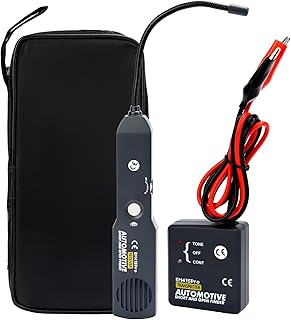
This EM415Pro is a 6–42V short-circuit finder and wire tracer for low-voltage DC diagnostics. Its listed 7-inch flexible probe is the main distinguishing feature in this group. The product title also identifies it as a circuit breaker finder, cable tracker, and voltage detector.
Best for: DIYers or technicians who need to trace wiring where a flexible probe may help with access. It was selected because its stated voltage range and short-finding purpose match the search, and the probe detail gives buyers a specific feature to compare.
Limitation: The supplied listing details do not explain how the probe is used, which readings or signals are displayed, or what accessories are included. Check the product instructions and package contents before purchase.
Automotive Circuit Tracer And Wire Tracker

This circuit tracer is listed for 6–42V DC systems and is described as a short finder, circuit tracker, tester, and scanner. The stated applications include cars, boats, and trailers, and the title identifies open- and short-circuit detection.
Best for: Buyers looking for one named tool for tracing low-voltage wiring across different vehicle or trailer contexts. It was selected because its listed voltage range and open/short focus are directly relevant, while the application wording goes beyond cars alone.
Limitation: The listing information provided does not specify probe length, display type, or operating steps. Do not assume it has the flexible probe or other features listed for a different model.
Automotive Wire Tracer For Shorts And Opens

This automotive wire tracer is described as a short- and open-finder, broken-wire detector, cable tracker, circuit tester, and auto wire locator. Its stated operating range is DC 6–42V.
Best for: Buyers whose main comparison criteria are the ability to trace wiring and investigate both open and short faults in a low-voltage circuit. It was selected because the listing explicitly names broken-wire locating as well as short and open finding.
Limitation: The supplied details do not provide more specific operating specifications or distinguish its detection method from the other listed tracers. Confirm that the instructions cover the kind of fault and circuit you plan to diagnose.
Wire Tracer Automotive Open And Short Finder

This tool is titled as a DC 6–42V wire tracer and circuit breaker finder. Its listed purpose includes locating shorts and opens, and the title also describes it as an electrical tester, fault probe, cable tracker, and broken-wire detector.
Best for: Shoppers who want a tool specifically presented for automotive open- and short-circuit tracing and who are comparing straightforward feature descriptions. It was selected because the stated voltage range and fault types align with common low-voltage wiring diagnosis needs.
Limitation: The provided product information does not state probe dimensions, supported circuit configurations, or how the fault indication works. Verify those details in the full listing before relying on it for a particular repair.
VDIAGTOOL V210 Wire Tracer

The VDIAGTOOL V210 is listed as an automotive circuit tester and circuit breaker finder for DC 6–42V low-voltage circuits. Its named functions include open- and short-circuit finding, cable tracking, and broken-wire locating.
Best for: Buyers who want a clearly named model for low-voltage automotive fault tracing. It was selected because its listing states both the 6–42V range and the open/short and broken-wire use cases.
Limitation: The supplied details do not describe the probe, display, or included accessories. Compare the complete listing and instructions with your diagnostic needs rather than assuming the V210 has features found on other tracers.
Buying Guide: How To Choose An Automotive Short Detector
What kind of fault do you need to find?
A short circuit occurs when current takes an unintended path, while an open circuit is a break that interrupts the intended path. A damaged or disconnected wire can cause an open; worn insulation or a pinched conductor can contribute to a short. Choose a tracer whose stated functions cover the fault you are investigating. If the listing only says “wire tracker,” check whether it explicitly supports short detection, open detection, or both.
A circuit tracer can help follow wiring and narrow down a fault location, but it does not replace a wiring diagram or a complete diagnostic process. Intermittent problems may require checking the circuit under the conditions when the fault occurs. Record what you have tested and avoid replacing parts based only on a tool’s indication.
Does the voltage range match your circuit?
The products here are described for DC 6–42V systems. Check the voltage of the circuit and the tool’s actual operating limits in the manufacturer’s instructions before connecting it. A stated range is not proof that a tool suits every electrical system or every diagnostic task. Do not use a low-voltage automotive tracer on household AC wiring or on a circuit outside its specified range.
Also check whether the instructions address the type of circuit you plan to test. Vehicle electrical systems can include sensitive electronic modules and different circuit designs. Disconnecting components, isolating a circuit, or testing a powered circuit can affect the diagnosis; follow vehicle service guidance and the tracer’s instructions.
Do you need access to wiring in a tight space?
Probe reach and flexibility can matter when a wire is routed behind trim, under a dashboard, or near other components. Among these listings, only the EM415Pro title specifically states that it has a 7-inch flexible probe. That makes it the clearest option to investigate if access is a priority, but the listing details provided do not establish how the probe performs in any particular vehicle.
For the other four tools, probe dimensions are not included in the provided descriptions. Check product images, specifications, and package contents to confirm the shape and reach. Do not assume that tools with similar names have the same probe or accessories.
How should you compare similar wire tracers?
Several products in this group use similar terms, including “circuit breaker finder,” “short finder,” “wire tracer,” and “cable tracker.” Those phrases alone do not explain signal method, sensitivity, indication style, or ease of use. Compare concrete specifications first: compatible voltage, supported fault types, probe design, connection method, included leads, instructions, and any stated limits.
- Choose the EM415Pro if a listed flexible 7-inch probe is important to your search.
- Consider the circuit tracer listing that explicitly names cars, boats, and trailers if those application categories matter to you.
- Compare the VDIAGTOOL V210 and other 6–42V tools by checking their full specifications and instructions; the supplied details do not show a decisive technical difference.
- Confirm package contents and operating guidance before purchase because they are not detailed consistently here.
What safety checks matter before testing?
Read the tool manual and vehicle service information before connecting a tracer. Identify the circuit and verify that its voltage is within the tool’s stated range. Keep probes away from moving parts, hot surfaces, and exposed conductors that could create an unintended connection. If you are unsure whether a circuit is safe to test, stop and seek help from a qualified automotive technician.
Do not treat a fuse that repeatedly opens as a reason to install a higher-rated fuse. A recurring fuse failure can indicate an unresolved electrical problem. Find and repair the cause using an appropriate diagnostic procedure instead of bypassing a protective device.
Frequently Asked Questions
What does an automotive short detector do?
An automotive short detector or circuit tracer is used to help locate wiring faults, such as shorts or breaks, in supported vehicle circuits. The exact function and method depend on the model, so check its instructions and stated voltage range.
Can a wire tracer find an open circuit as well as a short?
Some tracers are explicitly listed for both open- and short-circuit detection. Confirm that both fault types appear in the specifications for the exact model you are considering.
Are these tools suitable for household electrical wiring?
The products listed here are marketed for low-voltage DC automotive or similar circuits, with several titles specifying 6–42V. Do not use them on household AC wiring unless the manufacturer explicitly states that they are designed for that use.
Which product lists a flexible probe?
The EM415Pro listing specifically names a 7-inch flexible probe. The supplied descriptions for the other products do not state that feature.
Can a short detector identify the exact damaged component?
A tracer may help narrow down a fault location, but the listings do not promise identification of a failed component. Diagnosis may still require circuit diagrams, inspection, and additional testing.
What should I check before buying?
Verify voltage compatibility, supported fault types, probe reach, connection method, included accessories, and operating instructions. These details help determine whether a particular tool fits the circuit and access conditions involved.