
Best Bass Amp for Small Gigs: Compact, Portable Options for Live Play
Looking for a bass amp that performs well in tight spaces without sacrificing tone? This guide targets buyers seeking compact, gig-ready amps suitable for small venues, rehearsals, or livestream setups. We highlight five well-rounded options, with clear reasons each is best for specific situations—practice, small clubs, or travel. Use the quick reference table below to compare core capabilities at a glance.
| Product | Best For | Key Benefit |
|---|---|---|
| JOYO Vibe Cube BA-30 | Small gigs, livestreams | 30W, 4″ speaker, Bluetooth for backing tracks |
| Fender Rumble 15 V3 | Practice rooms, small venues | Quality Fender 15W with 8″ speaker |
| JOYO MA-10B | Travel, quick jams | 10W, ultra-portable, dual channels |
| demusea 20W | Beginner practice, portable | 3-band EQ, headphone/aux options |
| Fender Rumble 25 V3 | Small gigs with punch | 25W, 8″ speaker, contour/overdrive |
JOYO Vibe Cube BA-30: 30W Portable Bass Amp

The JOYO Vibe Cube BA-30 delivers 30 watts with a compact 4″ full-range speaker and an LF radiator for deep, punchy lows. A 3-band EQ plus a dedicated MID FREQ control lets you dial in precise tonal balance, while built-in compression smooths attack. Bluetooth 5.1 supports backing tracks, and OTG direct recording allows easy mobile or PC capture. Best for a guitarist who needs a portable, all-in-one solution for small gigs or livestreams where you want a robust bass tone without a large rig.
Best for: Bassists performing solo or with backing tracks in small venues or livestreaming environments. Why selected: Combines power, tone shaping, and easy digital connectivity in a compact package. Caution: Bluetooth can drop in busy wireless environments; keep back-up playback on a wired source if needed.
Fender Rumble 15 V3 Bass Amplifier

The Fender Rumble 15 V3 offers 15 watts with an 8″ Fender Special Design speaker and a straightforward top-mount control panel. Its output focuses on clean, punchy bass with stable performance for practice rooms or intimate gigs. The amp emphasizes practical features like simple EQ and a compact footprint, making it a better choice for players who prioritize reliability and tone over advanced effects for small venues.
Best for: Beginners or players seeking dependable, show-ready sound in intimate spaces. Why selected: Trusted Fender tone in a compact box without overcomplication. Caution: The 15W output may feel light for very loud rooms or outdoor small gigs without PA support.
JOYO MA-10B: 10W Mini Bass Amp

The JOYO MA-10B is a compact, 10W practice amp with two channels (Normal/Drive). It’s highly portable, weighing under 3 pounds, and supports headphone output and AUX in for jamming along with tracks. Battery operation adds true travel flexibility for busking or outdoor practice. Best for players prioritizing ultra-portability and price, with enough volume for private spaces or small gatherings.
Best for: Travel players, bedroom practice, or small jam sessions. Why selected: Maximum portability at a minimal cost. Caution: Limited headroom means it’s less suitable for loud venues without amplification.
demusea 20W Electric Bass Amplifier
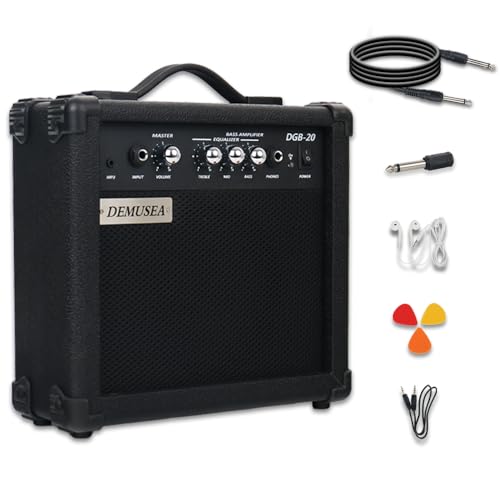
The demusea 20W bass amp features a full 3-band EQ to shape tone, plus a headphone jack for late-night practice and an AUX input to play along with tracks. Its durable build is designed for travel and lessons, making it a practical option for students or gigging players who need a portable setup with flexible connectivity. Better for studio-quiet gigs or small rooms where precise tone control matters.
Best for: Practice-heavy use near quiet venues or apartment settings. Why selected: Strong tone controls in a portable chassis. Caution: Lacks advanced built-in effects; for live band use, ensure adequate stage amplification if needed.
Fender Rumble 25 V3 Bass Amplifier

The Fender Rumble 25 V3 provides 25 watts with an 8″ speaker, plus a 1/8″ aux input and 1/4″ headphone output. Three-band EQ and a newly developed overdrive circuit offer punchy bass tones with contour controls to match stage needs. It’s a balanced option for small gigs where a bit more volume and classic Fender clarity are desirable.
Best for: Small venues requiring more headroom than a 15W, with reliable Fender tone. Why selected: More power and familiar control layout for quick tonal adjustments on stage. Caution: Slightly heavier than ultra-portable models; consider transport needs for frequent travel.
Buying Guide: Key Considerations For Small-Gig Bass Amps
- Venue size and power needs: Choose higher wattage models (15–30W) if you expect rooms with poor PA support or audiences beyond a bedroom size.
- Speaker size and tone: Smaller speakers (4″–8″) favor portability and quick projection; larger drivers offer fuller low end at the expense of size.
- Connectivity: Bluetooth, AUX, and USB/OTG recording features help with practice, backing tracks, and live demos. Consider dedicated headphone outputs for silent practice.
- Tone shaping: A visible 3-band EQ with adjustable mid frequencies enables precise voice for different songs and styles. Compression can smooth dynamics for livestreams.
- Portability vs. features: Travel-friendly amps trade some tone depth for lighter weight. If gigs require more, plan for a small mobile cart or backpack.
- Reliability and build: Durable cabinets and protective corners are important for frequent gigging or travel between venues.
Frequently Asked Questions
- What size amp should I use for small gigs? A 15–25W amp with an 8″ speaker is a common sweet spot for small venues, balancing volume and portability.
- Is Bluetooth playback useful for bass amps? Yes, for practice and demos; however, wired connections are more reliable in busy venues or livestreams.
- Do I need built-in effects on a bass amp for small gigs? Not always; many players rely on pedals or amp-sim pedals. Built-in overdrive or contour controls can cover basic tones.
- Should I choose a model with an aux input? Yes, an aux input makes it easy to jam with backing tracks or a smartphone during practice and soundcheck.
- Is a larger amp always better for small gigs? Not necessarily. Portability, tone, and stage volume control often trump raw wattage for intimate venues.
- What is the best practice setup for learning on a budget? A compact 10–20W amp with a headphone output and AUX in provides essential features at a lower cost.