Best Flatwound Bass Guitar Strings for Warm, Smooth Tones and Rich Low-End
Flatwound bass strings deliver a mellower, more rounded tone with minimal finger noise, making them ideal for jazz, reggae, and smooth R&B. This guide highlights five top options that suit different scales, gauges, and playing styles. Best for players seeking a classic, warm acoustic-like feel or a fretless-friendly setup, these choices emphasize consistency, intonation, and comfortable playing tension.
| Product | Scale | Gauge | Best For |
|---|---|---|---|
| D’Addario XL Chromes ECB81S | Short | 45-100 | Bright, mellow tone with smooth feel |
| D’Addario XL Chromes ECB81 | Long | 45-100 | Warm, intimate jazz tone |
| Fender 9050 34″ Flatwound | Standard | 45-105 | Versatile jazz, reggae, and R&B |
| Ernie Ball Regular Slinky Flatwound P02812 | Standard | 50-105 | Balanced warmth with clear output |
| Fender 9050L 34″ Flatwound | Standard | 45-100 | Warm, quiet finger noise |
D’Addario XL Chromes ECB81S Flat Wound, Short Scale 45-100

Best for players seeking a mellower, smooth tone on a shorter scale. The ECB81S uses a hex-core for consistent intonation and durability, with stainless steel flat wrap wire delivering a dark, warm voice. The short scale is ideal for players with smaller basses or those preferring lower tension without sacrificing projection. Caution: tension may feel stiffer than some long-scale sets for beginners transitioning to flats.
D’Addario XL Chromes ECB81 Flat Wound, Long Scale 45-100

Better for full-scale basses needing a consistently smooth, dark tone with a premium feel. The long-scale ECB81 shares the same hex-core construction and polished flat wrap wire for precise intonation. Best used on jazz-oriented setups or any genre prioritizing a refined, low-noise finger attack. Avoid if you prefer a brighter attack or a brighter round-wound texture.
Fender 9050 Bass Strings, Stainless Steel Flatwound 9050M
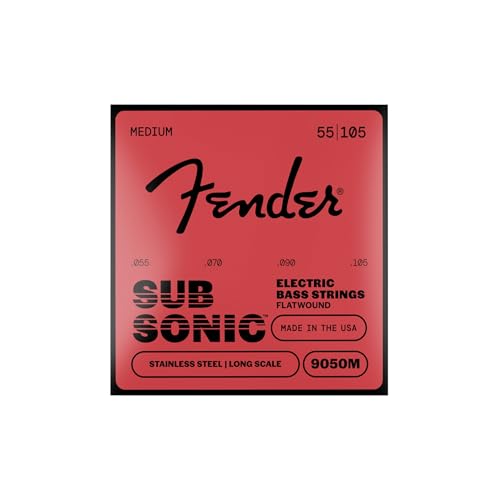
Best for players exploring reggae, jazz, country, and R&B textures with a classic flatwound voice. The 9050M set features a mellow, soft attack suitable for fretless or warm, intimate tones. While highly versatile, the flatwound construction may produce less brightness on aggressive picking. Choose this for a traditional, warm flatwound character and low finger noise.
Ernie Ball Group III Flatwound, 45-100

Best for players who want a consistent, warm flatwound feel with straightforward tension and smoothness. The Group III flatwounds use flattened stainless wrap wire over a hex-shaped core to deliver a warm, rounded tone with reduced finger noise. A good choice for jazz or R&B players who value traditional flatwound response. Limitation: may lack the higher output some players desire from cobalt or other alloy wrappers.
Ernie Ball Hybrid Slinky Flatwound, 45-105

Best for players wanting the traditional feel of flatwounds with a touch more clarity and output. The cobalt wrap wire adds definition without introducing roundwound finger noise. Suitable for players who want a balance between warmth and articulation. Caution: slightly brighter than classic flatwounds for those seeking a darker voice.
Ernie Ball Extra Slinky Flatwound, 40-95

Best for players seeking the smooth feel of traditional flats with added clarity and output. The cobalt-wrapped wire offers enhanced definition while preserving the characteristic warmth of flatwound strings. This set suits players who perform with aggressive dynamics yet prefer a controlled, muted finger noise. Limitation: can feel slightly stiffer for beginners compared to lighter gauges.
Buying Guide: Key Considerations For Flatwound Bass Strings
Choosing the right flatwound set depends on scale length, playing style, and tone goals. Consider tension and feel first: shorter scales generally require lighter gauges for comfortable play, while longer scales can accommodate a broader gauge range without increased tension. Flatwounds emphasize warmth and smoothness, so expect reduced finger noise and a mellower edge than roundwounds.
Scale length and gauge alignment matter for intonation and tension balance. Players on fretless basses or those chasing a warm jazz voice may prefer 34″ sets with medium to light gauges. If you need extra brightness or more output, look for flatwounds with cobalt or specialized wrap wires, recognizing this may shift the tonal balance away from a classic flatwound character.
Durability and core design influence longevity and intonation stability. Many leading brands use hex-core cores for precise intonation and consistent feel. Consider whether you prioritize ultra-smooth feel (flat wraps) or slightly more articulation (slightly brighter flatwound options).
FAQ
- What makes flatwound strings different from roundwounds? Flatwound strings use a flat, wound wire that creates a mellower tone with less finger noise, compared with the brighter attack and more texture of roundwounds.
- Which scale length should I choose for flatwounds? 34″ is standard for most basses, but short and long scales exist. Short scales reduce tension and are easier for beginners; long scales can provide deeper sustain and stable intonation on jazz setups.
- Are flatwounds good for fretless basses? Yes, they are a common choice for fretless players due to their smooth feel and warmth, which minimizes finger noise.
- Do flatwounds require special installation? They install like standard strings, but take care to align the winding with the tuner pegs to maintain even tension and avoid kinking the flat wrap.
- Which brand offers the best balance of tone and durability? It depends on tone preference; D’Addario Chromes and Ernie Ball flatwounds are widely regarded for consistent intonation and durable cores, with varied wrap wire constructions for different tonal goals.
- Can I mix flatwound sets on different basses? It is possible but not common; align tension and scale length to avoid excessive neck stress or intonation issues.