
Best Bass Guitar Loop Pedals for Building Rich, Layered Tracks
Choosing the right bass guitar loop pedal depends on how many layers you need, how long you want to record, and how intuitive the controls feel during a live performance. This guide highlights five solid options best suited for bass players seeking hands-free looping, live layering, and reliable performance features. Each option is explained with who it’s best for, what stands out, and a clear limitation to consider.
| Product | Best For | Key Strength |
|---|---|---|
| BOSS RC-1 Loop Station Pedal | Beginners and up-and-coming bassists | Clear indicators and straightforward operation |
| LEKATO Looper Pedal (9 Loops, 40 Minutes) | Musicians needing long recording and high memory | Large memory, high-quality audio, built-in tuner |
| Donner Triple Looper Pedal | Live performers who want multiple loops and a visual reference | Three loops, long total time, easy one-footswitch control |
| BOSS RC-5 Loop Station | Pro-level users needing extended storage and advanced features | Long recording time, high-quality audio processing |
| GOKKO GK-27 Looper Pedal | Compact practice and riff-building for bass | Ten-minute loops with unlimited overdubs and undo/redo |
The following sections detail each product. For each option, you’ll find who it’s best for, why it stands out, and a practical limitation to keep in mind.
BOSS RC-1 Loop Station Pedal

- Features: User-friendly loop station suitable for guitar, bass, and keyboard; supports layering phrases into a continuous loop; records, plays back, overdubs, and supports undo/redo in a compact stompbox.
Best for: Beginners and players who want a simple, reliable looping setup without extra frills. This model is favored by bassists starting with live looping or practicing ideas at home. Limitation: Fewer advanced memory and performance options compared to higher-end models.
LEKATO Looper Pedal (9 Loops, 40 Minutes)

- Features: Nine loops, up to 40 minutes total recording time; 48K/24-bit uncompressed audio; Analog-Dry-Through design; built-in tuner with high sensitivity.
Best for: Musicians who need substantial loop memory and professional-sounding dry-through tone. It’s a strong choice for bass players layering tracks and wanting reliable tuning integrated into the pedal. Limitation: Power supply not included; users must provide a compatible 9V supply.
Donner Triple Looper Pedal

- Features: Bright built-in screen showing loop status and timing; three independent loops with up to 90 minutes total recording time; single-footswitch operation for recording, playing, overdubbing, and clearing.
Best for: Live performers who want clear visual feedback and the ability to switch between multiple song sections. Limitation: Three loops may be insufficient for complex multi-section compositions compared to higher-end models.
BOSS RC-5 Loop Station

- Features: Advanced looping with class-leading audio quality; 32-bit AD/DA and 32-bit processing; single track with 13 hours of stereo recording and 99 phrase memories for quick recall.
Best for: Musicians seeking professional-grade sound and extensive memory for performances or studio-like live setups. Limitation: More complex interface may require a learning curve for new users.
GOKKO GK-27 Looper Pedal
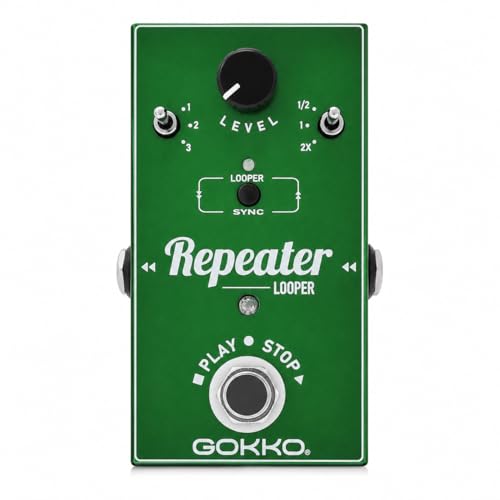
- Features: 10-minute loop recording; unlimited overdubs; undo/redo during playback; designed for electric guitar and bass practice and performance.
Best for: Players who want a compact, affordable option with strong overdub capabilities and a quick undo/redo workflow. Limitation: Shorter maximum loop duration compared to some other models.
Buying Guide
What should you consider when choosing a bass guitar loop pedal?
- Recording time and memory: If you plan long jams or multiple sections, choose a pedal with extended recording time and more phrase memories.
- Number of loops: Decide whether you need a single-loop device for simple layering or multiple loops to manage verse, chorus, and bridge separately.
- Audio quality and processing: Look for high-quality AD/DA conversion and reliable buffering so bass tones stay clear when layered.
- Tuning and syncing: Some pedals include built-in tuners or sync features which can reduce gear clutter during live sets.
- Ease of use in live settings: A bright display, clear indicators, and intuitive control can be decisive for gigging musicians.
- Power requirements: Check whether the pedal includes power supply or requires an external adapter, especially if you travel or perform live.
Practical tips
- Test footswitch sensitivity before a live gig to ensure reliable recording and overdubbing with your playing style.
- For bass players, consider a pedal with dry-through or true bypass to preserve your signal when not looping.
- Label your phrases or memories to speed up live recall during performances.
Frequently Asked Questions
- What is a bass guitar loop pedal used for?
A bass guitar loop pedal records phrases and plays them back on a loop, enabling layering, practice, and live performance ideas without an external computer or DAW.
- How many loops should I start with?
Beginners can start with a single-loop device for basic layering, while more advanced players may benefit from 3 or more loops for distinct song sections.
- Is built-in tuning important for loopers?
Built-in tuning can be convenient for on-the-fly adjustments, but it is not essential if you already use a dedicated tuner pedal.
- Do loop pedals affect bass tone quality?
Quality loop pedals with proper buffering and dry-through designs preserve tone integrity while layering multiple phrases.
- Can I use loop pedals with other instruments besides bass?
Yes. Most loop pedals support guitar, keyboards, and other line-level instruments, offering versatile live looping options.
- What should I watch for when recording long loops?
Look for sufficient memory, stable clocking, and reliable overdub behavior to avoid accidental erasures or timing drift.