
Best Rack-Mount Equalizers for Guitarists
Looking for a rack-mount equalizer to shape guitar tone for live sound, studio work, or home practice? This guide highlights five rack-ready options that suit different needs—from precise dual-channel control to broad preset effects. Each pick is explained with who it’s best for, plus practical caveats to help you decide.
Summary table of selected products:
| Product | Best For | Key Feature |
|---|---|---|
| MIZISNR EQX-215S | Audiophiles and professionals seeking precise dual-channel control | 15-band per channel with ±12dB and low-cut control |
| RQG Dual 15-Band | Home studios and DJs needing clear A/B comparison and bypass | Dual channels, 40Hz low-cut, bypass switch |
| SIKUING 15-Band | Live setups and studios needing subwoofer output | Independent subwoofer output, dual channels, low-cut, bypass |
| Behringer FBQ1502HD | Live sound and classrooms requiring quick feedback control | FBQ Feedback Detection, mono sub out, low-cut |
| Audio Effects Processor (Generic) | Live/karaoke and studio with versatile effects | 199 presets, dual channel, 24-bit processing |
MIZISNR Stereo Graphic Equalizer 15-Band EQ

The MIZISNR EQX-215S is a dual-channel graphic equalizer designed for home audio, studios, and live setups. It offers 15 bands per channel with a ±12dB range, enabling precise tonal shaping across the spectrum. A dedicated low-cut control helps remove unwanted low-end noise, which is useful in environments with rumble or stage feedback. This unit is best for audiophiles or professionals who require tight control over two separate audio paths, such as guitar and vocal chains.
Best for: Professional applications requiring dual-channel precision and flexible low-end management.
Caution: Detailed setup and cabling are required to extract full benefit; ensure your signal chain supports balanced connections where available.
Audio Effects Processor, 24 Bit Digital Signal Rackmount

This rackmount effects processor provides 24-bit digital processing with 199 presets, offering a broad palette of sounds for vocals, instruments, and various genres. Its dual-channel design supports parallel processing, enabling distinct effects on separate sources. This option is well-suited for live performance, studio work, or karaoke setups that require quick access to a wide range of textures without manual EQ tuning on each channel.
Best for: Musicians and engineers seeking ready-made, easily recalled effects alongside dual-channel routing.
Caution: Preset-based workflow can discourage fine-grained mixing; you may still need traditional EQ adjustments for precise tone matching.
SIKUING 15-Band Stereo EQ Rack Sub Out
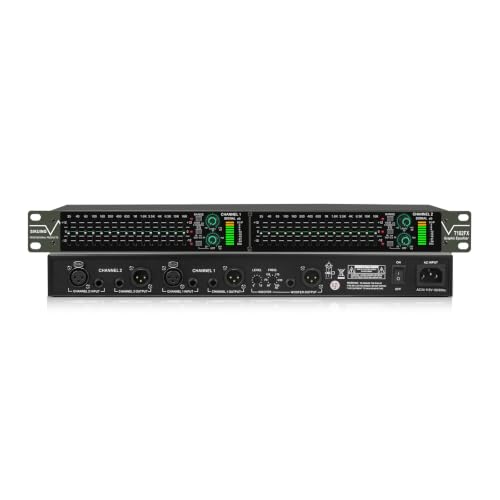
The SIKUING 15-Band offers precise dual-channel EQ with a dedicated subwoofer output, covering 25 Hz to 16 kHz. It includes an adjustable low-cut filter to reduce rumble and a bypass option for quick A/B comparisons. This model is especially helpful in live rooms or studios where subwoofers play a central role in the overall mix, and where feedback control is critical for clear guitar tone and vocal clarity.
Best for: Environments where subwoofer integration and feedback control are priorities.
Caution: Ensure compatible connectors (XLR/TRS) are available on your gear and that the sub output matches your subwoofer’s requirements.
Behringer FBQ1502HD

The Behringer FBQ1502HD features a revolutionary FBQ Feedback Detection system that instantly reveals problematic frequencies, aiding quick corrective action during live performances. It includes a mono subwoofer output with a configurable crossover and a low-cut filter to remove rumble. This unit is well-suited for venues or rehearsal spaces where quick feedback identification and subwoofer management are advantageous.
Best for: Live sound setups needing rapid feedback control and straightforward subwoofer integration.
Caution: While powerful for feedback detection, it may require careful room-based EQ tuning to achieve optimal results across all instruments.
RQG Dual 15-Band Graphic Equalizer

The RQG Dual 15-Band offers precise control through two independent channels, each with 15 bands. It includes a 40 Hz low-cut filter and a bypass switch for instant A/B comparisons. Connections include XLR balanced and 1/4″ TRS I/O, facilitating compatibility with many DJ mixers, power amps, and PA systems. This model is a solid choice for studios and performance rigs needing reliable, tight tonal shaping across dual paths.
Best for: Users who need clear channel separation and quick tonal comparisons during setup or gigs.
Caution: Relying heavily on bypass for tone comparisons should be complemented by room treatment and source-level EQ for best results.
Buying Guide: Rack-Mount Equalizers for Guitarists
- What type of environment will you use it in? Live venues demand robust feedback control and reliable subwoofer integration, while home studios prioritize precise, quiet operation and a compact footprint.
- How many channels do you need? Dual-channel units are ideal for separate guitar and vocal paths, while single-channel models may suffice for mono setups or a dedicated guitar rig.
- Which features matter most? Consider low-cut filters to reduce rumble, bypass for quick A/B checks, and subwoofer outputs if you use a dedicated sub in your monitoring chain.
- What connectivity is required? Verify XLR, TRS, and compatibility with your mixer, amp, and DI boxes. Balanced connections reduce noise in longer cable runs.
- Presets vs. hands-on control: Preset-rich processors offer speed, but dedicated graphic EQs provide granular, repeatable tone shaping across the band with direct knob control.
- Installation and maintenance: Rack-mount units require proper ventilation and secure mounting. Check dimensions and weight for your rack enclosure and transport considerations.
FAQ
- Do rack-mount EQs improve guitar tone in live sound? Yes, by precisely shaping frequency content and controlling feedback, they help maintain audible clarity across the mix.
- Is a dual-channel EQ necessary for guitarists? It can be beneficial if you run multiple sources (e.g., guitar and vocal) through separate paths or monitor mixes.
- What’s the advantage of a low-cut filter? It removes low-end rumble and stage noise that can muddy the overall tone, especially in smaller rooms.
- Can I use these with a guitar amp or digital pedalboard? Yes, most units accept instrument-level or line-level inputs; check input sensitivity and ensure proper impedance matching.
- Should I choose a preset-heavy processor or a traditional graphic EQ? If you need quick tonal changes on stage, presets can help; for studio precision, a graphic EQ offers more exact bandwidth control.
- Are Behringer or other brands reliable for live gigs? Reputable brands offer robust designs suitable for gigging; always ensure proper installation and compatibility with your gear.