
For bass drop tuning, choose a string set with enough tension and gauge for your target tuning, scale length, and playing feel. Ernie Ball Beefy Slinky is the clearest fit here for four-string players targeting low tunings such as drop C, drop B, or BEAD. DR DDT-50 is designed for drop-down tuning, while D’Addario Balanced Tension is better suited to players prioritizing even feel across the strings. The options below compare their stated gauges, construction, and intended use.
| Product | Stated gauge | Best suited to |
|---|---|---|
| Ernie Ball Beefy Slinky | 63–130 in product name; features say 65–130 | Four-string low tunings |
| DR Strings DDT-50 | .050–.110 | Drop-down tuning in a heavy set |
| D’Addario EXL160BT | 50–120 | Balanced feel across strings |
| Ernie Ball Hybrid Slinky | 45–105 | Players making a moderate tuning change |
| DR Strings Black Beauties | 50–110, tapered | Players seeking a black-colored set |
Ernie Ball Beefy Slinky
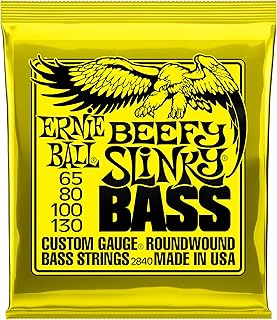
Best for: Four-string bass players who need a heavy set for low tunings. The product features specifically identify BEAD, drop B, and drop C as intended uses, making this the most direct match for players moving below standard tuning.
The product name lists a 63–130 gauge, while the feature text describes the set as 65-to-130. Check the package details before ordering if an exact gauge is important to your setup. Ernie Ball describes the strings as having a rich, balanced tone.
Why it was selected: Its stated low-tuning purpose and heavy overall gauge make it a practical starting point for a four-string bass tuned down. A heavier set can help retain a firmer feel when lowering pitch, though the result depends on the bass and setup.
Limitation: The listed gauge discrepancy needs attention, and the heavy feel may not suit players who prefer lighter strings or mostly standard tuning.
DR Strings DDT-50 Heavy

Best for: Bassists looking for a set explicitly named and marketed for drop-down tuning. Its stated .050–.110 heavy gauge gives a clear comparison point for players deciding between a medium-heavy and a substantially heavier set.
The listed construction is stainless steel. That distinguishes it from nickel-wound options in this selection and may matter to players choosing by material or tonal preference. The product information provided does not specify a particular target tuning, so match the set to the notes you plan to play rather than assuming it fits every low tuning.
Why it was selected: The DDT designation and drop-down tuning description make it relevant to the search, while the .050–.110 gauge suits players who want a heavy set without moving to the largest gauges listed here.
Limitation: Gauge alone cannot confirm the correct tension for a specific bass, and the available product details do not list a recommended tuning range.
D’Addario EXL160BT Balanced Tension

Best for: Players who prioritize a consistent feel across the strings and want a 50–120 set to consider for a lower tuning. D’Addario describes the set as balanced tension, intended to let the player apply a similar amount of fretting-hand pressure to each string.
The product features identify round-wound, nickel-plated steel construction and a bright tone. The listed product name gives a 50–120 overall gauge. Its feature text also lists individual gauges, but those figures do not clearly correspond to that overall range, so verify the packaging or manufacturer specifications if exact string-by-string sizing matters.
Why it was selected: A balanced-tension design is relevant to players adjusting to changed string feel, and the set provides a useful alternative to sets selected primarily for drop-tuning branding.
Limitation: The provided description does not name a target drop tuning. Do not assume that balanced tension alone guarantees adequate tension at a particular pitch.
Ernie Ball Hybrid Slinky

Best for: Bassists who want a popular 45–105 four-string set and are considering a modest drop in tuning rather than an especially heavy low-tuning setup. The features describe the set as one of Ernie Ball’s most popular four-string gauges and note its rich, balanced tone.
Compared with the Beefy Slinky, the Hybrid Slinky has a lighter stated gauge. That can make it a more familiar-feeling choice for players who do not want to move immediately to a heavy set. However, a lighter set may feel looser as pitch drops, depending on the instrument, scale length, and tuning.
Why it was selected: It provides a useful baseline comparison for players weighing normal playing feel against the firmer feel often sought in lower tunings.
Limitation: The product details do not identify it as a drop-tuning set or specify a low-tuning range. Choose a heavier option if the target pitch leaves these strings feeling too slack.
DR Strings Black Beauties

Best for: Bassists who want a black-colored string set in a heavy 50–110 gauge. The product name also identifies the strings as tapered, which is a relevant construction detail for players comparing string designs.
The provided product information does not state a specific drop tuning or explain the taper dimensions. Its .050–.110 range places it between the DDT-50 and Beefy Slinky by the listed gauge figures, although the two sets may differ in construction and feel.
Why it was selected: It combines a heavy gauge with a distinct appearance, giving players another option when choosing for both tuning needs and visual preference.
Limitation: The product data does not establish a recommended low tuning. Confirm that the set’s taper and gauge suit the bass before buying.
Buying Guide: How To Choose Bass Strings For Drop Tuning
What gauge works for your target tuning?
Start with the exact notes you plan to tune to, not just the phrase “drop tuning.” Lower pitches usually reduce string tension, and a heavier gauge can help a string feel firmer. The right gauge still depends on bass scale length, string construction, and personal preference. As a quick comparison, the Beefy Slinky lists the heaviest range in this group, while the 45–105 Hybrid Slinky is the lightest.
Use product gauges as a starting point rather than a universal ranking of tension. Two strings with the same nominal gauge can feel different because of their construction. If possible, compare the gauge and tuning used by players with a similar instrument and target pitch.
Should you choose a set labeled for drop tuning?
A set marketed for drop-down tuning, such as DR DDT-50, is a useful shortlist candidate. Still, the product information here does not specify every compatible tuning. A drop-tuning label cannot replace checking the individual gauges and your instrument’s setup requirements.
For a clearly named low-tuning application, Ernie Ball identifies Beefy Slinky for BEAD, drop B, and drop C. This makes its stated intent more specific than the descriptions for the other sets. Check its gauge discrepancy before purchase if choosing by exact string diameter.
How do material and winding affect the choice?
The listed construction varies. DR DDT-50 is stainless steel, while the Beefy Slinky and Hybrid Slinky are described as nickel wound. D’Addario EXL160BT is round wound with nickel-plated steel. These descriptions can help narrow a set by preferred material and tone, but the supplied details do not support a precise tonal comparison among every product.
The Black Beauties are identified as black-colored and tapered. If those features matter to you, verify that the set is appropriate for your bass and tuning. Do not select a set solely for appearance if it does not provide the gauge or feel needed at the intended pitch.
When might a setup adjustment be needed?
Changing string gauge or tuning can alter tension and may affect a bass’s setup. After fitting a different set, check tuning stability, string clearance, and whether the strings feel comfortable to fret. A very low tuning that produces excessive slack may call for a different gauge. If the bass needs adjustment, consult a qualified technician rather than forcing strings into an unsuitable setup.
Also confirm practical details before ordering, including the number of strings in the set, the individual gauges, and whether the string ends and length suit your instrument. The supplied descriptions do not provide all of those specifications for every product, so check the package or manufacturer listing when a detail is essential.
Frequently Asked Questions
What are the best bass strings for drop C?
Ernie Ball Beefy Slinky is the most directly specified option here because its features name drop C as an intended tuning. Confirm the set’s exact gauge before purchase because the product name and feature text give different lower gauges.
Are heavier bass strings always better for lower tuning?
No. Heavier strings can feel firmer at lower pitches, but the ideal gauge depends on the target tuning, scale length, string construction, and desired feel. Excessively heavy strings may not suit a player’s setup or preference.
Can I use .050–.110 strings for drop tuning?
Possibly, depending on the target notes and instrument. DR DDT-50 is described for drop-down tuning, but its listing does not specify a particular tuning range. Compare the string tension and feel at your intended pitch.
Are balanced-tension strings designed specifically for drop tuning?
Not necessarily. D’Addario EXL160BT is described as balanced tension, which concerns relative feel across strings. The provided product details do not identify a specific drop-tuning range.
Do I need a setup after changing to heavier strings?
A setup check is sensible after changing gauge or tuning because string tension can affect the instrument’s feel and adjustment. Whether a particular bass needs work depends on the change and the instrument.
What should I check before ordering bass strings?
Confirm the set’s string count, individual gauges, tuning suitability, construction, and compatibility with your bass. Check exact specifications where the product description is inconsistent or incomplete.