
Best Battery-Powered Phantom Power Supplies for Field Audio and Studio Use
Need a reliable battery-powered phantom power supply for condenser mics, shotguns, or portable setups? This guide highlights five top options that deliver clean 48V or 12V phantom power without mains electricity. They’re ideal for podcasters, field reporters, livestreamers, and on-the-go sound crews. Each pick is evaluated for portability, battery life, compatibility, and ease of use to help you choose what fits your workflow.
| Product | Power Source | Best For |
|---|---|---|
| Xvive P1 Phantom Power Supply 48V/12V | Rechargeable Battery | Long sessions away from power, home studios |
| Xvive P1 48V/12V Portable Power (Second Model) | Rechargeable Battery | Shows versatility for 12V or 48V mics |
| Mackie M48 48V Phantom Power | AC or 9V Battery | Rugged studio or stage use |
| NEEWER 1-Channel 48V Phantom Power | AC Adapter Option | Budget-friendly condenser setups |
| Depusheng 48V/12V Phantom Power | Rechargeable Battery | Portable interviews and field shoots |
Xvive P1 Phantom Power Supply 48V/12V
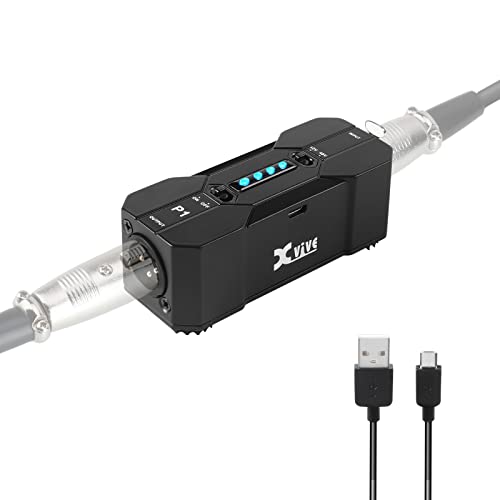
The Xvive P1 delivers 48V or 12V phantom power from an internal rechargeable battery, enabling condenser mics and similar devices without a power outlet. It supports up to 40 hours of use and recharges in roughly 2.5–3 hours. Best for mobile podcasters, streaming setups, or home studios where power access is limited. This model emphasizes low noise and high audio quality through professional circuitry that minimizes interference, making it suitable for critical mic power delivery.
Who it’s best for: solo creators, remote field reporters, and small studios needing long run times without mains power. Why selected: strong battery life, dual voltage support, and compact form factor. Caution: battery life is influenced by mic current draw; high-demand mics may shorten runtime.
Xvive P1 48V/12V Portable Phantom Power Supply Up to 40H Battery Life

This second Xvive P1 option emphasizes the same 48V/12V versatility with a rechargeable 2200mAh battery and a stated 14–40 hours of operation. It’s designed for quiet operation and flexible power delivery, which is beneficial for live streams, field reporting, or on-location recording where AC power isn’t available. The device aims to protect against ground loops and noise by removing cords from the setup.
Who it’s best for: performers and videographers needing a dependable portable supply with interchangeable voltage. Why selected: clear battery life range and cord-free operation. Caution: ensure microphone current draw stays within the unit’s capacity to maximize runtime.
Mackie M48 48V Phantom Power Supply

The Mackie M48 offers a straightforward dual-channel phantom power solution with balanced XLR inputs and outputs. It can be powered by the included AC adapter or a 9V battery, making it flexible for studio or on-the-road use. Best for small setups needing reliable, minimal-noise power with easy integration into existing XLR workflows.
Who it’s best for: small studios or live rigs that require dependable 48V power with simple AC or battery options. Why selected: simple two-channel design and clear signal integrity. Caution: not explicitly battery-powered as a primary supply; best when mains power is available or used with the battery option.
NEWER 1-Channel 48V Phantom Power Supply

The NEWER unit provides a single-channel 48V supply with a compact build and included XLR cable. It is designed for condenser mics and similar recording gear, with a focus on universality and ease of connection to various mics and mixers. It’s a practical choice for budget-conscious buyers needing a straightforward power supply in a portable form factor.
Who it’s best for: budget-conscious buyers seeking reliable 48V power for one microphone in a portable setup. Why selected: value-focused option with universal XLR compatibility. Caution: single-channel design limits expansion for multi-mic rigs.
Depusheng Phantom Power Supply 48V/12V
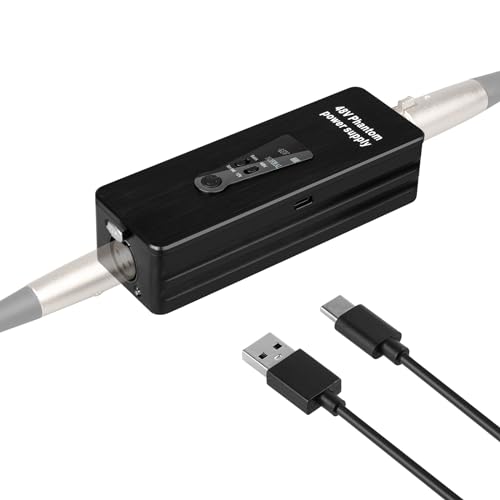
The Depusheng model covers 48V/12V with a rechargeable battery, designed for condenser mics, shotgun mics, and other compatible devices. It features a metal housing for durability and a universal XLR input/output. It’s positioned for mobile use—interviews, live events, and studio shoots where power access is limited.
Who it’s best for: field reporters and mobile studios needing robust build and battery-powered versatility. Why selected: rugged construction and straightforward compatibility. Caution: battery life can vary with mic draw; plan for mid-range runtimes under heavy loads.
Jectse 48V Phantom Power Supply

The Jectse unit provides a portable 48V phantom power supply with built-in rechargeable capacity and XLR input/output. It emphasizes stable voltage output and reduced interference, suitable for streaming, studio recording, and live performances where reliable mic power is essential.
Who it’s best for: users needing steady performance for vocals and instruments in variable environments. Why selected: voltage stability and interference suppression. Caution: ensure the built-in battery meets your on-site run-time expectations for longer shoots.
ART PHANTOM2 Pro Two Channel 48V Phantom Supply

The ART Phantom2 Pro is a two-channel 48V phantom supply designed for balanced XLR inputs and outputs, with low-power CMOS circuitry for longer battery life when used with a battery option. It suits multi-mic rigs in compact setups and is suitable for studio and live use where additional channels are needed.
Who it’s best for: users needing two phantom-powered channels with efficient battery use. Why selected: dual-channel capability with a focus on low power draw. Caution: traditional 9V battery operation may have slower runtimes; check intended power source compatibility for long sessions.
Buying Guide: How to Choose a Battery-Powered Phantom Power Supply
- Voltage needs: Confirm whether your mics require 12V or 48V phantom power, or both. Some models offer dual-voltage operation.
- Power source: Decide between rechargeable battery, USB charging, or mains power with battery backup. Battery life and recharging time impact field use.
- Portability: Consider size, weight, and form factor. Smaller units are easier for field work, larger ones may offer more features or channels.
- Number of channels: For setups with multiple mics, a two-channel or more capable supply reduces gear clutter.
- Noise and interference: Look for devices with circuitry designed to minimize hiss, ground loops, and other interference.
- Durability: For on-location work, a rugged housing and secure connectors help withstand travel and handling.
- Compatibility: Ensure XLR inputs/outputs and mic types align with your current rig, mixers, and interfaces.
- Maintenance: Consider availability of spare batteries, chargers, and support when selecting a brand.
Frequently Asked Questions
- What is phantom power and why is it needed? Phantom power supplies provide the necessary power to condenser microphones that require 48V or 12V to operate.
- Can I use a battery-powered phantom supply with all mics? Most condensers require standard phantom power; verify voltage requirements and connector compatibility for your mic.
- Is dual-channel phantom power better for multi-mic rigs? Yes, it reduces cable runs and ensures consistent power across mics.
- Do these units introduce noise into the signal? Reputable units use filtering and circuit design to minimize noise; check user reviews and specs for interference performance.
- What should I consider when using on-location? Battery life, charging options, and rugged design are key for field use; prioritize units with longer runtimes and durable build.
- Are there risks of battery-related issues with phantom power? Ensure correct voltage and polarity, and avoid over-discharging to extend battery life.