
For big sound from small speakers, choose a compact model whose format and connections fit your setup: the Saiyin soundbar is best for a small TV or desk, the Creative XF1 is aimed at buyers seeking more powerful desktop speakers, and the LENRUE and FUNLOGY models offer compact USB-powered computer audio. PocketTunes is the portable choice for surface-amplifying sound. Compare the listed power, connection options, and size before choosing; those details affect what each speaker can do.
| Product | Best For | Standout Detail |
|---|---|---|
| Saiyin 11.7-inch Sound Bar | Small TV or computer setups | Bluetooth, optical, AUX, and subwoofer output |
| Creative XF1 PC Speakers | Feature-rich desktop audio | 72W RMS, LDAC, and parametric EQ listed |
| LENRUE A39PRO | Simple computer sound | USB-powered, 10W stereo sound |
| FUNLOGY Speaker | Compact desktop listening | 14W stereo and 30-degree tilt design |
| PocketTunes Bone-Conduction Speakers | Portable wireless listening | Two-pack with surface-amplifying sound |
Saiyin 11.7-Inch Compact Sound Bar
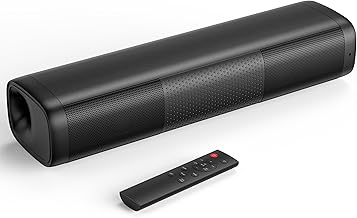
Best for: Buyers who want one compact speaker bar for a TV, computer, or smartphone. The Saiyin is listed at 11.7 inches long, making it a space-conscious option for a small shelf or a screen area with limited room.
The listing specifies 48W peak power and balanced bass and treble. Its connection options include Bluetooth 5.3, optical, and 3.5mm AUX. A dedicated subwoofer output lets buyers connect a powered subwoofer if they want to expand the system with a separate bass component.
Why it stands out: It combines a small footprint with several input choices, so it is more flexible than a speaker designed only for wired computer use. Choose it if you want a soundbar format and may use different audio sources.
Limitation: It is powered by an AC adapter, so it needs access to a power outlet. The listed 48W figure is peak power, not RMS power.
Creative XF1 Compact PC Speakers

Best for: Desktop listeners who want a compact speaker system with advanced audio features named in the listing. The product title specifies 72W RMS, Bluetooth 6.0, Hi-Res Audio, LDAC, AAC, parametric EQ, and a sub-out connection.
Those features make the XF1 a better fit for a buyer comparing more than basic USB-powered speakers. The listing also describes it for computer, bookshelf, and turntable use and includes speaker isolation stands. Buyers can consider the listed Bluetooth codecs and EQ when choosing a system for their preferred sources and adjustments.
Why it stands out: The stated 72W RMS rating and feature set distinguish it from the lower-power computer speakers in this roundup. Choose it if you want a desktop-oriented system with wireless audio and equalization options.
Limitation: The product information provided does not specify the speaker dimensions or explain which connection types are included beyond Bluetooth and sub-out. Confirm the inputs you need before buying.
LENRUE A39PRO USB Computer Speakers

Best for: Buyers who need a straightforward wired speaker for a desktop computer. The product name identifies the A39PRO as a USB-powered computer soundbar with 10W stereo sound and plug-and-play setup.
The single soundbar-style design can suit a desk where a pair of separate speakers would take up more space. The listing also mentions colorful lighting, which may appeal to buyers who want illuminated computer accessories. Its USB-powered format is the key consideration for shoppers seeking a speaker intended for computer use rather than a multi-input TV soundbar.
Why it stands out: It combines a stated 10W stereo output with USB power and a plug-and-play description. Choose it if you want a compact wired option and do not need the Saiyin’s listed optical, Bluetooth, or subwoofer connections.
Limitation: The supplied product information does not detail alternative inputs or explain whether the USB connection also carries audio. Check the current listing for connection requirements before purchase.
FUNLOGY 14W Tilt-Design PC Speaker

Best for: People shopping for compact stereo sound on a desktop, laptop, monitor, or gaming-console setup. The product name specifies 14W stereo output, USB power, a 30-degree tilt design, and a volume dial.
The tilt is a useful design distinction for buyers comparing small desktop speakers: it is a named feature intended to angle the speaker rather than leave it flat. The physical volume dial also provides a direct control listed in the product name. This model is a better match than a Bluetooth-focused speaker if USB power and a desktop-style setup are the priorities.
Why it stands out: Its stated 14W stereo output is higher than the LENRUE model’s listed 10W, while both are positioned as compact computer speakers. Choose the FUNLOGY if its tilt and volume-control features suit your desk.
Limitation: The supplied information does not list Bluetooth or optical inputs. Avoid choosing it on the assumption that it offers wireless or TV-style connections.
PocketTunes Surface-Amplifying Speakers

Best for: Buyers seeking a portable wireless speaker format rather than a fixed desktop soundbar. The product name describes two mini Bluetooth speakers that use surface-amplifying sound, support true wireless stereo, and recharge through USB-C.
The two-speaker package is a different approach from the single-bar models in this guide. Its listed true wireless stereo feature is relevant to buyers who want to use the pair as a stereo setup, while the rechargeable design suits portable use. The surface-amplifying approach is the defining feature to consider when comparing it with conventional computer speakers.
Why it stands out: It is the only product here explicitly presented as a portable two-pack with rechargeable wireless operation. Choose it if portability and the surface-amplifying format matter more than a fixed USB-powered desk setup.
Limitation: The supplied product information does not state output power, battery runtime, or charging time. Check those details if loudness or extended use away from power is essential.
Buying Guide: How To Choose Small Speakers With Big Sound
Which speaker format fits your setup?
Start with where the speaker will sit. A compact soundbar, such as the Saiyin or LENRUE, uses a horizontal format that can fit beneath a screen. Separate desktop speakers may suit listeners who prefer a pair on either side of a monitor, though the supplied product details do not provide dimensions for every model. PocketTunes is described as a portable two-pack rather than a screen-centered soundbar.
Measure the available shelf or desk space before selecting a model. For the Saiyin, the listed dimensions are 11.7 by 3.5 by 2.5 inches. For other products, verify the current listing’s dimensions rather than assuming that “compact” means a specific size.
How should you compare power ratings?
Power figures are useful only when their measurement type is clear. The Saiyin lists 48W peak power, while the Creative XF1 product name specifies 72W RMS. Peak and RMS ratings describe different power measurements, so they should not be treated as directly equivalent figures.
The LENRUE name lists 10W stereo sound, and the FUNLOGY name lists 14W stereo. These figures can help compare the stated output information, but power alone does not establish how loud or clear a speaker will sound in a particular room. Consider the room, listening distance, and product format as well.
What connections do you need?
Match the speaker’s listed inputs to the devices you plan to connect. The Saiyin lists Bluetooth, optical, and 3.5mm AUX, giving it several source options. The Creative XF1 title names Bluetooth and a sub-out connection, but the provided product information does not detail its full input list.
The LENRUE and FUNLOGY models are identified as USB-powered computer speakers. USB power should not be mistaken for proof that USB also carries audio; verify the connection details in the product listing. PocketTunes is described as Bluetooth and USB-C rechargeable. Choose based on both how the speaker receives power and how it receives audio.
Do you want to add a subwoofer?
If deeper bass is a priority, check whether the speaker has a subwoofer output and whether the system requires a separately powered subwoofer. The Saiyin explicitly lists a sub-out for connecting a powered subwoofer. The Creative XF1 title also identifies a sub-out, but the supplied details do not explain its configuration.
Do not assume that a compact speaker includes a subwoofer just because it has a sub-out. A separate component may take more room and require its own power. If you want a simple all-in-one setup, compare models based on their listed features and the available space.
Which features matter for computer use?
For a basic desk setup, prioritize an appropriate connection, accessible volume control, and a footprint that fits near the monitor. The FUNLOGY product name specifically lists a volume dial and 30-degree tilt. The LENRUE is described as plug-and-play and USB-powered. Those details may help buyers who want a simpler computer-oriented setup.
For more audio adjustments, the Creative XF1 lists parametric EQ. For a desk that also serves a TV or mobile device, the Saiyin’s multiple listed connection types may be more useful. Compare features against the devices you actually own instead of paying attention to a specification that will go unused.
What should portable buyers check?
Portable use makes charging and battery information important. PocketTunes is described as rechargeable over USB-C, but the supplied details do not state battery runtime or charging time. Look up those specifications if you need predictable listening away from an outlet.
Also consider whether surface-amplifying sound fits your intended use. The PocketTunes product name identifies this as its sound approach, but the supplied information does not specify how different surfaces affect performance. Buyers who want a conventional desktop or TV speaker may prefer one of the listed wired or soundbar-style products instead.
How can you avoid a mismatched purchase?
Use a short checklist before ordering: confirm the speaker’s dimensions, verify the audio input for your source, distinguish power from audio connections, and check whether any required adapter or separate subwoofer is needed. Do not infer compatibility from a product’s general label, such as “PC speaker” or “TV soundbar.” Check the exact connection details for your device.
Finally, compare the feature you value most rather than treating every specification as equally important. A small soundbar with multiple inputs may be best for a mixed TV-and-computer setup. A USB-powered model may suit a desk with limited space, while a rechargeable two-pack better matches a portable-use priority.
Frequently Asked Questions
Which product is best for a small TV setup?
The Saiyin is the clearest fit among these options because it is a compact soundbar with listed Bluetooth, optical, and 3.5mm AUX connections. Confirm that one of its inputs matches your TV.
Which speakers list the highest power figures?
The Creative XF1 product name lists 72W RMS, while the Saiyin lists 48W peak power. These are different rating types and should not be compared as equivalent measurements.
Are USB-powered speakers always USB-audio speakers?
No. USB power describes how a speaker receives power, but it does not by itself confirm that USB carries audio. Check the product’s connection details before buying.
Can I connect a subwoofer to the Saiyin soundbar?
The Saiyin listing specifies a dedicated sub-out for a powered subwoofer. Check the subwoofer’s requirements and connections to confirm it is suitable for your intended setup.
Which option is designed for portable use?
PocketTunes is described as a two-pack of mini Bluetooth speakers with USB-C recharging and true wireless stereo. The supplied details do not state battery runtime.