
Best Bone Conduction Sound Boxes for On‑The‑Go Audio
Bone conduction sound boxes offer a unique way to hear music by vibrating through surfaces instead of relying on traditional diaphragms. This guide highlights five top options, explains who they’re best for, and helps you choose the right one for travel, outdoor use, or shared listening. Each pick emphasizes portability, surface compatibility, and wireless convenience for a wide range of buyers—from travelers and students to party hosts and DIY audio enthusiasts.
Buyer’s quick-reference summary:
| Product | Best For | Key Benefit | Best Scenario |
|---|---|---|---|
| Anything Speaker | Ultra-portable travel users | Extremely small with bone conduction induction vibration | Impromptu listening on any object |
| vapeonly HumBird | Two‑speaker setups | Very compact with true wireless stereo when paired | Small spaces or desk setups |
| Splenssy Mini/DIY Series | Surface‑based sound experiments | Multiple surfaces yield varied effects | Creative listening surfaces |
| Okjew Bone Conduction Speaker | Surface variety + durability | Suction cup mounting, long life | Bedroom, kitchen, or outdoor use |
| Splenssy BT Mini (Various Colors) | Budget bone conduction with style | Solid performance, micro size | Travel or desk use |
Anything Speaker – Portable Mini Bone Conduction

The Anything Speaker uses bone conduction induction vibration to turn objects into sound sources. This ultra‑compact device is about 1.5 inches and is designed for travel, with true wireless stereo when pairing two units. Best for: solo travelers, students, and anyone who wants a pocketable, surface‑based audio experience. Caution: the louder the surface and larger the hollow space, the louder the sound, so performance varies by object shape.
vapeonly HumBird Bone Conduction Mini Speaker

The HumBird is described as the world’s smallest bone conduction speaker. It excels when used in pairs for a true wireless stereo experience, delivering up to 115 dB with deep bass. Best for: compact setups, desk listening, and mini‑pair configurations that maximize volume in small rooms. Limitation: a single unit may not provide as rich a space feel as a two‑unit setup.
Splenssy Wirelessly BT Mini Speaker Bone Conduction

The Splenssy bone conduction mini speaker emphasizes a DIY sound experience by letting you place the device on various surfaces such as plastics, glass, or wood to alter the sound. It supports BT 5.0 and True Wireless Stereo. Best for: experimental listeners who enjoy changing the sonic character by surface choice. Caution: effectiveness depends on surface quality and resonance; flat, smooth surfaces yield more consistent results.
Okjew Bone Conduction Speaker with Suction Cup
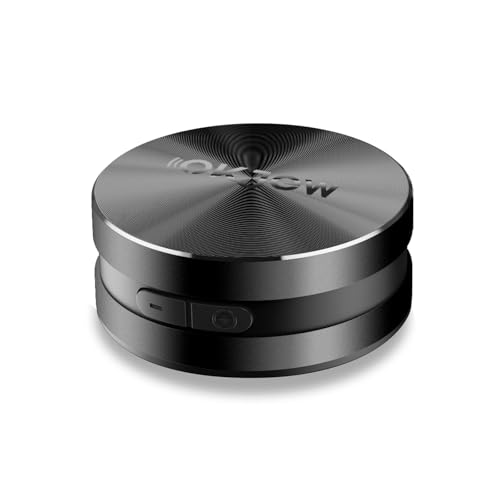
Okjew’s model combines bone conduction with a suction cup for mounting on glass, metal, wood, or cardboard. It emphasizes portability, a premium look, and a Type‑C charging option with a typical playback window of 90–120 minutes per charge. Best for: multitaskers who want hands‑free setup around the home or during outdoor activities. Limitation: volume can drop when held in the hand since the vibrating medium is needed for amplification.
Splenssy BT Mini Speaker – Colors

This Splenssy model follows the same bone conduction principle with BT 5.0 and True Wireless Stereo. It emphasizes compact size, up to 115 dB output, and rich bass. Best for: travelers who want a stylish, affordable option with strong portability. Caution: performance depends on surface choice and the device may require stable mounting to avoid muffled sound.
Buying Guide
What should you look for in a bone conduction speaker?
- Surface compatibility: Surface material and size influence loudness and tone. Large hollow objects typically yield louder sound.
- Wireless features: Bluetooth version (5.0 or newer) and the ability to pair two units for stereo can dramatically affect your listening experience.
- Power and battery life: Look for devices with longer playtimes per charge if you plan to use them outdoors or during travel.
- Mounting options: Suction cups and flat surfaces are common; choose a device with reliable mounting for stability.
- Portability: Consider dimensions, weight, and the form factor to ensure it fits your travel needs.
How to compare these models effectively?
- Best for solo travel: ultra‑compact units like the Anything Speaker provide portability, but you may miss bass depth in very small objects.
- Best for small groups: two‑unit setups (HumBird or Splenssy variants) offer stereo performance without bulky gear.
- Best for surface experiments: Splenssy DIY models invite experimentation with different objects for varied acoustics.
- Best budget option: Splenssy color variants offer affordable options with solid performance for general listening.
Frequently Asked Questions
- How does bone conduction differ from regular speakers?
Bone conduction transfers sound through vibrations in objects or surfaces, bypassing the traditional diaphragm-based speaker design. - Can I use these on any surface?
Performance varies by material and hollow space; smooth, larger, and hollow objects tend to produce louder sound. - Is two‑unit stereo always better?
Yes, two units can provide true wireless stereo and higher perceived volume, especially in small spaces. - What is the typical battery life for these devices?
Battery life ranges by model; many offer 90–120 minutes to several hours depending on usage and volume. - Do these require special apps to pair?
Most use standard Bluetooth pairing and do not require dedicated apps, though some features may be enhanced with companion software. - Are bone conduction devices durable for travel?
Portability and mounting options make many models travel-friendly, but care should be taken with mounting surfaces and moisture exposure.