
The best bridge for an archtop guitar depends on the instrument’s existing footprint, desired height adjustment, and preferred saddle design. The Alnicov rosewood bridge is best for straightforward thumbwheel adjustment, while the Alnicov bone-saddle model adds a compensated saddle. The Swhmc bridge offers listed dimensions and a compensated top, and the MUSICAL STRING ebony model suits buyers seeking an ebony bridge. Check measurements and fit before replacing any bridge.
| Bridge | Best For | Listed Standout |
|---|---|---|
| Alnicov Rosewood Adjustable | Simple height changes | Nickel-plated posts and thumbwheels |
| Swhmc Adjustable Rosewood | Buyers comparing dimensions | 120 × 15 mm size |
| Alnicov Bone Saddle | Saddle material and compensation | Inlaid bone saddle |
| MUSICAL STRING Ebony | Ebony bridge preference | Natural ebony wood |
| Alnicov Roller Saddles | Roller-style saddle design | Adjustable roller saddles |
Alnicov Rosewood Adjustable Archtop Bridge

This six-string Alnicov bridge combines a rosewood body with height-adjustment hardware. Its nickel-plated posts and thumbwheels are designed to turn for height adjustment, making it a practical option when the player needs to change string action without replacing the whole bridge.
Best for: Archtop owners who want a conventional rosewood bridge with adjustable height. It is also positioned as a replacement for a broken, dirty, or old archtop jazz guitar bridge. The lightweight construction may appeal to buyers looking for a bridge described as lightweight and easy to fit.
Why it was selected: It provides clear, useful features for a common replacement need: a rosewood bridge base and adjustable thumbwheels. Compared with a fixed design, height adjustment offers a way to alter action at the bridge.
Check before buying: The supplied product details do not state the bridge’s overall dimensions, string spacing, or post spacing. Measure the existing bridge and confirm that its footprint and setup requirements match before ordering.
Swhmc Adjustable Rosewood Bridge
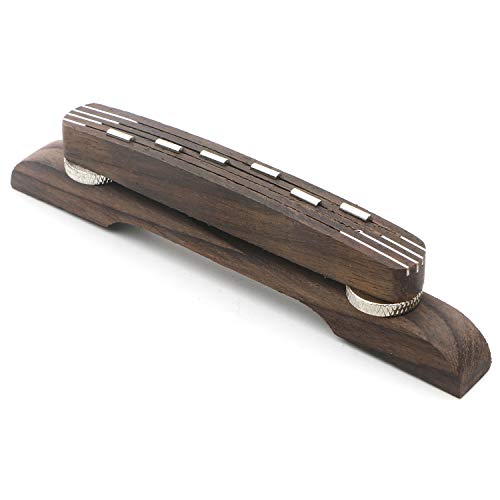
The Swhmc is a six-string rosewood bridge with a listed size of 120 × 15 mm, or approximately 4.72 × 0.59 inches. Its height can be adjusted with two knobs. The product details also describe a smooth, polished surface, flat bottom, and compensated bridge top.
Best for: Buyers who want a bridge with stated dimensions to compare against their current part. It is a useful candidate when height adjustment and a compensated top are priorities. The two-knob adjustment design makes the action-setting method easy to identify from the product description.
Why it was selected: Clear measurements help narrow down fit, while the adjustable height gives the player a means to change string action. The compensated top is another relevant feature for players assessing bridge designs for intonation needs.
Check before buying: The listed measurements do not specify every fit-critical detail, such as string spacing or the full adjustment range. Confirm those measurements against the guitar and compare the bridge’s height requirements with the existing setup.
Alnicov Rosewood Bridge With Bone Saddle

This Alnicov archtop bridge has a rosewood body and a lightweight inlaid solid bone saddle. The product description says the saddle brightens tone and resists string wear. It also identifies the saddle as arched and compensated for a wound G string. Nickel-plated posts and knurled thumbscrews provide the adjustment hardware.
Best for: Players seeking an adjustable six-string jazz guitar replacement with a bone saddle and a specified compensation detail. Choose this model if the saddle material and wound-G compensation are important considerations alongside height adjustment.
Why it was selected: It combines several clearly stated features—rosewood, bone, compensation, and adjustable nickel-plated hardware—in one bridge. That makes it a distinct alternative to bridges whose descriptions focus mainly on the wood or dimensions.
Check before buying: The product information does not provide overall dimensions, string spacing, or a stated height range. Verify the bridge’s size and saddle layout against the instrument; the wound-G compensation detail may not suit every string setup.
MUSICAL STRING Natural Ebony Bridge

This MUSICAL STRING bridge is described as a six-string acoustic guitar bridge made from 100% natural ebony wood. Its product name identifies golden hardware, while the feature details emphasize the ebony material. It is a straightforward option for a buyer who prefers ebony over rosewood.
Best for: Archtop owners who specifically want a natural ebony bridge and are replacing an existing bridge with a compatible design. Its material-focused description makes it easy to compare with the rosewood models in this list.
Why it was selected: Wood choice is a common part of bridge selection, and this model gives buyers an ebony alternative among mostly rosewood options. It is relevant for shoppers who already know they want this material and can verify the physical fit independently.
Check before buying: The provided features do not list dimensions, adjustment range, saddle material, or string spacing. Do not assume that the bridge fits a particular guitar based on the word “archtop” alone; compare measurements and bridge style with the current part.
Alnicov Rosewood Bridge With Roller Saddles

This Alnicov bridge uses a dense rosewood body and chrome-plated roller saddles. The product description says the saddles work smoothly and are adjustable for harmonics. It is presented as a replacement for an old, dingy, or dirty guitar bridge.
Best for: Players looking specifically for a roller-saddle design rather than a conventional fixed saddle. The adjustable saddles offer a different approach to setting harmonics, so this model may be worth comparing when intonation adjustment is a priority.
Why it was selected: It adds a distinct saddle style to the comparison. Buyers can weigh roller saddles against the bone saddle and compensated-top options above rather than comparing only wood types.
Check before buying: The supplied details do not give dimensions, string spacing, or the full adjustment range. Confirm the bridge’s fit and ensure its roller layout is suitable for the guitar before replacing an existing part.
Buying Guide: How to Choose an Archtop Guitar Bridge
Will the bridge fit the guitar?
Start by measuring the existing bridge and recording its length, width, height, string spacing, and post or thumbwheel spacing where applicable. Compare those measurements with the replacement’s published specifications. A bridge described as suitable for an archtop or jazz guitar is not automatically a match for every instrument.
Also check the way the original bridge sits on the guitar. Some bridge designs rely on a particular base shape or contact area. The bridge should sit securely in the intended position, and its saddle should align correctly with the strings. When key measurements are unavailable, ask the seller for them or consult a repair technician before ordering.
Do you need height adjustment?
An adjustable bridge uses posts, knobs, or thumbwheels to change its height. This can help when string action needs adjustment, but the available range matters. Check whether the replacement can reach the height required by the guitar without leaving too little or too much adjustment room.
Fixed or simpler designs may suit a direct replacement when the existing setup already works and the replacement matches the old part. Choose an adjustable model when you need more control over action, but do not assume adjustment alone will correct every setup issue. Bridge placement, saddle shape, and the guitar’s overall setup also affect results.
Which saddle design should you compare?
Consider whether the bridge has a bone saddle, a compensated top, or roller saddles. The Alnicov bone-saddle model lists compensation for a wound G string. The Swhmc model describes a compensated bridge top, while the roller-saddle Alnicov uses adjustable rollers for harmonics. These are different features, so compare them with your string setup and intonation requirements.
Material descriptions can help narrow a choice, but they do not replace fit checks. The products here include rosewood and ebony options. Choose based on your preference and the guitar’s requirements, and avoid assuming that a particular wood or saddle material will produce a guaranteed tonal result.
What measurements should you verify?
- Bridge footprint: Compare the length and width of the base with the current bridge.
- Height and adjustment range: Check both the bridge’s starting height and how far its hardware can raise or lower it.
- String spacing: Confirm that the strings will line up correctly across the fingerboard.
- Saddle and compensation: Check the saddle profile and whether its compensation suits the guitar’s strings and setup.
- Hardware: Compare the posts, thumbwheels, and adjustment method with the bridge already on the instrument.
When should you ask a repair professional?
Seek help from a guitar technician if the measurements are unclear, the bridge does not sit evenly, or the guitar needs substantial action or intonation work. An incorrectly fitted bridge can make setup difficult. A technician can also help determine whether a new bridge is appropriate or whether the existing bridge can be adjusted.
Frequently Asked Questions
Can any archtop bridge fit any archtop guitar?
No. Bridge dimensions, string spacing, height, base shape, and adjustment hardware can vary. Compare the replacement with the existing bridge and the guitar’s setup before buying.
What is the advantage of an adjustable bridge?
An adjustable bridge allows height changes through posts, knobs, or thumbwheels. This can help set string action, provided the bridge’s adjustment range suits the guitar.
What does a compensated bridge saddle do?
A compensated saddle uses a shaped contact surface intended to account for intonation differences between strings. The appropriate compensation depends on the guitar and its string setup.
Is rosewood or ebony the better bridge material?
Neither is automatically best for every guitar. The listed options provide both materials, but fit, bridge design, and the player’s preferences should guide the choice.
Should I replace a bridge that looks worn?
Replacement may be appropriate if the bridge is damaged or no longer works for the instrument, but appearance alone does not confirm that it needs replacing. Check its condition and fit, and consult a repair professional if you are unsure.