
Best Budget Hi-Fi Speakers for Great Sound on a Budget
Answering the search intent for budget hi-fi speakers, this guide highlights solid-value options that deliver clear vocals, good bass, and respectful imaging without breaking the bank. These picks appeal to: casual music lovers who want fuller sound without a large floor-standing system; home theater enthusiasts seeking affordable stereo or 2.0–2.1 setups; and entry-level audiophiles who want reliable performance with straightforward setup. Below, five carefully chosen models are compared on purpose, strengths, and realistic limitations. A quick buying table helps you compare key points at a glance.
| Product | Best For | Key Strength | Limitations |
|---|---|---|---|
| Elimavi Floor Standing Tower Speakers | Living rooms needing room-filling bass | Three 6.5″ woofers + 1″ tweeter | Size and weight may require dedicated space |
| Pyle 5.25” Bookshelf Speakers | Desk or small shelf setups | Compact 2-way design with silk dome tweeter | Wiring quality can vary; room size matters |
| Dayton Audio Classic B40 | Smaller spaces with balanced sound | 4″ woofer, true hi-fi 2-way design | Limited low-end compared to larger models |
| Fosi SP601 | Home theater or stereo pairs with detailed highs | 6.5″ woofers + 1.5″ silk dome tweeter | Passive design—requires proper amp pairing |
| NEUMI BS5 | Budget-conscious music lovers | 5″ woofer, simple passive design | Requires external amplifier |
Elimavi Floor Standing Tower Speakers Pair
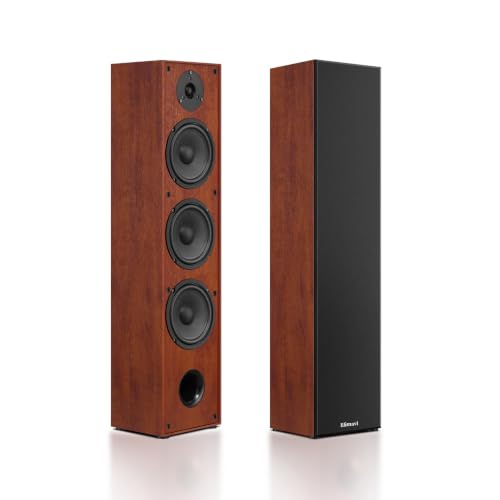
Best for: Those needing room-filling sound with strong bass. Why: Each tower packs three 6.5″ woofers plus a 1″ high-frequency driver, delivering fuller bass and clear highs. The two-way crossover optimizes bass to the woofers while preserving vocal clarity. The MDF cabinet minimizes resonance for tighter bass and more accurate imaging. Caution: These are sizeable floor-standing units, requiring ample floor space and sturdy support.
Pyle 5.25” Wired Bookshelf Speakers

Best for: Desktop setups and compact rooms. Why: 50W RMS per speaker with a 65Hz–20kHz range and a 0.75″ silk-dome tweeter deliver a full-range sound from a small footprint. The 12dB crossover helps maintain clean highs and lows in a compact design. Caution: Performance is most satisfying in smaller rooms; in larger spaces, they may require repositioning or additional speakers for coverage.
Dayton Audio Classic B40 Bookshelf Pair

Best for: Small-to-medium spaces that seek balanced, accurate sound. Why: The 4″ woofer with a 1″ silk dome tweeter provided by a dedicated crossover offers true Hi-Fi design with controlled low-end via sealed cabinet. Caution: Bass response is more restrained due to cabinet size; pairing with a subwoofer can help extend the low end if needed.
ARRAROWN ZK-1002T Amplifier Board

Best for: DIY projects or powering compact speakers with a robust 100W+100W class output. Why: Bluetooth 5.0, USB and AUX inputs, and independent treble/bass controls offer flexible integration with budget speaker sets. Caution: It is an amplifier board, not a full speaker system, and needs proper enclosure or pairing with compatible speakers.
Fosi Audio SP601 Passive Bookshelf Speakers

Best for: Hi-Fi listening rooms that want detailed imaging. Why: 4Ω 160W per pair with 6.5″ HybridCone woofers and a 1.5″ silk dome tweeter produce deep bass and smooth highs. The waveguide helps dispersion for a wider listening field. Caution: Being passive, performance depends on a suitable amplifier; ensure compatibility with your receiver or amp.
NEUMI BS5 Passive Bookshelf Speakers
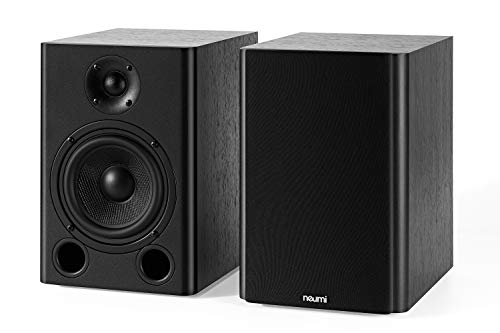
Best for: Budget-conscious listeners who want a simple two-speaker setup. Why: 5″ fiberglass woofer with passive design offers straightforward amplification with decent bass and midrange. Caution: Requires an external amplifier or receiver to function; placement and room acoustics will influence perceived bass.
Saiyin 5.0 Home Theater System

Best for: A complete budget surround option for small home theaters. Why: Four full-range speakers plus a dedicated center improve dialogue and spatial cues. The system emphasizes surround sound consistency and flexible placement. Caution: System performance depends on proper speaker calibration and amplifier compatibility; not a standalone active system.
Buying Guide: Key Purchase Considerations
What room size should influence my choice?
Smaller rooms benefit from bookshelf or compact floor-standing models that minimize bass boom, while larger living spaces can benefit from taller floor-standing designs or a multi-speaker setup with a subwoofer for extended low-end.
What is the role of a subwoofer with budget hi-fi speakers?
A subwoofer adds depth to bass-heavy tracks and film soundtracks. If the main speakers are compact, consider a separate sub to avoid overworking the woofers and to achieve a more balanced soundstage.
Is passive or powered better for budget setups?
Powered speakers include built-in amplification, simplifying setup but reducing flexibility. Passive speakers require an amplifier, which can be advantageous if you already own an AV receiver or want to mix and match components.
How important are crossover and tweeter quality?
Crossovers ensure smooth transitions between drivers, reducing distortion. A quality silk dome tweeter typically provides clearer highs with less harshness, which is beneficial for long listening sessions.
What about room acoustics?
Placement matters. Position speakers at ear level, avoid walls that induce reflections, and consider soft furnishings to soften early reflections. Simple room corrections can dramatically improve perceived clarity.
FAQ
- What is a good budget hi-fi speaker system for a small living room? A compact bookshelf pair or a small floor-standing pair with a subwoofer or a receiver-based setup can provide balanced sound without overwhelming space.
- Do I need an amplifier for budget passive speakers? Yes. Passive speakers require a separate amplifier or receiver to power them.
- Are 2-way bookshelf speakers enough for home theater? They can be, especially in smaller rooms or when paired with a center channel and a subwoofer for full-range sound.
- Can I upgrade later with better cables? Upgrades may offer marginal gains; focus on speaker placement and matching with a suitable amplifier first.
- Which is better for music or movies? For music, focus on accurate midrange and imaging. For movies, a balanced pair with a capable sub or surround setup improves dialogue and bass.
- Do budget speakers degrade quickly? Reputable brands with proper care can maintain performance, but room acoustics and listening habits influence longevity more than price.