
A DC-to-AC car adapter, usually called a power inverter, converts a vehicle’s 12-volt DC power into household-style AC power. The PiSFAU 200W inverter is best for drivers who want two AC outlets plus USB-A and USB-C charging, while the BESTEK 300W models are better for buyers prioritizing higher stated inverter wattage. The two AC-to-DC converters listed below work in the opposite direction, so they are included to help prevent a common buying mistake—not as substitutes for an inverter.
| Product | Conversion Direction | Best For |
|---|---|---|
| PiSFAU 200W Car Power Inverter | 12V DC to 110V AC | Two AC outlets and USB-A/C |
| BESTEK 300W Aluminum-Housing Inverter | 12–17V DC to 110V AC | 300W output and dual USB |
| BESTEK 300W USB-C Inverter | 12V DC to 110V AC | AC outlets and USB-C charging |
| ALITOVE 120W Converter | 110V AC to 12V DC | Using a 12V car device at home |
| 24W Cigarette-Lighter Converter | 110–240V AC to 12V DC | Low-power 12V devices at home |
PiSFAU 200W Car Power Inverter
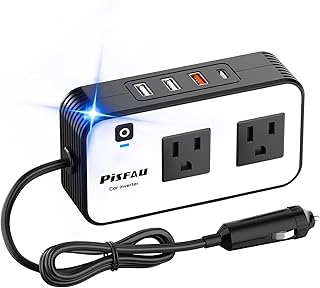
The PiSFAU is a DC-to-AC car inverter described as a 200W model. It plugs into a vehicle’s 12V cigarette-lighter socket and provides two AC outlets, along with USB-A and USB-C ports. The listing specifies 4.8A and 24W for the USB charging output.
Best for: Drivers who want to power or charge more than one type of device from a single car accessory. Its combination of two AC outlets and USB ports makes it a practical option for road trips and camping when devices use different connections.
Why it stands out: It provides more than one AC outlet, which can be useful when a single plug is not enough. Its stated 200W rating is lower than the two 300W BESTEK options, so compare device requirements before choosing.
Consideration: The listing identifies a 200W inverter. Do not assume it can run an appliance that needs more power; check the appliance’s input requirements and the inverter’s operating instructions.
BESTEK 300W Aluminum-Housing Inverter

This BESTEK inverter converts vehicle DC power into 110V AC and is listed for a 12–17V DC input range. Its product name specifies 300W output, an aluminum housing, and two USB charging ports with a combined stated output of 4.8A.
Best for: Buyers looking for a 300W-rated car inverter with two AC outlets and dual USB charging. It may suit road-trip use when the devices fall within the inverter’s stated power and input requirements.
Why it was selected: Its 300W rating is higher than the PiSFAU model’s stated 200W, and its product description clearly identifies both AC outlets and USB ports. That makes it a useful comparison for shoppers choosing between inverter output and charging-port features.
Consideration: The listing specifies a 12–17V DC input range. Confirm that your vehicle’s power source and intended devices meet the product’s requirements. The product name does not specify USB-C output.
BESTEK 300W USB-C Car Inverter

This BESTEK model is listed as a 300W DC-to-AC car power inverter with two AC outlets. Its product name also specifies a 30W USB-C port and an 18W USB-A port, which provide distinct charging options alongside the household-style outlets.
Best for: Drivers who want a 300W inverter and specifically need USB-C and USB-A charging ports. The stated port ratings make it easier to compare with models that list USB output differently.
Why it was selected: It combines two AC outlets with named USB-C and USB-A outputs. Choose it if those port types are more important to your setup than a general dual-USB specification.
Consideration: The listed 300W rating describes the inverter, not a guarantee that every appliance will work. Check the power draw and plug type of each device before use, and follow the product’s instructions.
ALITOVE 120W AC-to-DC Converter

This product converts household 110V AC power into 12V DC power. The listing describes a 10A, 120W supply with a car cigarette-lighter socket, intended for using certain car devices from a wall outlet. Mentioned examples include a car vacuum cleaner, inflator, refrigerator, and cooler.
Best for: Someone who wants to operate a compatible 12V car accessory at home. It is not the right choice for powering an AC appliance from a vehicle, because its conversion direction is the reverse of a car inverter.
Why it is included: “Car adapter DC to AC” searches can return products with confusingly similar descriptions. This converter’s listed 110V-to-12V direction helps illustrate what to check before buying.
Consideration: Its 120W maximum stated output may be insufficient for a device that requires more power. Verify the car device’s voltage, current, connector, and power needs before connecting it.
24W AC-to-DC Cigarette-Lighter Converter

This adapter converts 110–240V AC input into 12V DC output through a car cigarette-lighter socket. The product name lists a 2A, 24W rating. Its function is to provide a 12V car-style power connection from an AC outlet.
Best for: Buyers who need a low-power 12V car socket for a compatible device while near a wall outlet. It is not a DC-to-AC inverter and should not be selected to run household AC equipment from a vehicle.
Why it is included: This is another example of the reverse conversion direction. Comparing the input and output labels can help separate a wall-powered adapter from a vehicle-powered inverter.
Consideration: Its stated 24W output is substantially lower than the 120W ALITOVE converter. Avoid using it with a device whose power requirement exceeds its listed output.
Buying Guide: How To Choose A Car DC-To-AC Adapter
Do you need an inverter or an AC-to-DC converter?
For a car adapter that changes vehicle power into household-style AC, look for a power inverter labeled with an input such as 12V DC and an output such as 110V AC. A converter labeled 110V AC to 12V DC does the opposite: it lets a compatible car device use power from a wall outlet. Check the input and output directions on the product listing before comparing features.
How much inverter wattage do your devices need?
Check each device’s power requirements before selecting an inverter. The products in this comparison list ratings of 200W or 300W for the inverters. Those figures are not interchangeable with USB port output ratings, and a device that exceeds an inverter’s capacity may not operate properly. If several devices will be used at once, account for their combined requirements and follow the manufacturer’s instructions.
Which outlets and charging ports matter?
Choose an inverter based on the plugs your devices use. The PiSFAU and the two BESTEK inverters list dual AC outlets. The PiSFAU lists USB-A and USB-C charging with 4.8A and 24W specified in its name; one BESTEK lists dual USB ports at 4.8A, while the other specifies 30W USB-C and 18W USB-A. Compare the actual port types and stated outputs rather than assuming all USB ports provide the same performance.
What should you check about vehicle power?
Confirm the inverter’s stated DC input range and make sure it matches the intended vehicle power source. One listed BESTEK model specifies a 12–17V input range, while the PiSFAU and other BESTEK product names identify 12V vehicle use. Check the instructions for any vehicle or socket limitations, and do not exceed the device’s stated power requirements.
When is a wall-powered 12V converter the better choice?
Choose an AC-to-DC converter only when your goal is to run a compatible 12V car accessory from household AC power. The ALITOVE model lists 120W output, while the smaller converter lists 24W. Match the converter’s output to the device’s voltage and power needs. These products do not replace an inverter for powering AC equipment from a car.
Frequently Asked Questions
What does a car DC-to-AC adapter do?
A car DC-to-AC adapter, or power inverter, takes DC power from a vehicle and converts it into AC power for compatible devices. Check the inverter’s stated output and the device’s power requirements before use.
Is an AC-to-DC car adapter the same as a car inverter?
No. An AC-to-DC adapter changes household AC power into 12V DC for a compatible car device. A car inverter changes vehicle DC power into AC. The direction of conversion determines which product you need.
Can a 300W inverter power any 300W appliance?
Not necessarily. A 300W rating is a limit to compare against the device’s requirements, not a promise of compatibility with every appliance. Check the appliance’s power needs, plug type, and the inverter’s instructions before connecting it.
What is the difference between AC outlets and USB ports on an inverter?
AC outlets are for compatible devices with household-style plugs. USB-A and USB-C ports are for devices that charge through those USB connections. The listed USB output may differ between products, so compare the port type and stated rating.
Can I use a 12V car accessory with a wall outlet?
Yes, if the accessory is compatible with an AC-to-DC converter that provides the required 12V output and enough power. The ALITOVE and 24W products listed above are examples with different stated output limits. Verify compatibility before connecting a device.