
The best car adapter outlet converter depends on which direction you need to convert power. For using household-style AC devices in a vehicle, the PiSFAU 150W is best for modest loads, while the 200W PiSFAU and BESTEK 300W offer higher stated output. The 400W model lists multiple USB charging options. For powering a 12V car accessory from a household outlet, the AC-to-DC adapter is the relevant choice. Check your device’s power requirements before selecting any converter.
| Product | Best suited for | Stated output or feature |
|---|---|---|
| PiSFAU 150W Inverter | Light-duty vehicle charging | 150W continuous, 300W peak |
| PiSFAU 200W Inverter | AC and USB charging options | 200W; dual AC outlets |
| AC-to-DC Converter | Using a 12V car accessory indoors | 110–240V AC to 12V DC |
| BESTEK 300W Inverter | Higher stated inverter capacity | 300W; dual USB ports |
| 400W Car Inverter | Multiple outlet and USB connections | 400W; dual AC outlets |
PiSFAU 150W Car Power Inverter
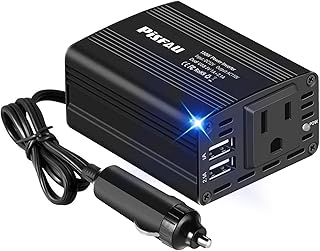
This PiSFAU converter changes 12V DC vehicle power into 110V AC power. Its listed output is 150 watts continuous and 300 watts peak. It also has two AC outlets and two USB charging ports, with a stated combined USB output specification of 3.1A.
Best for: Drivers who need a compact, lower-output inverter for compatible electronics or small devices. It is a practical pick when 150W continuous capacity is enough and both AC and USB connections are useful.
The listed protection features include a smart chip and built-in fuse. The product description says the inverter can shut off output and display a red indicator when it detects a fault.
Limitation: Its 150W continuous rating is lower than the 200W, 300W, and 400W options here. Check the device’s running and startup power needs; do not rely on the peak figure as continuous capacity.
PiSFAU 200W Dual-Outlet Inverter

This 12V DC-to-110V AC car inverter is listed with 200 watts of output and two AC outlets. Its product name also specifies 4.8A USB-A/C charging and 24W USB output. The multiple connection types can help when a trip involves AC-powered equipment alongside USB-charged devices.
Best for: Buyers who want a middle-ground inverter with two AC outlets and USB-A/C charging. Choose it if its stated 200W output meets the combined requirements of the devices you intend to use.
Its vehicle cigarette-lighter plug format is described as portable and intended for road trips, camping, and vehicle use. The product name provides the main available specifications; confirm the complete product details and operating instructions before use.
Limitation: The supplied product information does not state a peak-watt rating or protection details. Do not assume either specification; verify them with the manufacturer if they matter for your setup.
AC-to-DC 12V Socket Adapter

Unlike the other converters in this list, this adapter changes household AC power into 12V DC. The listing identifies an input range of 110–240V AC and a 12V car cigarette-lighter socket, with a stated 2A, 24W rating.
Best for: Someone who wants to power a compatible 12V car accessory from a household outlet. This is the appropriate direction of conversion when the power source is a wall outlet and the accessory expects a vehicle-style 12V socket.
Before connecting an accessory, compare its required voltage, current, and connector type with the adapter’s specifications. The 2A and 24W ratings are important limits, not just general descriptions.
Limitation: It does not convert a vehicle’s 12V DC supply into household AC. Avoid choosing it for powering a laptop or other device that requires a 110V AC outlet.
BESTEK 300W Vehicle Inverter

The BESTEK inverter accepts a stated DC input range of 12–17V and provides 110V AC output. Its listed inverter capacity is 300W, and it includes dual USB charging ports rated at 4.8A. The listing also identifies an aluminum housing.
Best for: Drivers looking for a higher stated inverter capacity than the 150W and 200W models, plus USB charging for smaller devices. It is a useful comparison point for buyers whose intended devices require more output than a lower-capacity option provides.
Its stated 300W output is a key selection figure, but buyers should still check the power draw of every connected device. A vehicle plug and inverter must also be used within their stated operating limits.
Limitation: The supplied details do not specify a peak rating or list particular protection features. Confirm those details if your device has a high startup draw or requires a specific safety feature.
400W Car Inverter With USB-C

This vehicle inverter is listed for 12V DC-to-110V AC conversion and has a stated 400W rating. Its product name specifies two AC outlets and USB ports, including a 30W PD USB-C port, a 15W USB-C port, and 15W USB-A/C ports.
Best for: Buyers who need multiple connection options and want the highest stated wattage among these five products. The AC outlets and several USB charging options can suit a vehicle setup with different kinds of devices, provided their combined power needs stay within the product’s limits.
Use the individual port specifications to match USB devices with an appropriate connection. For AC equipment, check its wattage separately and consider whether it has a startup demand beyond its normal operating draw.
Limitation: The provided details do not clarify whether 400W is continuous or peak output. Confirm the rating type and the vehicle plug’s operating requirements before relying on the full figure.
Buying Guide: How to Choose a Car Adapter Outlet Converter
Do you need DC-to-AC or AC-to-DC conversion?
Start by identifying the power source and the device. A car inverter takes a vehicle’s 12V DC power and produces household-style AC output. That is the type to consider when you want to connect compatible AC equipment in a vehicle. The PiSFAU and BESTEK inverters in this list are examples of this direction.
An AC-to-DC adapter works in the opposite direction. It takes power from a household AC outlet and supplies 12V DC through a car-style socket. The 2A, 24W adapter is designed for that use, not for making a car outlet available from a vehicle battery.
How much inverter output do your devices need?
Check the wattage requirements shown on each device or its power supply. For an inverter, consider both normal running power and any higher startup demand. If you plan to connect multiple devices at once, add their requirements and compare the total with the converter’s applicable output rating.
The products here list 150W, 200W, 300W, and 400W ratings, but the supplied details do not identify every rating as continuous or peak. The 150W PiSFAU listing explicitly states 150W continuous and 300W peak. For other models, verify the rating type instead of assuming the largest number is available continuously.
Which outlet and USB connections do you need?
Choose an inverter based on the actual plugs used by your devices. AC outlets suit devices with AC power plugs, while USB ports serve compatible USB-powered equipment. Port count alone does not establish how much power every connected device can receive, so check the listed output for the specific port and the combined limits, if provided.
The 200W PiSFAU lists dual AC outlets and USB-A/C charging. The 400W model lists dual AC outlets and multiple USB port ratings, including a 30W PD USB-C port. The BESTEK has dual USB ports, and the 150W PiSFAU lists two USB ports.
What should you check before using a vehicle plug inverter?
Confirm the converter’s input requirements and follow the product instructions. The supplied listings describe these inverters for 12V vehicle use, but do not provide complete information about every vehicle’s outlet limits. Check the vehicle manual and the inverter specifications to make sure the intended load is appropriate.
Do not connect a device just because its plug fits. Compare voltage, wattage, current, and any special power requirements. Keep total connected loads within the converter’s stated limits, and stop using a unit if it indicates a fault or behaves unexpectedly.
When is an AC-to-DC socket adapter the right choice?
Select an AC-to-DC socket adapter when you have a compatible 12V car accessory and want to operate it from a household outlet. Compare the accessory’s current draw with the adapter’s stated 2A, 24W rating. If the accessory needs more power, has a different voltage requirement, or uses a different connector, this adapter may not be suitable.
Frequently Asked Questions
Can a car inverter power a household AC device?
A car inverter converts vehicle DC power into AC output. A particular device can be used only if its voltage and power requirements are within the inverter’s specifications and the vehicle setup supports the load.
Is an AC-to-DC converter the same as a car inverter?
No. A car inverter changes DC power into AC power. An AC-to-DC adapter changes household AC power into DC output, such as the 12V car-style socket specified for the adapter listed here.
Can I connect several devices to one inverter?
Only if their combined power requirements stay within the inverter’s limits and the unit provides the required connections. Check the specifications for both total output and individual ports before connecting devices.
Does a 400W rating mean the inverter always supplies 400W?
Not necessarily. The supplied information for the 400W model does not say whether that figure is continuous or peak output. Verify the rating type in the product specifications before selecting it for a particular load.
What does a 2A, 24W rating mean for a 12V adapter?
It identifies the adapter’s stated current and power limits. The connected 12V accessory should not require more than the adapter can provide, and its connector and voltage must also match.