
A car power inverter is the device you need to turn a vehicle’s 12-volt power into household-style AC power for compatible electronics. The PiSFAU 200W model is best for buyers seeking a midrange inverter, while the 300W BESTEK and DrimMek options suit shoppers who want higher stated output. The 150W PiSFAU and FOVAL models are better for lighter charging needs. Compare the output rating and ports with your devices before choosing.
| Product | Best For | Stated Output |
|---|---|---|
| PiSFAU 200W | Everyday travel charging | 200W in product name |
| PiSFAU 150W | Basic AC and USB charging | 150W continuous; 300W peak |
| FOVAL 150W | Compact 150W option | 150W in product name |
| DrimMek 300W | Multiple ports and devices | 300W in product name |
| BESTEK 300W | Higher continuous output | 300W continuous; 700W instantaneous |
PiSFAU 200W Car Power Inverter
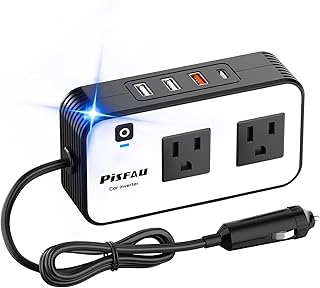
Best for: Drivers who want a midrange 200W-class car inverter for powering compatible devices from a vehicle outlet. The product name identifies it as a 12V DC to 110V AC adapter, making it relevant to shoppers looking to plug an AC device into a car power source.
Why it was selected: Its stated 200W output places it between the listed 150W and 300W choices. That middle position may suit buyers who want more stated capacity than a 150W model without immediately choosing one of the 300W products.
Limitation: The supplied product details do not specify continuous versus peak output, port count, or protective features. Check the listing and the power requirements of your device before relying on this model.
PiSFAU 150W Power Inverter
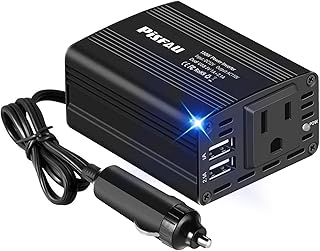
Best for: Travelers who need a modest amount of AC power alongside USB charging. This model provides 150W of continuous DC-to-AC power and 300W peak power, according to the supplied product features.
Why it was selected: It has one or more 110V AC outlets for larger devices such as laptops and tablets, plus two USB charging ports for USB-compatible electronics. The listed examples also include small electronics and devices such as game consoles, lights, and tablets; actual suitability depends on each device’s power draw.
The inverter includes a smart chip and built-in fuse protection. Its description says it can automatically stop output and show a red indicator when it detects a fault.
Limitation: The 150W continuous rating is the key ceiling. Avoid this choice if the combined load of the devices you plan to connect exceeds that rating.
FOVAL 150W Car Power Inverter

Best for: Buyers comparing 150W car inverters who want a model identified as a 12V DC-to-110V AC converter with dual USB charging. The product name also describes it as having a 3.1A dual USB car charger.
Why it was selected: It addresses the core need of converting vehicle power to an AC outlet while also providing USB charging in the same adapter. Its 150W designation makes it a lower-output alternative to the two 300W options in this list.
Limitation: The provided feature details do not state its continuous and peak output ratings or describe its protection features. Confirm those specifications on the product listing, especially if you plan to power equipment with a substantial or variable load.
DrimMek 300W Car Power Inverter

Best for: Drivers who want multiple AC and USB connections for compatible devices on trips, while camping, or for emergency use. The product description specifies two AC outlets, two USB-C ports rated at 24W and 65W, and two 24W USB-A ports.
Why it was selected: Its multi-port layout is the most detailed among the listed products and is intended to allow several devices to charge at once. The listing describes the inverter as a 300W adapter for 12V vehicles and mentions overload, short-circuit, overheating, and low-voltage protection. It also describes a compact design for storage in a glove box or center console.
Limitation: The product name states 300W, but the supplied details do not clarify whether that figure is continuous or peak output. Check the full specification and account for the total load across connected ports.
BESTEK 300W Car Power Inverter

Best for: Buyers who prioritize a clearly stated continuous output rating and need two AC outlets plus USB ports. The supplied details list 300W continuous power and 700W instantaneous power, along with two 110V AC outlets and two USB ports rated at 4.8A each.
Why it was selected: The continuous and instantaneous figures make it easier to compare the stated output with device requirements. Its two AC outlets suit more than one plug-in device, while the two USB ports offer a separate way to power USB-compatible electronics. The description calls it ultra-compact and lists a 32-inch cigarette-lighter plug.
Limitation: The stated input range is 11–17V, and the product is described for vehicle use. Check your vehicle’s electrical system and the load requirements of every device before connecting them.
Buying Guide: Choosing a Car Inverter For A Regular Outlet
A car inverter converts a vehicle’s DC power into AC power for devices that use a household-style plug. It does not turn a car into a wall socket with unlimited capacity. The inverter’s output rating, the vehicle power source, and the device’s requirements all determine whether a particular setup is appropriate.
How much wattage do your devices need?
Start by checking the wattage printed on the device or its power adapter. Compare that figure with the inverter’s continuous output rating, not just a peak or instantaneous number. If you intend to run several devices together, add their power requirements and ensure the combined load stays within the inverter’s stated continuous capacity.
Among these choices, the PiSFAU 150W specifies 150W continuous output and 300W peak output. BESTEK specifies 300W continuous and 700W instantaneous output. The supplied details do not clarify continuous output for the PiSFAU 200W, FOVAL 150W, or DrimMek 300W models, so verify those distinctions before purchase.
Do you need AC outlets, USB ports, or both?
Choose an AC outlet when your device uses a standard plug and requires power from an inverter. USB ports are useful for USB-compatible electronics and can keep a separate device charging without taking up an AC outlet. Port count alone does not determine how much power the inverter can provide; check the total output and port-specific ratings.
- For AC and USB charging: The PiSFAU 150W lists AC outlets and two USB ports.
- For several port types: The DrimMek lists two AC outlets, two USB-C ports, and two USB-A ports.
- For two AC outlets and USB: BESTEK lists two AC outlets and two USB ports.
- For FOVAL: The product name specifies AC conversion and dual USB charging, but the supplied details do not give more port specifications.
Does the vehicle have a compatible power source?
These products are described as 12V vehicle inverters or car-plug adapters. Check the product’s input range and the vehicle’s outlet specifications before connecting an inverter. Some vehicles limit the power available through a cabin accessory outlet. Do not assume that the inverter’s maximum output can be sustained through every vehicle outlet.
Also consider where the adapter will sit. A compact unit may be easier to store, but cables and plugs still need enough room to avoid blocking controls or interfering with driving. Use an inverter only when it can be positioned securely and safely.
What protection and output details should you check?
Protection features can matter when an inverter detects an electrical fault or an unsuitable operating condition. The PiSFAU 150W description lists a smart chip and built-in fuse with automatic output shutoff and a red fault indicator. DrimMek lists overload, short-circuit, overheat, and low-voltage protection. The supplied information for other models is less detailed, so confirm the product specifications rather than assuming that every inverter offers the same safeguards.
Check whether output is described as continuous, peak, or instantaneous. These terms are not interchangeable. Also verify any device-specific power needs and whether the inverter’s documentation permits the intended use. A product’s wattage alone does not confirm that it is suitable for every appliance.
Which model is the better match for travel or emergency use?
For light charging, compare the 150W models and focus on their stated ports and output details. For several devices or a higher load, compare the 300W options, but do not treat their ratings as equivalent unless the listing confirms the same type of output. DrimMek provides the most extensive port and protection details in the supplied information, while BESTEK clearly identifies continuous and instantaneous wattage.
For road trips, camping, or emergency kits, consider storage size, access to the vehicle outlet, number of devices, and whether the vehicle can provide the required power. Keep in mind that an inverter’s ability to provide AC power does not establish how long a vehicle battery can support a load. Follow vehicle and inverter instructions to reduce the risk of draining the battery.
Frequently Asked Questions
What is the device called that gives a car a regular outlet?
It is usually called a car power inverter or vehicle power inverter. It converts DC power from a vehicle into AC power for compatible plug-in devices.
Can I plug any household device into a car inverter?
No. The device must be compatible with the inverter’s AC output, and its power demand must stay within the inverter’s output limits. Check the device label and the inverter’s specifications before use.
Is 150W enough for a laptop?
It depends on the laptop and its power adapter. Check the adapter’s wattage and compare it with the inverter’s continuous rating. The PiSFAU 150W model specifies 150W continuous output, but that does not establish compatibility with every laptop.
What is the difference between continuous and peak wattage?
Continuous wattage describes the output an inverter is rated to provide on an ongoing basis. Peak or instantaneous wattage refers to a higher output available for a limited moment, according to the product’s specifications. Use continuous wattage when comparing sustained device needs.
Can I charge multiple devices at once?
Some listed models offer multiple AC and USB ports, but simultaneous charging depends on the inverter’s total output and the combined power requirements of the devices. Check both the overall rating and port-specific limits before connecting several devices.
Will a car inverter drain the vehicle battery?
It can draw power from the vehicle electrical system while operating. How quickly that affects the battery depends on the vehicle, load, and use conditions. Follow the vehicle and inverter instructions, and do not assume an engine-off setup can run indefinitely.