Best Car Charger to USB Picks for Every Driver
Answering the most common buyer question: which USB car charger best meets your vehicle’s needs? This guide highlights five top options across different use cases, from simple two-port charging to multi-port, high-widelity hubs. Ideal for commuters, road-trippers, and tech-heavy households, these picks balance power, safety, and practicality. Each product section explains who it’s best for and why it stands out, plus a quick caution where relevant.
Quick comparison table
| Product | Main Benefit | ||
|---|---|---|---|
| WYMECT USB A to 12V Socket (8W Max) | USB to 12V output | Low-power devices on the go | Not suitable for high-power tools |
| Anker 320 Car Charger | 24W shared across two USB-A ports | Dual-device charging with compact design | No Quick Charge support |
| [4 in 1] JUNVANG 90W Car Charger | 4 ports, high total output | Multiple devices and PD/USB-C charging | Higher price and larger footprint |
| AILKIN 2-Pack Dual USB-A | Dual USB-A with 3.4A total | Simple dual-port sharing | No USB-C or PD support |
| LISEN 69W USB-C + USB-A | Balanced PD and QC charging | One-port USB-C fast charging with a second USB-A | Higher price for two-port setup |
WYMECT USB A to 12V Car Socket Converter
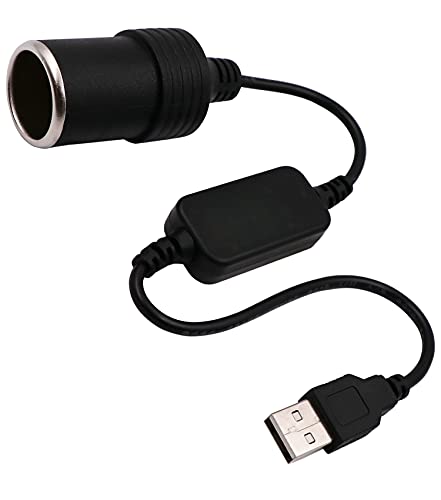
- low-power accessories in travel cars, or when you need an extra 12V foundation from a USB source.
- Converts USB power to a 12V cigarette-lighter socket, enabling small, low-power devices to run from a USB source. Suitable for power banks or other USB-powered accessories.
- Output is limited to 12V 8W max. Not suitable for high-power devices like tire inflators or car refrigerators.
- Easy to power car electronics with spare USB power; intended for low-demand devices.
Anker 320 Car Charger (24W II)

- drivers who need reliable dual-device charging on the go without Quick Charge.
- Dual USB-A ports deliver up to 24W total, enabling simultaneous charging of two devices efficiently in a compact, stylish aluminum housing.
- Does not support Qualcomm Quick Charge technology, which may be a limitation for some devices expecting QC.
- Space-saving design keeps dashboard clutter minimal while maintaining easy access.
JUNVANG 4-in-1 90W Car Charger
![[4 in 1] USB C Car Charger](https://m.media-amazon.com/images/I/41AHeA2IWSL._SL500_.jpg)
- households or travelers with multiple devices, including higher-widelity USB-C devices.
- 90W total output with two USB-C ports and two USB-A ports supports both PD/ QC fast charging and multiple devices simultaneously.
- Higher output can generate more heat and requires a larger car cigarette lighter socket footprint.
- Broad compatibility across iPhone, iPad, Samsung Galaxy, Google Pixel, and many USB-C devices.
AILKIN Dual USB-A Car Charger

- shared charging in cars where two devices need steady, safe power.
- Dual USB-A ports with a combined 3.4A output and an emphasis on safety through RoHS, CE, and FCC certifications.
- No USB-C or PD support, so future-proofing may be limited for newer devices.
- Indicator LED helps verify connection and charging status.
LISEN Car Charger USB C Dual Port

- drivers needing balanced PD charging on USB-C plus a USB-A port for older devices.
- 69W total with a PD-enabled USB-C port and a secondary USB-A QC port; designed to minimize heat and clutter with a smarter power split.
- The price and footprint are higher than basic dual-port options.
- Aimed at versatile road charging for iPhone, iPad, and most Android devices along with accessories.
Buying Guide
Key considerations when choosing a USB car charger include power output, port configuration, device compatibility, size, heat management, and safety features. If you routinely charge a single device, a compact 1-port or 2-port charger may suffice. For families or heavy device users, multi-port options with USB-C PD often deliver faster, more reliable charging without overheating.
- Look for PD (Power Delivery) on USB-C ports for faster charging of newer phones and laptops; USB-A ports remain useful for legacy devices.
- A mix of USB-C and USB-A ports covers more devices and reduces cable clutter.
- Ensure certifications (RoHS, CE, FCC) and built-in protections against overcharging, overheating, and short circuits.
- Some high-output adapters may require a vehicle’s cigarette lighter socket with enough space and power handling; verify your car’s capacity.
- Larger hubs can deliver more power but may heat up; choose models with heat-dissipation design and a compact form for easy access.
FAQ
What is the difference between USB-C PD and USB-A charging?
USB-C PD uses higher power for faster charging on supported devices, while USB-A generally offers standard charging speeds. A PD-enabled port can charge newer devices more quickly than a USB-A port.
Do car chargers with multiple ports overheat?
Some heat is normal under high load, but many models include thermal protection and smart power distribution to minimize overheating. Look for heat-dissipation design and safety certifications.
Can I charge laptops in a car with these adapters?
Most car chargers in this list are designed for phones, tablets, and smaller devices. Laptops typically require higher wattage and dedicated car chargers or in-car power inverters.
Is it better to choose a single high-power charger or multiple smaller ones?
Multiple ports allow charging several devices simultaneously. A single high-power PD charger is best if you mainly need fast charging on one device at a time.
Are there safety considerations for USB-C PD in vehicles?
Yes. Use certified adapters with proper protections and avoid cheap models that lack safety features, which can risk device damage.