
Best Car-to-Car Walkie Talkies for on-the-Go Communication
Answering the need for quick, reliable, and easy-to-use car-to-car communication, this guide highlights top-selected walkie talkies suitable for road trips, convoy driving, and outdoor adventures. The featured models are best for groups, families, or teams who require simple, license-free two-way radios with decent range, durable builds, and practical features. Each entry explains who it’s best for and why, plus a brief caveat to keep expectations realistic on range and use scenarios. The table below compares key details to help you decide at a glance.
| Product | Best For | Channel/Privacy | Ruggedness | Range Claim |
|---|---|---|---|---|
| MaxTalker MT10 | Hiking, camping, family trips | 22 channels, 99 CTCSS | Rechargeable lithium battery | Up to 5 miles (open areas) |
| Retevis RB48 | Harsh environments, frontline use | IP67, MIL-STD-810H | Heavy-duty | Up to 300,000 sq ft / 25 floors |
| Midland T10 X-Talker | Group activities, events | 22 channels, Weather alert | Rechargeable pack option | Long-range in open space |
| Midland LXT600VP3 | Family travel, open terrain | 36 channels, 2,662 codes | Rechargeable or AA | Up to 30 miles |
| pxton 4-Pack Long Range | Large groups, steady coordination | 16 channels, 105 CDCSS/50 CTCSS | Includes earpieces | Open-area range most mentioned |
MaxTalker MT10 Long Range Walkie Talkies

The MaxTalker MT10 offers a 1200mAh rechargeable lithium battery, replacing disposable cells for longer operation and easier recharging via USB-C. Best for outdoor excursions or car-to-car chats during camping trips, its up to 5 miles of range in open areas helps groups stay coordinated. With 22 channels and 99 CTCSS tones, you can select a clear channel and privacy code to minimize cross-talk. A built-in LED flashlight adds practicality in vehicle or campsite setups. Caution: real-world range may vary with terrain and obstacles, and battery life depends on usage patterns.
Retevis RB48: Durable Long-Range Walkie Talkies

Retevis RB48 is designed for harsh conditions with MIL-STD-810H testing and IP67 waterproof/dustproof protection. Best for emergency kits, construction sites, or family trips where durability matters. The long-range claim extends to up to 300,000 sq. ft. or about 25 floors in open line-of-sight environments. The combination of rugged build and strong transmission makes it a solid choice for demanding scenarios. Caution: higher durability may come with a heavier unit and bulkier carry ratio compared to compact models.
Midland T10 X-Talker: Team Communication

The Midland T10 X-Talker emphasizes easy, point-to-point communication with 22 channels and 38 privacy codes. It supports weather alerts to keep groups informed in outdoor settings. Rechargeable battery packs offer reliable longevity for day trips, and belt clips facilitate hands-free carry. Best for groups seeking straightforward channel control and a compact design. Caution: range performance depends on terrain; urban environments may reduce practical range compared with open spaces.
Midland LXT600VP3: Expanded Privacy And Range

The LXT600VP3 offers 36 FRS channels and 2,662 privacy codes through CTCSS to reduce cross-talk. It supports long-range conversations in open environments and gives users the option of rechargeables or AA batteries for flexibility. This model is well-suited for families, road trips, or outdoor events where private channels are valuable. Caution: actual range may be less in built-up urban areas with dense materials or heavy interference.
pxton 4-Pack Long Range Walkie Talkies
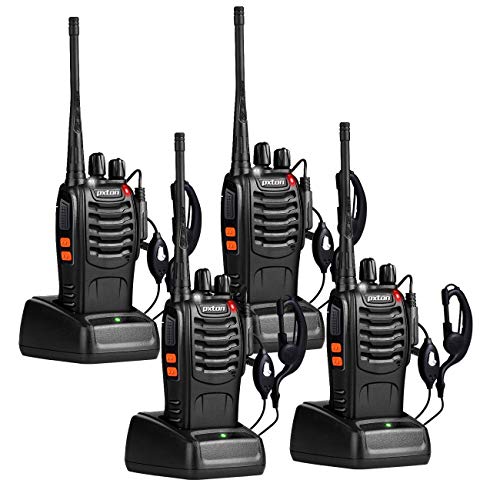
Pxton’s 4-pack focuses on long-range capabilities with 16 channels and 50 CTCSS/105 CDCSS privacy options. It includes earpieces for discreet listening and night flashlight features for low-light scenarios. Best for large groups or convoy driving where clear, private conversations matter. Caution: actual range depends on environment; urban interference can reduce practical coverage.
Buying Guide
What should you consider when choosing car-to-car walkie talkies?
- Range vs. terrain: Open areas typically provide the best range; urban areas with buildings and vehicles can reduce it.
- Privacy features: Look for CTCSS/CDCSS codes to minimize cross-talk in group trips.
- Power options: Rechargeable packs are convenient; consider AA compatibility for flexibility.
- Durability: For outdoor or heavy-use scenarios, a rugged IP rating or MIL-STD-810H rating offers extra resilience.
- Ease of use: Channel selection, VOX, and hands-free operation help reduce driver distraction.
- Battery life and charging: Assess how long devices last under typical use and the availability of USB-C or standard chargers.
Practical buying questions
- Do I need a waterproof model? If you’ll be in wet or dusty environments, prioritize IP67/MIL-STD-810H rated devices.
- How many channels are enough? For small groups, 22 channels with privacy codes usually suffice; larger groups may prefer more codes.
- Is license-free operation important? All selected options are FRS (license-free) and suitable for consumer use without licensing.
- Should I choose rechargeable only or mixed power options? Rechargeable packs are convenient, but having AA backup is useful for extended trips.
- Is a compact design important? If you’ll mount units in a car, consider lighter models with clip-and-go belts.
- Are earpieces worth it? Earpieces help with discreet listening and reducing distractions in driving situations.
FAQ
- What is a practical range for driving in open areas? Typically, up to several miles in open terrain, but city environments can reduce it.
- Can these radios interoperate with other brands? Many radios share common channels and privacy codes, but results vary; test compatibility with your intended devices.
- Do these require a license? No, FRS devices listed here are license-free for consumer use.
- What maintenance is needed? Regular charging, battery care, and keeping antennas clean help maintain performance.
- Are there safety considerations when using in a car? Mount units securely, avoid driving distractions, and keep volume at safe levels.
- How many units should a family get? A 2–4 unit set covers most small-to-medium groups and convoy needs.