
The best cassette tape dubbing machine depends on whether you want to make cassette copies, digitize old recordings, or do both. The TEAC W-1200B is best suited to buyers seeking recording features and USB output, while the Pyle PT659DU is a better fit for transferring tapes to a computer. The two other Pyle dual decks offer straightforward high-speed dubbing, and Maxell blank tapes are a practical media option for recording.
| Product | Best For | Key Feature |
|---|---|---|
| TEAC W-1200B | Recording and computer transfer | USB output and dual recording |
| Pyle PT659DU | Converting tapes to MP3 | USB connection to a computer |
| Pyle B09MSPCPRT | Basic cassette-to-cassette dubbing | Normal- and high-speed dubbing |
| Pyle B00009V3TT | Dubbing with auto stop | Auto stop and tape counter |
| Maxell 60-minute tapes | Blank recording media | Normal-bias cassette tape |
TEAC W-1200B Dual Cassette Deck

The TEAC W-1200B is best for buyers who want a feature-rich cassette dubbing machine for playback, recording, and computer transfers. Both cassette decks support recording and playback, and independent mechanisms let the unit handle dual-deck tasks. One-touch dubbing and parallel recording provide options for copying or recording to two tapes at once.
For digitizing, the deck has a USB output for connecting to a PC or Mac and recording at up to 48 kHz/16-bit PCM. It also includes RCA analog input jacks, a headphone output, a remote control, and a microphone input with mixing for announcements or karaoke use.
- Best for: Buyers who want cassette duplication plus USB transfer and additional playback controls.
- Notable controls: Four-digit counters, return-to-zero, A-B repeat, and 12% pitch control.
- Tape support: Type I and Type II tapes can record and play; Type IV tapes are listed for playback.
A limitation is that this deck has more functions than a buyer needs for simple, occasional cassette copying. Its listed USB feature supports computer recording, but the product details do not specify a particular bundled conversion application.
Pyle PT659DU Cassette Deck With USB
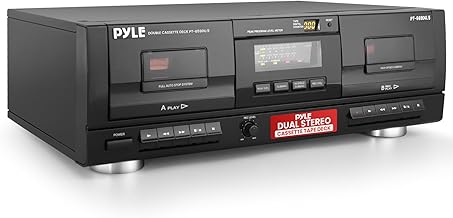
The Pyle PT659DU is best for buyers whose main goal is transferring cassette recordings to a computer. Its included USB cable connects the deck to a computer for transferring tape audio to MP3 format. The listed feature information says it works with PC and Mac computers, making it a direct choice for people who want a digital copy as well as cassette playback.
The machine also offers two-speed cassette dubbing, with normal- and high-speed copy functions. Both decks can play tapes, but only Deck B is specified for recording or dubbing. It supports standard and CrO2 tapes and provides recorder-level and gain controls for adjusting the signal sent to a computer.
- Best for: People digitizing cassette collections who also want cassette-to-cassette dubbing.
- Useful feature: Recorder-level and gain controls offer adjustment of the computer-bound signal.
- Copying detail: Recording and dubbing are limited to Deck B.
Choose another model if you need both decks to record, since the listing specifies that only Deck B records. The product information describes MP3 transfer but does not provide further software or file-format details.
Pyle Dual Cassette Deck With High-Speed Dubbing

This Pyle dual cassette deck is best for buyers who want a relatively straightforward cassette-to-cassette dubbing setup. It provides normal- and high-speed dubbing, so users can choose between copying at standard speed or completing a copy more quickly. A built-in three-digit tape counter helps track a position on a cassette.
The deck includes a CrO2 tape selector and an auto tape selector. RCA line inputs and outputs support connections to compatible audio equipment, and the product listing describes a digital link interface for connecting to a PT600A amplifier. The amplifier is not included.
- Best for: Home users who mainly need dual-deck playback and cassette copying.
- Why choose it: It combines two dubbing speeds with tape-selection controls and RCA connections.
- Consider before buying: The counter has three digits, and the mentioned PT600A amplifier must be purchased separately if needed.
This model is less suited to buyers who specifically want USB transfer to a computer; the listed features describe RCA connections and dubbing, not USB digitizing.
Pyle Dual Cassette Deck With Auto Stop

This Pyle Home deck is best for buyers seeking dual-speed dubbing with an auto-stop function. It supports normal- and high-speed cassette copying, and the listed auto stop provides additional control when a tape reaches its end. A three-digit tape counter and CrO2 and auto tape-selection features round out its basic recording controls.
RCA line inputs and outputs allow connection to compatible audio equipment. The product listing also describes a digital link interface for use with the PT600A amplifier, which is not included. These connections make it a better match for a home audio setup than for a computer-first digitizing workflow.
- Best for: Buyers who value auto stop alongside standard and high-speed cassette dubbing.
- Why choose it: It adds an auto-stop feature to a dual-deck design with tape-selection options.
- Connection note: RCA cables are listed, while the PT600A amplifier is not included.
The listing does not describe USB output or direct MP3 conversion, so choose a model with USB features if transferring tapes to a computer is your priority.
Maxell 60-Minute Blank Cassette Tapes

Maxell’s 60-minute cassette tapes are best for buyers who already own a compatible dubbing machine and need blank media for everyday music or voice recording. The product is a two-pack of normal-bias tapes, with up to 60 minutes of recording time per cassette. The listing describes a low-noise surface level for music and voice recordings.
These tapes are recording media, not a cassette deck or dubbing machine. They are included here as a useful companion for making copies, recording audio, or testing a cassette workflow.
- Best for: Buyers who need blank normal-bias tapes for music or voice recording.
- Capacity: Up to 60 minutes per tape.
- Limitation: This product does not play, record, dub, or digitize tapes without a separate cassette machine.
Buying Guide: How To Choose A Cassette Tape Dubbing Machine
Do you need cassette copies or digital files?
Start by deciding whether your main task is making another cassette or moving audio to a computer. A dual-deck machine with normal- and high-speed dubbing is designed for cassette-to-cassette copying. For computer transfers, look for a model that explicitly lists USB output or a USB connection and explains its transfer function. Among these options, the TEAC W-1200B and Pyle PT659DU list USB-related recording features.
Do not assume that every dual cassette deck digitizes audio. RCA inputs and outputs are analog connections, not the same as a USB transfer feature. If you intend to create digital files, check the exact product description for computer connection details and any stated format or software requirements.
Is high-speed dubbing important?
High-speed dubbing can make copying quicker, while normal-speed dubbing is the alternative listed on the Pyle dual decks. Choose based on how often you plan to make copies and whether speed or a standard-speed workflow matters more. The available product details do not give enough information to compare the sound quality of high-speed and normal-speed copies, so do not assume they will sound identical.
What recording and tape controls should you compare?
A tape counter helps you locate a position without relying only on listening. The Pyle decks list three-digit counters, while the TEAC lists four-digit digital counters and a return-to-zero function. Auto stop, pitch control, repeat playback, and recording-level controls serve different needs, so prioritize the features that match your routine rather than treating every extra control as essential.
Check the tape types listed for the deck as well. The Pyle products specify CrO2 selection, and the TEAC lists Type I and Type II recording and playback, with Type IV playback. Match your tapes to the machine’s stated capabilities. Do not infer recording support for a tape type when the listing only identifies playback.
Which connections fit your audio setup?
RCA inputs and outputs are useful when connecting a deck to compatible audio equipment. USB is the more relevant connection when your goal is to transfer audio to a computer. Some Pyle listing details mention a digital link for the PT600A amplifier, but that amplifier is not included. Verify that the connections you need are actually listed and account for any separately sold equipment.
How many tapes will you record?
Think about tape length and how many copies you need before buying blank media. The Maxell option listed here provides up to 60 minutes per cassette, and it is normal-bias tape. Blank tapes are separate from the dubbing machine; confirm that the deck supports the tape type you plan to use.
Frequently Asked Questions
What is a cassette tape dubbing machine?
A cassette dubbing machine uses a cassette deck to copy audio from one tape to another. Dual-deck models can play one cassette while recording to another, and some offer normal- and high-speed dubbing.
Can a cassette dubbing machine transfer tapes to a computer?
Some models list USB output or a USB connection for computer recording. The TEAC W-1200B and Pyle PT659DU list USB-related transfer features. Check the individual product details for the connection and recording process before buying.
Does every dual cassette deck record on both decks?
No. Recording capability varies by model. For example, the Pyle PT659DU listing says both decks play tapes but only Deck B records or dubs. Check the deck-specific recording description rather than assuming both sides record.
What does high-speed dubbing mean?
High-speed dubbing copies a cassette at a faster rate than the normal-speed option listed for some decks. It is useful when copy time matters, but the product details provided here do not specify comparative audio-quality results.
Do I need an amplifier to use a cassette deck?
Not necessarily; it depends on how you plan to use the deck and which connections your audio setup requires. The Pyle listings mention a PT600A amplifier connection, but state that the amplifier is not included. Review the listed inputs and outputs for your intended setup.
Are blank cassette tapes included with these machines?
The machine listings provided do not state that blank tapes are included. The Maxell product is a separate two-pack of blank 60-minute normal-bias tapes.