
If you are shopping for a CEA-2006-compliant amp, the Jensen JA1CH is the only product in this selection whose supplied description explicitly says it is CTA-2006-D certified. The other four amps may suit different speaker or installation needs, but their provided product details do not confirm compliance. The table below compares their stated power and channel configurations so you can narrow your search without treating unverified ratings as certified.
| Product | Best For | Stated Power | Compliance Detail Provided |
|---|---|---|---|
| Jensen JA1CH | Single-channel subwoofer use | 240W RMS at 4 ohms; 400W at 2 ohms; 600W at 1 ohm | CTA-2006-D certified |
| Alpine KTP-445U | Compact four-channel upgrade | 45W x 4 at 4 ohms | Not stated |
| Pioneer GM-A6704 | Four-channel systems with bridging options | 60W x 4 at 4 ohms | Not stated |
| ORION CEA600.4D | Flexible full-range speaker systems | 100W x 4 at 4 ohms; 150W x 4 at 2 ohms | Not stated |
| Taramps TS 1200 | Higher-output four-channel setups | 300W x 4 at 2 ohms | Not stated |
Jensen JA1CH Mono Class-D Amplifier

Best for: Buyers seeking a single-channel amp for a subwoofer system who want an explicit compliance claim in the product description. Jensen identifies this model as CTA-2006-D certified, making it the clearest match in this selection for a search focused on CEA-2006-style ratings.
The listed output is 240 watts RMS at 4 ohms, 400 watts RMS at 2 ohms, and 600 watts RMS at 1 ohm. It is a Class-D mono amplifier with a compact design. These are single-channel figures, so compare them with the subwoofer’s impedance and power requirements rather than with four-channel speaker-amplifier ratings.
Why it was selected: It is the only listed product whose supplied features explicitly mention CTA-2006-D certification. Limitation: It is mono, so it is not a direct choice for separately powering front and rear speaker pairs.
Alpine KTP-445U Four-Channel Power Pack

Best for: Drivers looking for a compact, plug-and-play-style power upgrade for a four-channel setup. The product details list 45 watts RMS per channel at 4 ohms, an adjustable gain switch, and plug-and-play installation.
Its stated output is more modest than the higher-powered multichannel models in this roundup. That can make it a better fit for buyers who want to add amplification without choosing a larger-output amp. Check the receiver and speaker connections before purchase; the supplied details do not identify specific vehicle fitment or guarantee compatibility with a particular factory system.
Why it was selected: It offers a straightforward four-channel option and a clearly stated RMS figure. Limitation: The provided features do not say that the Alpine is CEA-2006 compliant, so buyers who require confirmed compliance should verify documentation with the manufacturer.
Pioneer GM-A6704 Bridgeable Four-Channel Amp

Best for: Buyers who need a four-channel amp with the option to bridge channels for a different system layout. Pioneer lists 60 watts RMS per channel at 4 ohms and 190 watts RMS x 2 in bridged mode. The product description also notes that the amp can be used with front and rear speakers or with a subwoofer in a suitable configuration.
This model uses a Class AB design. Its stated 1,000-watt figure is maximum power, while the RMS ratings provide the more useful comparison for continuous system planning. Compare the RMS output with the connected speakers’ requirements and follow the amp’s wiring guidance when bridging.
Why it was selected: It supplies a clearly stated four-channel RMS rating and bridged-output information. Limitation: CEA-2006 compliance is not stated in the supplied product features; the maximum-power number should not be treated as a certified RMS rating.
ORION CEA600.4D Compact Four-Channel Amp

Best for: Buyers building a full-range system who want multiple channel and impedance options plus adjustable crossover controls. ORION lists 100 watts RMS x 4 at 4 ohms and 150 watts RMS x 4 at 2 ohms. The amp also has adjustable high-pass and low-pass filters from 40Hz to 500Hz.
The crossover range gives installers control over which frequencies reach connected speakers. The listed features describe this as a Class-D, full-range amplifier intended for midrange, high-frequency, or full-range speaker systems. Confirm the planned speaker impedance and wiring arrangement against the manufacturer’s instructions before installation.
Why it was selected: Its RMS figures and filter controls make it a flexible multichannel comparison option. Limitation: Despite “CEA” in the model name, the supplied details do not explicitly state CEA-2006 certification. A model name alone is not proof of compliance.
Taramps TS 1200 Four-Channel Amplifier
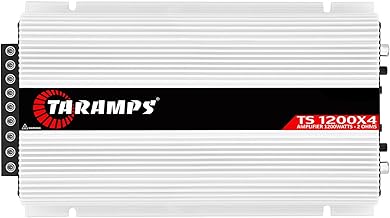
Best for: Buyers who need a high-output four-channel amp and want both RCA and high-level input options. The listed rating is 300 watts RMS x 4 at 2 ohms or 600 watts RMS x 2 when bridged at 4 ohms. Its high-level inputs and automatic turn-on are described as allowing connection to an OEM radio without an adapter.
The amp provides high-pass, low-pass, and full-range modes. These options can help match the output to speakers or a planned system arrangement. The product description recommends professional installation, an important consideration when planning wiring and power connections.
Why it was selected: Its input choices and substantial stated RMS output distinguish it from the lower-output four-channel options. Limitation: The supplied information does not confirm CEA-2006 compliance, and its installation recommendation may not suit buyers seeking a simple DIY fit.
Buying Guide: How to Choose a CEA-2006-Compliant Amp
What Does CEA-2006 Compliance Tell You?
CEA-2006 is an industry standard used for reporting car-amplifier power under defined test conditions. A standardized rating can make comparisons more useful than a large “maximum watts” claim, which may not describe continuous output. The supplied product details identify the Jensen as CTA-2006-D certified, but do not provide the same confirmation for the other four models.
Check the manufacturer’s documentation for the exact standard, test conditions, and rated output before treating an amp as compliant. Do not infer certification from a model name, brand, or wattage figure. If compliance is a requirement for a purchase or system specification, request documentation that names the specific model.
Should You Choose a Mono or Multichannel Amp?
A mono amplifier, such as the Jensen JA1CH, is designed around one output channel and is suited to a single-channel application such as a subwoofer. A four-channel amp can power multiple speakers, often front and rear pairs. Some four-channel models can be bridged, but bridging changes the number of available channels and the load presented to the amp. Follow the product manual for supported configurations.
How Should You Compare RMS Power?
Compare RMS output at the same impedance whenever possible. For example, a rating at 2 ohms is not directly comparable to one at 4 ohms unless the speaker load is also considered. Match the amp’s output to the speakers’ power handling and impedance, and use RMS figures rather than peak or maximum figures for planning. The numbers in this article are those supplied in the product descriptions, not independent test results.
Which Inputs and Controls Matter?
RCA inputs are commonly used with receivers that provide preamp outputs. High-level inputs can be useful when connecting to a factory radio, but confirm the amp’s input instructions and the vehicle’s wiring before buying. Adjustable high-pass or low-pass filters can help direct suitable frequency ranges to different speakers. The ORION and Taramps descriptions list filter controls; the Alpine description lists an adjustable gain switch.
What Should You Check Before Installation?
- Confirm the amplifier supports the speaker impedance and channel arrangement you plan to use.
- Check RMS output at the relevant impedance, rather than relying on maximum or peak power alone.
- Verify input type, turn-on method, wiring needs, and physical installation space.
- Review the manufacturer’s wiring and ventilation instructions. The Taramps listing specifically recommends professional installation.
- Seek model-specific compliance documentation if CEA-2006 or CTA-2006-D certification is essential.
Frequently Asked Questions
Which amp in this selection explicitly states CTA-2006-D certification?
The Jensen JA1CH product description explicitly identifies it as CTA-2006-D certified. The supplied details for the other listed products do not make an equivalent compliance claim.
Is the ORION CEA600.4D confirmed as CEA-2006 compliant?
Not by the supplied product features. “CEA” appears in the model name, but the provided description does not explicitly state CEA-2006 certification. Check manufacturer documentation for confirmation.
Are maximum watts and RMS watts interchangeable?
No. RMS ratings are the more useful figures for comparing continuous amplifier output. A maximum-power figure should not be treated as an RMS rating or as proof of standardized compliance.
Can a four-channel amp power a subwoofer?
Some four-channel amplifiers support bridged operation, and the Pioneer and Taramps descriptions provide bridged ratings. Confirm the supported impedance, wiring configuration, and output in the product documentation before connecting a subwoofer.
Does a CEA-2006 rating guarantee an amp will work with my car?
No. A power-rating standard does not establish vehicle fitment or connection compatibility. Check the vehicle’s receiver outputs, wiring, available space, speaker impedance, and the amplifier’s installation instructions separately.