
The best cheap microphones for rapping depend on where you record: a USB condenser mic is convenient for home vocals, while a wired dynamic mic suits live performance. The FIFINE T669 is best for a desk or home studio with an adjustable boom arm; the ZealSound K66 is better for creators who want onboard controls and noise reduction; and the FIFINE K6 is designed for amplified live use. Compare connection type, included accessories, and room noise before choosing.
| Microphone | Best for | Connection |
|---|---|---|
| FIFINE T669 | Home vocal recording with a boom arm | USB |
| ZealSound K66 | Recording with onboard controls | USB |
| TONOR TC777 | Simple desktop recording | USB |
| Dejasound DJM5 | Home recording with monitoring and echo controls | USB |
| FIFINE K6 | Live vocals through audio equipment | 1/4-inch plug |
FIFINE T669 USB Recording Microphone
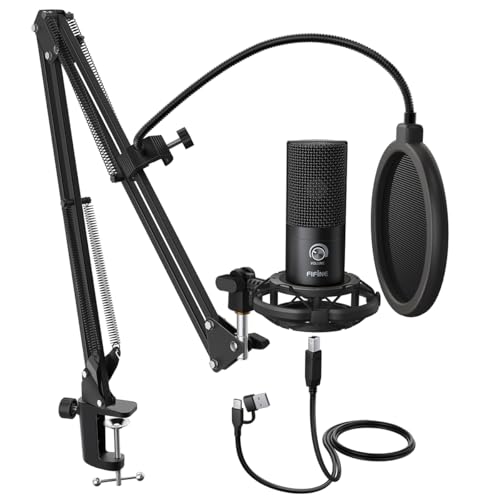
Best for: Rappers making vocals at a desk or in a home recording space who want a boom arm and pop filtering included.
The T669 is a USB condenser microphone with a cardioid pickup pattern. Its USB connection is intended for direct use with a PC or laptop, without additional hardware or drivers. The cardioid capsule picks up sound from the front and is designed to reduce ambient noise, making microphone placement and vocal direction important during recording.
The kit includes a desktop boom arm, an 8.2-foot USB cable, a shock mount, and a double-layer pop filter. The arm adjusts up and down by 180 degrees and forward and backward by 135 degrees. These features make it easier to position the mic close to the rapper and keep the desktop area more open than a fixed tripod setup.
Why it was selected: It combines a computer-friendly connection with a positionable arm and pop protection, useful for recording spoken vocals and rap takes at home. Limitation: The listed features specify PC and laptop USB use and say it is incompatible with Xbox; they do not describe a direct connection to phones or mixers.
ZealSound K66 USB Microphone

Best for: Rappers who want a USB microphone with onboard gain, volume, mute, monitoring, and noise-reduction features.
The ZealSound K66 uses a condenser capsule and cardioid pickup pattern. The manufacturer lists a 40 Hz–18 kHz frequency response, 46 kHz sampling rate, and –45 dB ±3 dB sensitivity. These specifications describe the microphone’s stated audio range and sensitivity; they do not guarantee a particular recording result. A quiet room and consistent mic distance still matter for clear rap vocals.
The microphone offers a noise-reduction mode intended to help reduce sounds such as keyboard clicks, computer fans, air conditioners, and background chatter. Its default mode is described as maintaining a natural vocal tone in quieter spaces. Onboard controls include gain, volume, and mute, and a monitoring feature lets users listen while recording.
Why it was selected: Its controls and stated device support make it a flexible choice for creators who record on a computer or switch between supported devices. Listed connections include USB-C and Lightning adapters, with Windows, Mac, PS4, PS5, tablets, iPhone, and iPad included in its compatibility information. Limitation: Noise reduction can help with some environmental sounds, but it is not a substitute for a quiet recording space.
TONOR TC777 Desktop USB Microphone

Best for: Beginners who want a compact desktop microphone for recording rap vocals on a computer.
The TONOR TC777 is a USB cardioid condenser mic supplied with a non-slip tripod stand, shock mount, and pop filter. Its cardioid pickup pattern is designed to capture sound in front of the mic while suppressing some unwanted background noise. The stand occupies a small desktop area, which can be useful when a boom arm is not practical.
One-click mute and volume control provide quick access to basic adjustments during recording. The product information lists compatibility with Windows, Mac, PS4, PS5, and common communication programs such as Zoom, Skype, and Discord. For rap recording, the pop filter is a practical inclusion because it can help reduce plosive bursts from close-up vocal delivery.
Why it was selected: It offers a straightforward USB setup and several useful desk accessories in one kit. Choose it if you prefer a small stand and simple physical controls over an adjustable boom arm. Limitation: It is not compatible with Xbox, and the listed information does not identify mobile-phone adapters.
Dejasound DJM5 Studio Microphone

Best for: Home vocal recording where onboard echo, volume, mute, and headphone-monitoring controls are priorities.
The Dejasound DJM5 is a USB condenser microphone with a cardioid pattern and a listed 16 mm diaphragm. Its stated specifications include a 192 kHz/24-bit sampling rate and a 30 Hz–16 kHz frequency response. It is described as plug-and-play with a PC, laptop, or smartphone, without additional hardware. The included-feature information does not specify which phone adapters are supplied, so check the connection requirements for the device you plan to use.
Controls include echo adjustment, volume adjustment, and a mute button. A 3.5 mm headphone-monitoring jack supports listening through headphones while recording. These functions can be useful for creators who want to adjust their recording setup at the microphone rather than relying entirely on software controls.
Why it was selected: Its listed monitoring and adjustment options make it a useful alternative to simpler USB mics, especially for home recording and livestreaming. Limitation: The supplied product details do not describe the included stand, pop-filter arrangement, or exact phone connectors, so verify the package and connections before buying.
FIFINE K6 Wired Dynamic Microphone

Best for: Live rap vocals, karaoke, or performance setups that use an amplifier, mixer, or compatible audio system.
Unlike the USB condenser models above, the FIFINE K6 is a wired handheld dynamic microphone with a 1/4-inch plug and a 14.8-foot detachable cable. Its cardioid pickup pattern is intended to reduce feedback and help minimize surrounding noise in live situations. The listed frequency range is 50 Hz–18 kHz, and the microphone requires no power.
This design is better suited to holding in the hand and connecting to compatible live audio equipment than to plugging directly into a computer as a USB recording mic. The product information identifies uses such as stage performance, presentations, karaoke, and spoken-word events. Rappers who perform through an amplifier or mixer may prefer this type of connection and handheld format.
Why it was selected: It covers a different use case from the USB studio mics: live vocals through compatible equipment. Limitation: It is not available for a 3.5 mm connection, even with an adapter. It is also not a USB microphone, so choose another option for direct computer recording.
Buying Guide: How To Choose A Microphone For Rapping
Are you recording at home or performing live?
For computer-based home recording, a USB condenser microphone is often the simplest starting point. The T669, TC777, K66, and DJM5 are described as USB models and include features aimed at desk recording or content creation. For live performance, a wired dynamic microphone such as the FIFINE K6 is designed to connect to compatible amplification or mixing equipment instead.
Match the microphone to the gear you already own. A 1/4-inch plug is not interchangeable with USB, and the K6 listing specifically rules out 3.5 mm connections. If you are buying a USB mic, check that your computer or mobile device supports its connection and any required adapter.
Which accessories will help with rap vocals?
A pop filter can reduce sharp bursts of air on sounds such as “p” and “b,” which are common in close-mic vocal delivery. The T669 includes a double-layer pop filter, while the TONOR TC777 includes a pop filter and shock mount. The Dejasound and ZealSound feature lists focus more on built-in controls and monitoring than on detailed pop-filter accessories.
A boom arm can make mic placement easier and keep a recording surface less crowded. A small tripod is a more compact choice if you need a simple desktop setup. An isolation shield, such as the type described in the SwaykTech kit, may help reduce reflections around a microphone, but it cannot make a noisy room silent.
Do you need a condenser or a dynamic microphone?
The four USB studio models in this selection are condenser microphones. They are intended for close voice recording and computer-based use. Condenser microphones can pick up room sound, so recording in a quieter space and placing the mic consistently can improve clarity. The FIFINE K6 is a dynamic handheld mic aimed at live situations and compatible audio systems.
Neither type automatically makes a vocal sound professional. Performance, mic distance, room conditions, and recording levels all affect the result. A beginner may benefit more from a simple setup that fits their space than from specifications alone.
Are onboard controls and monitoring important?
Choose the ZealSound K66 if gain, volume, mute, and a noise-reduction mode are useful to your workflow. The Dejasound DJM5 adds volume, echo, mute, and a 3.5 mm headphone-monitoring jack. The TONOR TC777 also provides one-click mute and volume control. Before buying, decide whether you prefer physical controls or are comfortable making adjustments in recording software.
What should you check before recording?
- Confirm the microphone connector matches the computer, phone, mixer, or amplifier you plan to use.
- Check whether any required adapter is included; do not assume every USB microphone supports every phone.
- Place the mic in front of you and keep a consistent distance while recording.
- Use a pop filter or suitable mic position to manage plosive sounds.
- Reduce room noise where possible; noise-reduction features do not replace good recording conditions.
- For live gear, confirm that the input accepts the microphone’s plug type.
Frequently Asked Questions
What is a good beginner microphone for recording rap at home?
A USB microphone with a cardioid pattern and basic accessories is a practical starting point. The TONOR TC777 includes a tripod, shock mount, and pop filter, while the FIFINE T669 includes a boom arm and double-layer pop filter.
Can I use a USB microphone for live rap performances?
USB microphones in this selection are described mainly for computer-based recording and content creation. For a live setup, choose a microphone that connects to your compatible amplifier or mixer, such as the FIFINE K6 with its 1/4-inch plug.
Does a cardioid microphone eliminate background noise?
No. A cardioid pattern is designed to focus more on sound from the front and reduce some sound from other directions, but it does not eliminate room noise. Mic placement and a quieter recording space still matter.
Do I need a pop filter for rap vocals?
A pop filter is useful for reducing plosive bursts caused by breath hitting the microphone. It is not required for every recording, but it can help when recording close vocals. The TONOR TC777 and FIFINE T669 include pop-filter accessories.
Can the FIFINE K6 connect to a phone’s 3.5 mm jack?
The product information says the K6 is not available for a 3.5 mm connection, even when using an adapter. It uses a 1/4-inch plug and is intended for compatible audio equipment.
Should I prioritize microphone specifications or accessories?
Choose based on your actual recording setup. A boom arm, pop filter, or monitoring jack may be more useful than a specification you do not know how to apply. Confirm device compatibility and the included accessories before choosing.