
The best clip-on chromatic tuner depends on which instruments you play and what matters most: the Fender FCT-2 suits players who want dedicated instrument modes, the Snark ST-2 is a rechargeable option with a rotating display, and the D’Addario Micro is designed for discreet placement. The five choices below use vibration-based or clip-on tuning features described by their manufacturers, with options for multi-instrument use, open tunings, and compact storage.
| Tuner | Best for | Standout feature |
|---|---|---|
| Fender FCT-2 | Players switching among several instruments | Dedicated instrument modes and color LCD |
| Snark ST-2 | Players who prefer rechargeable power | Rechargeable design and 360-degree display |
| New Bee Rechargeable Tuner | Players who want open-tuning detection | Five-instrument modes and screen rotation |
| D’Addario Micro | Players who want a discreet tuner | Compact headstock placement and tri-color screen |
| KLIQ UberTuner | Players tuning in noisy environments | Vibration-based pitch detection and color display |
Fender FCT-2 Professional Multi-Instrument Tuner

Best for: Musicians who use guitar, bass, ukulele, or violin and want one clip-on tuner with dedicated modes. The FCT-2 also offers chromatic tuning, making it a flexible choice for players who need more than a standard guitar setting.
The tuner senses instrument vibrations rather than relying on room sound. That approach is useful in loud venues as well as quiet practice spaces. Its color LCD needle display provides a visual indication of pitch and responds quickly, according to the product information.
Why it stands out: The combination of multiple instrument modes and chromatic mode makes it a practical all-around pick. Choose it if you want clearly labeled settings for several common string instruments.
Limitation: The listed features do not specify rechargeable power or display rotation, so buyers seeking those particular features may prefer another option.
Snark ST-2 Rechargeable Chromatic Tuner

Best for: Players who want a rechargeable tuner with an adjustable viewing angle. The ST-2 is described as a multi-instrument chromatic tuner, with an extended frequency range for tuning across different instruments.
Its high-resolution, full-color display rotates 360 degrees, allowing the screen to be positioned for visibility from different angles. The product features also list pitch calibration from 415 to 466 Hz and a fast tuning chip. Rechargeable power means users do not need to buy or replace disposable batteries for this tuner.
Why it stands out: It combines a rotatable display, rechargeable operation, and adjustable calibration. Choose it if those features matter more than having the smallest possible tuner.
Limitation: The provided features do not state the charging method or battery runtime. Check the product listing for those details if they affect your setup.
New Bee Rechargeable Tuner With Open Tuning

Best for: Guitarists who use open tunings and players who need a tuner for several string instruments. The listed modes cover guitar, bass, ukulele, violin, cello, and chromatic tuning, with automatic open-tuning detection for guitar.
The New Bee has a high-resolution color screen designed for note visibility in different lighting conditions. Its 360-degree rotating display can be adjusted to suit the player’s viewing angle. The silicone-padded clamp is described as gripping the instrument securely without damaging it.
Why it stands out: Automatic open-tuning detection is the most specific feature in this group for guitarists who regularly change from standard tuning. The additional instrument modes also make it useful for households or players with several instruments.
Limitation: The listed features do not provide a calibration range or battery runtime. If either specification is essential, verify it before choosing this model.
D’Addario Micro Headstock Tuner
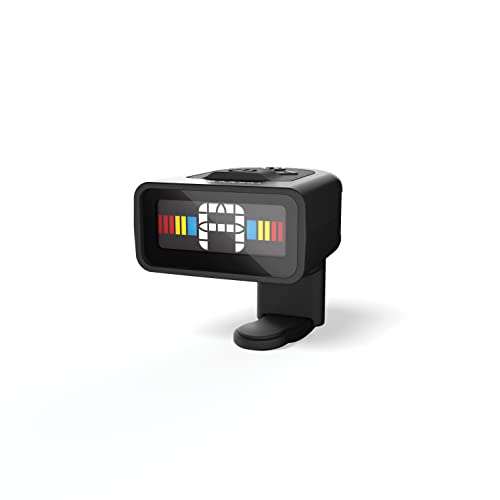
Best for: Players who want a compact, low-profile tuner that can stay on an instrument while it is stored. The manufacturer describes this model as lightweight and discreet, with a design that sits behind the headstock.
A piezo transducer detects vibration rather than sound. The tri-color backlit display shows red when a note is out of tune, yellow when it is close, and green when it is in tune. Its listed calibration range is 410–480 Hz. The tuner uses an included CR2032 battery and has an auto-off function.
Why it stands out: Its small form and clear color-coded feedback make it a strong choice when visibility and low-profile placement matter more than a large screen.
Limitation: The compact design may be less suitable for buyers who prefer a larger display with a 360-degree adjustment feature. The listed features do not describe dedicated instrument modes.
KLIQ UberTuner Clip-On Chromatic Tuner

Best for: Guitar, bass, and ukulele players who tune in noisy rehearsal rooms or live settings and want a color screen that can be repositioned. Its vibration-based pitch detection does not require a microphone and is described as ignoring background noise.
The UberTuner uses a piezo sensor and processor for chromatic tuning. The product information states accuracy within one cent. Its full-color display rotates 360 degrees, and the clip can be positioned on the front or back of a headstock for right- or left-handed players.
Why it stands out: The combination of vibration sensing and an adjustable screen makes it a practical choice for players who need readable tuning feedback in different environments.
Limitation: Its listed instrument coverage names acoustic guitar, electric guitar, bass, and ukulele. Choose a broader multi-instrument model if violin or cello tuning is a priority.
Buying Guide: How To Choose A Clip-On Chromatic Tuner
Which instruments do you need to tune?
Start by checking the instruments you play. A tuner with dedicated instrument modes can make setup more straightforward when switching between guitar, bass, ukulele, violin, or cello. The Fender FCT-2 lists modes for guitar, bass, ukulele, and violin, while the New Bee lists five instrument modes that include cello. For instruments not covered by a dedicated setting, chromatic mode can provide a more flexible option when available.
Do not assume that every clip-on model supports every instrument. Compare the manufacturer’s listed modes with your instrument before buying. If you play only guitar, a tuner focused on guitar and bass may be sufficient; if you play several instruments, broader mode support may be more useful.
Will you tune in a noisy room?
Clip-on tuners that sense vibration can be useful when other sounds make microphone-based tuning difficult. The Fender FCT-2 and KLIQ UberTuner product descriptions specifically describe vibration detection. The D’Addario Micro lists a piezo transducer that detects instrument vibration. This feature can help isolate the instrument’s pitch from surrounding room noise.
For frequent stage or rehearsal use, also consider how easy it is to see the display. A bright or color screen can make tuning feedback easier to interpret, but screen size and preferred viewing angle vary by player.
Does the display need to rotate?
A rotating display can help you see the tuning indication without moving the instrument into an awkward position. The Snark ST-2 and New Bee list 360-degree screen rotation; the KLIQ UberTuner also has a 360-degree adjustable color display. These models are worth comparing if you play from different positions or want to clip the tuner to the front or back of a headstock.
A compact tuner such as the D’Addario Micro takes a different approach: it is designed to sit discreetly behind the headstock. Choose between screen adjustability and low-profile placement based on what is more important in your usual playing setup.
Do you prefer rechargeable or replaceable batteries?
The Snark ST-2 and New Bee are described as rechargeable. The D’Addario Micro uses an included CR2032 battery and lists an auto-off function. Consider whether you prefer charging a device or replacing a battery when needed. The supplied product details do not state runtime or charging method for the rechargeable models, so check the current listing if those details matter.
Do you use alternate guitar tunings?
Chromatic tuning is useful when you need note selection beyond a standard instrument preset. The New Bee also specifically lists automatic open-tuning detection for guitar. That makes it the clearest match among these choices for players who frequently use open tunings. If you use other alternate tunings, check how the tuner displays notes and whether it offers the settings you need.
How important are calibration and tuning precision?
Calibration determines the reference pitch used by a tuner. The Snark ST-2 lists a range of 415–466 Hz, and the D’Addario Micro lists 410–480 Hz. Compare those specifications with your tuning requirements if you need a nonstandard reference pitch. The KLIQ product information states accuracy within one cent; avoid assuming the same specification applies to the other models unless their own listings say so.
Frequently Asked Questions
What does chromatic mean on a clip-on tuner?
A chromatic tuner detects and displays musical notes across the chromatic scale rather than limiting tuning to a single standard tuning preset. This can help when tuning instruments or strings to notes outside a common preset.
Can a clip-on tuner work in a noisy room?
A vibration-sensing clip-on tuner can detect vibration through the instrument instead of relying on room sound. This makes models with piezo or vibration-based sensing useful to consider for noisy practice or performance environments.
Which tuner in this guide supports open guitar tunings?
The New Bee tuner lists automatic open-tuning detection for guitar, alongside guitar, bass, ukulele, violin, cello, and chromatic modes.
Which options have rechargeable power?
The Snark ST-2 and New Bee are described as rechargeable. The D’Addario Micro uses an included CR2032 battery and has an auto-off feature.
What is the advantage of a rotating tuner display?
A rotating display lets players adjust the screen angle for easier viewing while the tuner is clipped to the instrument. The Snark ST-2, New Bee, and KLIQ UberTuner list display rotation or 360-degree adjustment.