
The best way to convert cassette tapes to MP3 is to play each tape through a cassette-to-digital converter and save the audio to removable storage or a computer. The KLIM K7 is best for buyers who want a portable player with a rechargeable battery and included 16GB SD card. Reshow is a candidate for people seeking automatic track division, while SEMIER offers USB-C or SD-card recording and support for Type I tapes. Check each model’s recording workflow and included accessories before buying.
| Product | Best for | Notable listed feature |
|---|---|---|
| KLIM K7, Black | Portable conversion with included storage | Rechargeable battery and 16GB SD card |
| KLIM K7, Ash | Buyers who prefer the Ash color | Portable player with built-in speaker |
| KLIM K7, Black-Orange | Buyers who prefer the Black-Orange color | Earphones and built-in microphone listed |
| Reshow Portable Cassette Player | Automatic track division | Automatically divides recordings |
| SEMIER Small Cassette Player | USB-C or SD-card recording | Supports Type I tapes, as listed |
KLIM K7 Cassette Converter, Black

The KLIM K7 Black is best for someone who wants a portable cassette player and a stated set of recording accessories in one package. Its listed features include cassette-to-MP3 conversion, a rechargeable battery, a built-in microphone and speaker, earphones, and a 16GB SD card. The included card may simplify starting a conversion without sourcing storage separately.
Choose this version if an included SD card and rechargeable operation matter more than a desktop-only setup. The built-in speaker offers a way to listen without connecting the included earphones, according to the product name. Before buying, confirm the product listing explains how recordings transfer from the card to a computer and which file formats or settings are available. The provided details do not specify those steps or audio controls.
KLIM K7 Cassette Converter, Ash

The Ash version is a color alternative in the KLIM K7 product line. Its listed name identifies it as a portable cassette-to-MP3 converter with a rechargeable battery, built-in microphone and speaker, earphones, and a 16GB SD card. It is best for buyers who want those stated features and prefer the Ash finish.
Because the product name lists the same core features as the Black version, compare the live listing for any package-specific differences before ordering. Do not assume that a different color means a different recording workflow. The available information does not describe conversion controls, supported bit rates, or how to edit recordings after they are saved, so check those details if you need control over the final MP3 files.
KLIM K7 Cassette Converter, Black-Orange

The KLIM K7 Black-Orange is best for shoppers who want the K7’s named portable-conversion package in this particular color. The product title lists a rechargeable battery, built-in microphone and speaker, earphones, and a 16GB SD card. These details make it a straightforward option to compare with the Black and Ash variants when color and an included card are important.
Choose this model if its appearance suits your preference and the current listing confirms the accessories you need. The provided product details do not identify a technical difference between the color versions. A limitation is that the title alone does not explain whether MP3 files can be transferred directly by USB or require a separate card reader; verify the transfer method before purchase.
Reshow Portable Cassette Converter

The Reshow Portable Cassette Tape Player is best for buyers who prioritize automatic division of recordings into tracks. Its product name describes it as a standalone USB-to-MP3 converter and specifically says it automatically divides audio. That feature may be useful when digitizing a tape with multiple songs, since separate track files can be easier to browse than one continuous recording.
Choose this model if automatic splitting is more important to your workflow than having an explicitly listed SD card. The provided product information does not state that a storage card is included, nor does it explain how the automatic division detects track boundaries. Check the listing for the required USB connection, storage destination, and any setup steps before relying on it for a large archive.
SEMIER Small Cassette Converter
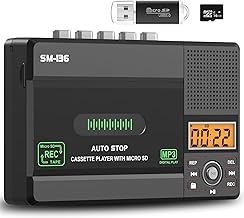
The SEMIER Small Cassette Player is best for buyers comparing USB-C and SD-card recording options. The product name also lists a loud speaker, headphone jack, a 16GB SD card, and recording to cassette, computer, or SD card via microphone. It identifies Type I tapes as the supported tape type, making tape compatibility an important purchase check.
Choose this model if you want the listed connection and storage choices, or if you also need the stated cassette-recording function. Its stated Type I support is a limitation for people whose collection includes other tape types: verify that your tapes match before buying. The name does not specify the exact computer software or file-export process, so confirm the instructions for saving MP3 files to your preferred device.
Buying Guide: How to Choose a Cassette-to-MP3 Converter
Do you want a standalone converter or a computer workflow?
Start by deciding where you want the audio files to go. A converter that records to an SD card can be convenient if you prefer to move files afterward. A USB-oriented device may suit a workflow centered on a computer. Product names do not always explain whether a computer is required, whether a cable is included, or whether software is needed, so confirm those details in the current listing and instructions.
“Standalone” can mean different things across product descriptions. Check whether the unit can record without a computer, what storage it uses, and how files are transferred. If you want to create MP3s directly, verify that MP3 is the actual saved format rather than a format you must create later using software.
Is automatic track splitting important?
A cassette may contain several songs, spoken sections, or long uninterrupted recordings. Automatic track division can reduce manual editing, but confirm how the device identifies a gap between tracks. Short pauses, applause, and quiet passages can affect where tracks are split. If accurate track boundaries matter, look for controls that allow manual start and stop or editing after recording; the supplied product details do not confirm such controls for these models.
Which storage and transfer details should you check?
Compare whether a memory card is included, the card capacity, and the process for copying files. The KLIM K7 versions and SEMIER product names list a 16GB SD card. The Reshow name highlights USB conversion but does not list an included card. These descriptions do not establish maximum supported storage, file naming conventions, or whether a card reader is required, so check the full listing before choosing.
- Confirm whether the device saves MP3 files directly.
- Check what storage is included and whether it is removable.
- Look for instructions on transferring recordings to a Windows PC, Mac, or other intended device.
- Check whether the product requires software, a cable, or a separate card reader.
How should tape compatibility affect your choice?
Read the supported tape-type information before buying. The SEMIER name specifically says it is for Type I tapes. If your collection includes tapes with different formulations or unusual formats, do not assume compatibility from the phrase “cassette player” alone. Confirm support with the seller’s specifications. Also inspect tapes for damage and make sure they play properly before attempting a full-length recording.
Do you need portability or listening accessories?
A rechargeable battery is useful when you want to operate a player away from a fixed outlet, while a built-in speaker or included earphones can offer listening options. The KLIM K7 product names list these features. SEMIER lists a speaker and headphone jack. Compare the features you will actually use, and check whether battery runtime, charging method, and earphone specifications are stated in the listing; those details are not provided here.
What affects the quality of a digital recording?
Conversion preserves what the cassette player can read; it cannot restore audio that is missing or damaged on the tape. For a more dependable transfer, use a tape that plays steadily, clean and maintain playback equipment according to its instructions, and record in a quiet setting if using a microphone-based function. Listen to a short sample before converting an entire tape. Keep an unchanged backup of the first digital copy before trimming or renaming files.
Frequently Asked Questions
Can I convert cassette tapes directly to MP3?
Yes, if the converter records or exports audio as MP3. Confirm the device’s saved file format and transfer method before purchase, because product descriptions may not explain whether conversion to MP3 happens on the device or later on a computer.
Do I need a computer to digitize cassettes?
Not necessarily. Some products are described as standalone or record to an SD card, while other workflows may use a computer. Check the exact model’s instructions to learn whether computer access is required for recording, file transfer, or editing.
Will automatic track division split every song correctly?
Not always. Automatic splitting depends on how the device detects gaps or changes in audio. Listen to the resulting files and adjust track boundaries with editing software if the splits do not match the tape.
What does Type I tape support mean for the SEMIER player?
The SEMIER product name identifies Type I tapes as supported. If your tapes are labeled with a different type or you are unsure of their formulation, check the complete compatibility information before buying.
Can I preserve the original cassette after conversion?
Yes. Digitizing a tape creates a separate audio file and does not inherently require erasing the original cassette. Store tapes away from heat, moisture, and strong magnetic sources, and keep a backup copy of the resulting digital files.