
These five products are cassette-to-digital converters, not DAT tape converters, so none can directly convert a Digital Audio Tape (DAT) to MP3. To digitize DAT, you need a compatible DAT deck and a way to capture its audio to a computer or other recording device, then export the recording as MP3. If you meant ordinary compact cassette tapes, the products below offer different conversion methods; the ClearClick model records to a USB drive, while several others use an SD card or computer connection.
| Product | Best suited for | Conversion destination |
|---|---|---|
| SEMIER Cassette Converter | People choosing between SD card and computer workflows | SD card or computer |
| KLIM K7 Cassette Player | SD-card conversion without a computer | SD card |
| DIGITNOW USB Cassette Player | Computer-based cassette capture | Computer |
| Reshow Cassette Player | Portable cassette listening and computer conversion | Computer |
| ClearClick Cassette Converter | USB-drive conversion without a computer | USB flash drive |
What You Need to Convert DAT Tape to MP3
DAT stands for Digital Audio Tape. It is a digital recording format that uses a small cassette-like tape, but it is not the same format as a standard analog compact cassette. A compact cassette player or cassette-to-MP3 converter cannot read a DAT tape simply because the tape looks similar.
For a DAT-to-MP3 transfer, the usual requirements are a working DAT deck that can play the tape, a suitable audio connection to a computer or recording interface, and software that can capture and export audio. The exact connection and settings depend on the deck and the recording. Check the deck’s outputs and the tape’s format before choosing equipment.
During capture, save an original copy in a lossless format if possible, then make an MP3 copy for everyday listening. This keeps a higher-quality source available if you later need a different file format. If the tape contains important or irreplaceable material, consider using an experienced audio-transfer service rather than risking damage with an unreliable deck.
SEMIER Cassette Converter
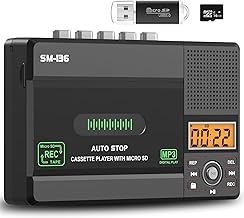
Best for: People converting standard Type I compact cassettes who want a choice of SD-card or computer-based recording. This portable player can save cassette audio to its included 16GB SD card or connect by USB for conversion using Audacity, according to the supplied product information.
It also plays SD-card audio and includes an LCD for navigating recordings. A built-in microphone supports recording, and a headphone jack is listed. These features make it a flexible option for someone who wants to listen to tapes as well as create digital files.
Why it was selected: It offers two stated cassette-conversion routes, which can suit buyers who have not decided between recording directly to a card and using a computer.
Limitation: The product information says it does not support Type IV or metal tapes. It is for compact cassettes, not DAT tapes.
KLIM K7 Cassette Player

Best for: Compact-cassette owners who prefer to convert directly to an SD card without using a computer during the transfer. The product includes a 32GB SD card and card reader, and its listed conversion process saves MP3 files to the card.
The K7 also functions as an SD-card music player and includes a built-in microphone, speaker, 3.5mm earphone jack, and earphones. Those functions may be useful for portable playback or voice recording alongside tape conversion.
Why it was selected: The included card and computer-free conversion approach make it a straightforward choice for buyers seeking a self-contained cassette workflow.
Limitation: The listing says the device does not record onto cassette tapes. It converts compact cassettes, not DAT, and the listed recording destination is the SD card.
DIGITNOW USB Cassette Converter

Best for: People who want to play a compact cassette through a computer-based conversion workflow. The product connects by USB and uses Audacity software to convert cassette audio to digital MP3 files. The listing says it requires no installation or drivers.
It is also described as a portable cassette player with a 3.5mm headphone jack and included earphones. The audio output can be used for headphone listening or connection to another speaker system.
Why it was selected: Its USB connection and software-based workflow suit users who want to manage cassette recordings on a laptop or desktop rather than record directly to removable media.
Limitation: The described conversion method relies on a computer and Audacity. It is intended for compact cassette tapes and cannot read DAT tapes.
Reshow Cassette Tape Player

Best for: Buyers who want a compact cassette player for listening as well as a USB-based route for converting tapes on a laptop or desktop. The product is described as converting standard cassettes to digital MP3 files through a USB cable.
For playback, the listing mentions standard headphones and a 3.5mm AUX connection. That output can connect to compatible earbuds, headphones, or an AUX input such as one found on some car stereos.
Why it was selected: It combines cassette playback with a computer conversion workflow and provides a 3.5mm output for listening through other equipment.
Limitation: The stated digital conversion uses a USB connection, so it is not the best fit for someone specifically seeking a standalone USB-drive or SD-card recording process. It does not convert DAT tapes.
ClearClick Cassette to USB Converter

Best for: Compact-cassette owners who want to save MP3 files to a USB flash drive without using a computer during conversion. The listing says the device needs no computer, software, or drivers and includes a 16GB USB drive.
A distinguishing feature is automatic track splitting, which is described as separating tracks into individual MP3 files. That can be useful when a cassette contains multiple songs or sections and separate files are preferred.
Why it was selected: Its direct-to-USB workflow and automatic track-splitting feature offer a different approach from products that depend on a computer or SD card.
Limitation: This is a converter for audio cassettes, not DAT. The product information does not establish compatibility with every cassette condition or recording, so check the instructions for the specific transfer.
Buying Guide: How to Choose a DAT-to-MP3 Method
Do you have a DAT tape or a compact cassette?
First identify the tape format. DAT is a digital format and requires a DAT deck; a standard cassette converter is not a substitute. A compact cassette is the familiar analog audio cassette that these five products are designed to play and convert. Confirm the tape label and, if possible, the model of the equipment that recorded it.
What equipment is needed for DAT transfer?
For DAT, start with a working deck that can play the tape. Determine which audio outputs it provides and choose a compatible way to capture the signal on a computer or recording device. The capture software can then save the audio and export an MP3. If you do not own a DAT deck, compare the cost and effort of obtaining suitable equipment with using a transfer service.
Do not buy one of the cassette products in this article expecting it to play DAT. Their listed functions cover compact-cassette playback and conversion only. For DAT, verify deck format support, output connections, and recording software requirements before purchasing any equipment.
Should you save directly to a card, USB drive, or computer?
- Choose an SD-card approach if you want a compact-cassette converter that records to removable storage. The SEMIER and KLIM K7 listings describe SD-card conversion.
- Choose a USB-drive approach if you want cassette conversion without a computer during recording. The ClearClick listing specifies MP3 files on a USB flash drive.
- Choose a computer workflow if you want to manage captured cassette audio on a laptop or desktop. The DIGITNOW and Reshow listings describe USB-connected conversion, while SEMIER also lists a computer option.
These are distinctions between the listed compact-cassette products. A DAT transfer still requires a compatible DAT deck and an appropriate capture path.
Do you need separate files for individual tracks?
Track handling matters when a tape contains multiple songs, programs, or recordings. ClearClick lists automatic track splitting. The other provided product details do not specify automatic track splitting, so do not assume they provide it. With a computer workflow, check the available software controls and be prepared to divide a long recording into separate files if needed.
What should you check before converting old tapes?
Inspect the tape and device before playback. Avoid forcing a cassette into a player if its shell is damaged or the tape is tangled. For DAT, use an appropriate DAT deck rather than a compact-cassette mechanism. Keep an untouched original recording where possible, check the resulting file from beginning to end, and retain a backup before editing or deleting the source capture.
Frequently Asked Questions
Can any of these products convert DAT tapes to MP3?
No. The five products listed are described as compact-cassette players or converters. DAT tapes require a compatible DAT deck and a separate audio-capture workflow.
What is the basic process for converting DAT to MP3?
Play the tape in a compatible DAT deck, capture its audio through a suitable connection to a computer or recording device, and export the captured recording as an MP3. The exact setup depends on the deck’s outputs and the recording.
Is DAT the same as a regular cassette tape?
No. DAT means Digital Audio Tape. Although DAT uses a small cassette-shaped tape, it is a different recording format from a standard analog compact cassette and needs compatible playback equipment.
Which listed product records cassette audio without a computer?
The KLIM K7 listing describes conversion to an SD card, and the ClearClick listing describes conversion to a USB flash drive without a computer. These features apply to compact cassettes, not DAT.
Which listed product offers automatic track splitting?
The ClearClick product information specifically lists automatic track splitting into individual MP3 files. The supplied details for the other products do not specify that feature.
Should I keep an uncompressed copy of a transfer?
Yes, if your recording workflow permits it. Keep a lossless original capture and make an MP3 copy for convenient playback. A lossless source provides more flexibility if you need to edit or export the audio in another format later.