Best Tape-to-Digital Converters for Preserving Your Old Memories
If you want to convert analog tapes and old video footage into modern digital formats, these devices provide a simple, PC-free or PC-assisted path to preserve memories. The top picks below cover analog video capture and cassette-to-digital workflows, catering to video hobbyists, casual converters, and travelers who want portability. Each choice highlights who it’s best for, along with tangible reasons and a small caveat to consider before buying.
| Product | Best For | Why It Stands Out |
|---|---|---|
| Portta VHS to Digital Converter | Video enthusiasts needing 1080p capture | Direct conversion with 1080P/30Hz recording, USB/SD storage, no PC required |
| ClearClick Video to Digital Converter 2.0 | Users with working VCRs | One-button recording, direct to USB/SD, supports multiple legacy sources |
| Oassuose VHS to Digital Converter | PC-friendly digitization | RCA/S-Video to USB-C/USB-A, captures to computer or USB/SD output |
| VIXLW VHS to Digital Converter | Easy plug-and-play capture | RCA/S-Video to USB, simple no-driver setup |
| Reshow Cassette Tape to Digital Converter | Casette nostalgics on the go | Portable, USB/SD options, records to MP3 and plays on the go |
Portta VHS to Digital Converter

This device is a converter/recorder for analog video and audio that outputs to MP4 or MP3. It supports AV/RCA, S-Video, and AUX inputs with a 3.0″ preview LCD and built-in speaker. It records up to 1080P/30Hz and stores directly to USB or TF cards. It is best for buyers who want a PC-free setup and direct playback on the device. Limitations include the need to connect CVBS or AUX properly and that it cannot play tapes or DVDs by itself.
Who it’s best for: Casual converters who want an all-in-one box without a computer and with on-device storage. It’s also suitable for classrooms or small projects where a quick digitization workflow is preferred.
ClearClick Video to Digital Converter 2.0
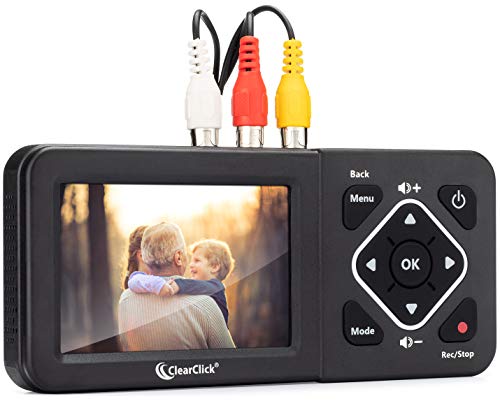
ClearClick 2.0 is a second-generation model designed to digitize video from VHS, VCRs, Hi8, camcorders, DVD players, DVRs, and gaming systems. It records directly onto a USB flash drive or SD card, with SD resolution options of SD 640×480 or 720×480. It requires a working VCR/camcorder and tapes; no standalone playback. This is the pick for users who want a straightforward, on-the-go digitization workflow with minimal setup.
Who it’s best for: Those who already own working legacy gear and want a simple, button-based capture without a computer, accepting that upscaling to HD isn’t supported.
Oassuose VHS to Digital Converter
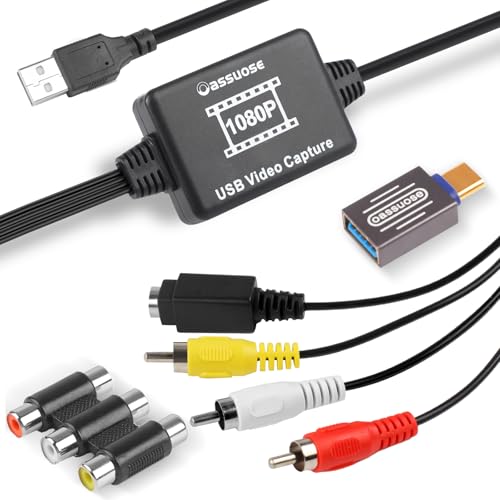
This capture device converts analog RCA or S-Video inputs to a 1080P/30fps USB-A or USB-C output. It is designed to digitize VHS, VCR, Hi8, and DV tapes to a computer or storage device. It’s plug-and-play, but may require acquisition software for some setups. It’s a balanced choice for users who want flexible PC-assisted workflows with straightforward setup.
Who it’s best for: People who intend to edit or archive footage on a computer after capture, and who are comfortable installing acquisition software.
VIXLW VHS to Digital Converter

VIXLW’s model emphasizes easy plug-and-play operation with RCA and S-Video inputs to USB output. It is suited for users who want a hassle-free digitization experience without installing drivers. The main caveat is that it relies on basic software compatibility, so advanced editing features may require external tools.
Who it’s best for: Quick-and-easy digitization for families or hobbyists who want fast results with minimal setup and no driver installations.
Reshow Cassette Tape to Digital Converter

Reshow focuses on cassette tapes with USB/SD card output and a built-in microphone for direct recording to MP3. It supports multiple play modes and provides a portable option for digitalizing cassettes on the go. A limitation to note is potential variability in MP3 quality and fidelity depending on the tape and playback setup.
Who it’s best for: Cassette collectors who want a portable, all-in-one device for capturing music and storing it in MP3 format without a computer.
Buying Guide
- What type of source are you converting? For video tapes (VHS, Hi8, DV), choose devices that explicitly support these formats and offer 720p/1080p capture. For audio tapes, look for cassette-specific converters with USB/SD output or PC compatibility.
- Do you need a PC-free solution? If you want to digitize on the go or in a classroom, consider models that record directly to USB or SD without software.
- Storage and output formats—MP4 or MP3 are common. Check whether the device stores the exact formats you need and if it supports uncompressed audio where fidelity matters.
- Input options—RCA/AV, S-Video, or AUX inputs determine compatibility with your old gear. Ensure the device has the right connectors for your tapes or camcorders.
- Capacity considerations—USB drives and SD cards should offer enough space, and some devices require external power for large drives or high-capacity cards.
- After-capture workflow—If you plan to edit, ensure the resulting files are easily imported by your editing software or that the device supports direct PC transfer.
FAQ
What is the best option for converting old VHS tapes to digital?
The best option depends on your needs: a PC-free, quick workflow favors devices like Portta or ClearClick, while PC-assisted workflows benefit from Oassuose for flexible editing later.
Do these devices require a computer to work?
Some do, some don’t. PC-free units record directly to USB/SD; others require software on a computer to capture or edit.
Can I still watch my tapes after digitization?
Yes, you can play back the digitized files on the device or transfer them to a computer for broader playback options.
What formats will I get after conversion?
Common formats include MP4 for video and MP3 for audio, with some devices offering WAV or LPCM options depending on the model.
Are there any limitations I should expect?
Some devices require working original tapes and camcorders; others may have limited upscaling and rely on the original recording quality.