
The most reliable way to digitize a microcassette is to play it in a compatible microcassette recorder and capture its audio through a computer-connected audio interface. The products below offer cassette-to-digital features, but their listings do not confirm microcassette compatibility. A computer capture device is best for users who already have a suitable microcassette player; standalone cassette converters may suit standard cassette tapes, but should not be assumed to work with microcassettes.
| Product | Best suited for | Important qualification |
|---|---|---|
| ClearClick Cassette to USB | Direct USB conversion of supported cassette tapes | Microcassette compatibility is not stated |
| Reshow Cassette Player Recorder | Computer-based conversion and tape playback | Microcassette compatibility is not stated |
| DigitPro Audio Capture Card | Capturing audio from a separate player | Requires a suitable playback source |
| DIGITNOW Audio Capture Card | Computer recording with included software | Requires a suitable playback source |
| SEMIER Cassette Converter | SD-card conversion of supported tapes | Does not support Type IV or metal tapes; microcassette support is not stated |
ClearClick Cassette Tape To USB

The ClearClick Second Generation converter is designed to transfer audio cassette tapes to MP3 files on a USB flash drive. Its listed features include a 16 GB USB drive, automatic track splitting, and setup that does not require a computer, software, or drivers.
Best for: People who want a simple, standalone workflow for cassette formats the device supports. Automatic splitting may help separate recordings into individual files without manually creating each track.
Why it is included: It is the most direct USB option in this selection. The stated workflow saves MP3 files to the included drive rather than requiring a computer for capture.
Microcassette caution: The product description refers to audio cassette tapes and does not confirm microcassette support. Do not assume a microcassette will fit or play correctly. Confirm compatibility with the seller or manufacturer before choosing it for microcassette recordings.
Reshow Portable Cassette Player And Converter

The Reshow is a portable cassette player and recorder that can convert audio tapes to digital files through a USB-C connection to a computer. The listing also describes a built-in speaker, headphone jack, microphone, and AUX input for recording audio onto blank tapes.
Best for: Buyers who want a portable cassette player with computer-based conversion features, as well as playback and recording functions. It is a better fit for someone who expects to use the device for more than one cassette-related task.
Why it is included: Its USB-C connection provides a route for digitizing audio on a computer, while the built-in speaker and headphone jack add listening options. The product description specifically mentions conversion to digital files.
Microcassette caution: The listing does not state that the player accepts microcassettes. Confirm tape size and format compatibility before buying it for this purpose. Its USB-C cable is described as part of a computer-based conversion process, so it is not presented as a standalone USB-drive recorder.
DigitPro USB Audio Capture Card

The DigitPro audio capture card connects an analog audio source to a computer over USB. Its listed inputs include 3.5 mm and left/right audio connectors. The product description says it can transfer audio from cassette tapes, records, and radio to a PC or Mac and convert recordings to MP3 or WAV.
Best for: People who already own a microcassette recorder with an appropriate audio output and want to record its playback on a computer. This type of capture device can be useful when the playback deck, rather than the tape converter, determines compatibility.
Why it is included: Its listed analog inputs and computer recording workflow make it a flexible option for capturing audio from a separate source. It does not depend on the tape fitting inside a standard cassette converter.
Microcassette caution: This is an audio capture card, not a microcassette player. You need a compatible playback device and a suitable connection to the listed input. The listing notes that it is not compatible with Mac OS 10.15, so check your operating system before choosing it.
DIGITNOW USB Audio Capture Card

The DIGITNOW capture card records analog audio into a computer through USB. It has a 3.5 mm input and left/right audio connectors, and the listing describes recording from microphone, line-in, or auxiliary sources. It also says that professional audio capture and conversion software, identified as Audacity, is included.
Best for: Users who prefer to record and manage audio on a computer and have a separate microcassette playback device. It may be a better fit than a cassette deck-style converter when the existing player provides an output that can connect to the capture card.
Why it is included: It offers a computer-centered recording workflow and multiple stated input types. The product description says no extra power supply is required and identifies software for capturing and converting audio.
Microcassette caution: The capture card does not play tapes, and its listing does not establish microcassette compatibility. Check the playback device’s output and the computer’s operating-system requirements before selecting this setup.
SEMIER Cassette Converter With SD Card
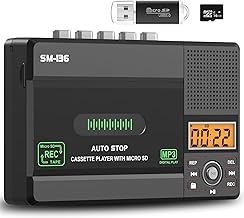
The SEMIER player supports two described conversion routes: recording cassette audio to an included SD card, or connecting to a computer by USB and using Audacity. Its listed features include an LCD, a speaker, a headphone jack, and the ability to play and record audio.
Best for: Buyers who want SD-card recording or a computer-based option for cassette tapes the device supports. The two stated conversion methods give users a choice between saving to removable storage and recording through software.
Why it is included: It provides more than one listed way to create digital audio files and includes a 16 GB SD card. Its compact dimensions and LCD are also identified in the product description.
Microcassette caution: The listing says the device does not support Type IV or metal tapes, and it does not confirm microcassette support. Verify both the physical tape format and compatibility before purchase; the included SD card does not resolve a playback-format mismatch.
Buying Guide: How To Choose A Microcassette Digitizing Setup
Does the converter need to play microcassettes?
Start by checking whether the tape itself fits the playback device and whether that device supports the recording format. Microcassettes are a distinct physical format from standard audio cassettes. The five product listings above describe cassette or analog-audio conversion but do not explicitly confirm microcassette playback. That distinction matters: a converter can record audio only after a compatible player has successfully played the tape.
If you already have a microcassette recorder, a capture card may be the more adaptable route. Connect the player’s audio output to the capture card’s matching input, then record to a computer. If you do not have a suitable player, first find a microcassette playback device whose format and output meet your needs.
Should you choose direct USB, SD card, or computer recording?
- Direct USB drive: ClearClick is listed as saving MP3 files to a USB flash drive without a computer. Choose this type of workflow only if the device is confirmed to play your tape format.
- SD card: SEMIER lists recording cassette audio to an included SD card. This can reduce reliance on a computer during capture, but it does not establish microcassette compatibility.
- Computer capture: DigitPro and DIGITNOW are capture cards, while Reshow and SEMIER describe computer conversion options. Computer recording offers a way to manage the captured file, but requires compatible hardware, connections, and software.
What connections should you check?
Inspect the microcassette player for an audio output and identify its connector before buying a capture device. The DigitPro and DIGITNOW listings mention 3.5 mm and left/right audio connectors. Confirm that the player’s output can connect to the selected input; connector shape alone does not guarantee that a particular cable or setup is included.
Also check the computer’s operating system. DigitPro lists support for older Windows versions and Mac OS 10.7–10.14, and specifically notes that Mac OS 10.15 is not compatible. DIGITNOW lists Windows support and describes computer software. Review the current product details for exact system requirements before purchase.
Which digital file format is appropriate?
MP3 is commonly used when the goal is convenient playback and sharing. WAV may be preferable when a capture workflow offers it and you want an uncompressed file for editing or archiving. The listed capture-card products mention MP3 and WAV conversion; ClearClick specifies MP3. Preserve an original capture before editing, and keep a separate backup if the recording is important.
How can you prepare the tape and recording?
Use a compatible player that operates normally, and make a short test recording before transferring a long tape. Listen for excessive noise, low volume, dropouts, or playback problems. Record in a quiet environment if the player or connection introduces audible noise. Avoid repeatedly playing a fragile or damaged tape; if the recording is valuable and the tape appears compromised, consider professional digitization.
For computer-based recording, capture the tape in real time: the audio must play through the player while the computer records it. Check that the recording software is using the intended input, make a brief test, and confirm that the resulting file plays before digitizing the full recording.
Frequently Asked Questions
Can these products convert microcassettes directly?
The supplied product information does not confirm microcassette compatibility for any of the five products. Verify support before buying. A capture card can digitize audio from a separate player, but it does not play microcassettes itself.
What is the simplest way to digitize a microcassette?
Use a compatible microcassette player with an audio output, connect it to a computer audio capture device, and record playback with suitable software. Confirm the player-to-input connection and software settings with a short test.
Do I need a computer to convert the recordings?
Not always. ClearClick lists saving MP3 files to a USB drive without a computer, and SEMIER lists SD-card recording. However, neither listing confirms microcassette playback, so a compatible player remains essential.
Can a USB capture card play the tape?
No. The DigitPro and DIGITNOW products are audio capture devices. They record audio from a connected source; a separate compatible tape player must provide the playback audio.
Should I save the recording as MP3 or WAV?
Choose MP3 for compact, convenient playback when the converter offers it. Choose WAV when available if you want an uncompressed file for editing or preservation. Keep a backup of important recordings.
What should I verify before ordering?
Confirm microcassette format support, playback-device outputs, capture-device inputs, included cables and software, and computer operating-system compatibility. Product descriptions that say “cassette” alone should not be treated as proof of microcassette support.