
The best digital console for live sound depends on channel needs, hands-on controls, and how much onboard processing a setup requires. The PreSonus StudioLive Series III SE 32 is best suited to larger professional systems, while the ALTO TMD16 offers a more compact digital-console format with physical faders and a display. For smaller, simpler rigs, the Yamaha MG10XU, FULODE 16-channel mixer, and K-mxerpro 8-channel mixer provide useful combinations of inputs, effects, or USB playback.
| Product | Best for | Standout feature |
|---|---|---|
| PreSonus StudioLive Series III SE 32 | Large professional live systems | 40 channels and 26 mix buses |
| ALTO TMD16 | Hands-on digital mixing | Touch faders and a color display |
| FULODE 16-Channel Mixer | Effects-rich small performances | 99 DSP effects and channel mute buttons |
| Yamaha MG10XU | Compact live and recording setups | USB and SPX effects |
| K-mxerpro 8-Channel Mixer | Small events and basic streaming | Bluetooth and USB playback |
PreSonus StudioLive Series III SE 32
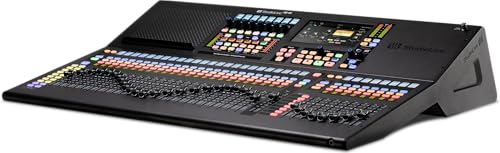
Best for: Larger live productions that need substantial channel and mix-bus capacity. The listed specifications include 40 channels and 26 mix buses, integrated recording, and advanced audio networking.
This is the strongest match in the list for buyers specifically seeking a professional digital console. Its processing includes seven State-Space modeled EQ options and eight vintage-inspired compressor options on every input and bus. Milan-certified AVB networking supports connections with compatible PreSonus stage boxes, personal monitor mixers, other StudioLive Series III mixers, and an AVB-D16 Dante bridge.
Why it was selected: It combines extensive routing capacity, onboard processing, recording, and networking for a more complex live system. It is better suited to venues or productions with many sources and monitor mixes than to a small, straightforward setup.
Limitation: The listed 40-channel and 26-bus capacity may be more than a small band or basic event needs. Confirm system requirements and the networking equipment needed for a planned setup.
ALTO TMD16 Digital Mixer

Best for: Operators who want a 16-channel digital mixer with direct, tactile controls. The TMD16 has 100mm capacitive touch faders, dedicated encoders, and a 7-inch color display, so the listed interface does not require a tablet.
Its 10 digital mic preamps and versatile inputs are described for live sound in small venues, rehearsal spaces, event centers, and houses of worship. Onboard processing includes parametric EQ, compression, and a 16-preset effects engine. That processing can reduce the need to add separate outboard equipment for the listed functions.
Why it was selected: It offers a clear middle ground between compact mixers and larger professional consoles: digital controls and processing in a 16-channel format. It is better for users who value hands-on fader operation than for buyers who want a minimal, knob-only mixer.
Limitation: The product information lists 10 digital mic preamps, not 16. Buyers should check input types and preamp needs against their exact microphone and instrument count.
FULODE 16-Channel Mixer

Best for: Small performances, karaoke, rehearsals, and DJ-style setups that benefit from onboard effects and playback options. The mixer provides Bluetooth streaming, USB flash-drive playback, a digital display player, and 99 DSP effects, including reverb, delay, and ambience.
Each channel has independent gain, three-band EQ, and a mute button. The master section adds a seven-band graphic EQ for broader sound shaping. Its hybrid input jacks are described as supporting condenser microphones with 48V phantom power, as well as dynamic microphones, wireless systems, electric guitars, and DI boxes.
Why it was selected: Its channel-level controls, plentiful effects, and playback features make it a flexible option for performers who want several functions in one mixer. It is better for a feature-focused small rig than a system that needs the advanced routing and networking of a professional digital console.
Limitation: The listed details do not specify advanced digital-console networking or integrated multitrack recording. Check the required routing and recording workflow before choosing it for a complex production.
Yamaha MG10XU 10-Input Mixer

Best for: Smaller live setups that need a familiar mixer layout, USB, and built-in effects without the channel count of a larger console. The MG10XU is a 10-channel stereo mixer with USB and SPX digital effects.
Yamaha lists discrete Class A D-PRE preamps with an inverted Darlington circuit. Three-band EQ and high-pass filters provide channel shaping and a way to reduce unwanted low-frequency noise. These features suit a compact band, presentation, or recording arrangement where basic processing and a manageable footprint matter.
Why it was selected: It offers practical digital functions in a compact mixer and is a relevant alternative for buyers searching for live-sound consoles who may not need a fully digital surface. It is better for straightforward mixing than for large systems requiring extensive bus routing.
Limitation: The listed features do not describe a full digital-console workflow with a screen, touch faders, or extensive networking. Avoid treating it as a substitute for those functions if they are central to the setup.
K-mxerpro 8-Channel Mixer

Best for: Small events, simple live-streaming setups, and users who want several playback connections. The mixer has eight channels with XLR and unbalanced quarter-inch inputs on all channels, plus REC and TAPE input and output options.
Bluetooth and USB support music playback from devices, and the product information says audio can be recorded to a USB flash drive. Each channel includes gain and three-band EQ controls, while built-in reverb and delay provide basic effects. A headphone jack supports private monitoring, and the mixer lists 48V phantom power.
Why it was selected: It covers common small-system needs—multiple inputs, playback, basic EQ, effects, and monitoring—in one unit. It is better for users prioritizing accessible connections and simple operation than for engineers needing deep digital routing.
Limitation: Eight channels may be restrictive as a performance grows. The listed features do not establish the advanced bus architecture or networked stage-box support found on larger digital consoles.
Buying Guide: How To Choose A Live-Sound Digital Console
How many channels and microphone preamps do you need?
Count every source that may need its own channel: vocal microphones, instruments, playback devices, and any additional inputs required for a performance. Then allow room for occasional guest microphones or extra instruments. Channel count and mic-preamp count are not always the same, so check both figures. For example, the ALTO TMD16 is described as a 16-channel mixer with 10 digital mic preamps. A small setup may be served by an eight- or 10-channel mixer, while larger productions may require much greater capacity.
Do you need a true digital console or digital features?
Product descriptions use “digital” in different ways. A true digital console generally provides digital mixing controls and processing; the ALTO TMD16 and PreSonus StudioLive are explicitly described as digital mixers or consoles. Other products in this group combine conventional mixer controls with digital effects, USB, or Bluetooth. Decide whether the essential requirement is a digital control surface, or whether effects and convenient playback are enough.
What processing should be built in?
Consider which tools you need for each input and for the overall mix. EQ shapes frequency balance, compression controls dynamics, and reverb or delay adds effects. The ALTO lists parametric EQ, compression, and a 16-preset FX engine. The FULODE lists channel EQ and 99 DSP effects, plus a master graphic EQ. The Yamaha lists three-band EQ, high-pass filters, and SPX effects. Match the feature list to your actual workflow rather than choosing only by the number of effects.
How many monitor mixes and buses are required?
Performers may need separate monitor mixes so each person can hear a useful balance. The number of available mix buses can limit how many independent mixes a console supports. The PreSonus lists 26 mix buses, making its capacity more suitable for complex arrangements than a basic compact mixer. If monitor routing matters, verify the console’s bus count and output configuration before purchase; channel count alone does not answer this question.
Will you use USB, Bluetooth, or networked audio?
USB, Bluetooth, and audio networking serve different purposes. USB may support a computer connection or playback and recording, depending on the mixer. Bluetooth is useful for wireless music playback but should not be assumed to provide a complete recording workflow. The PreSonus lists AVB networking and integrated recording, while the K-mxerpro and FULODE list convenient USB and Bluetooth options. Confirm the exact connection method and recording functions needed for the intended system.
Which controls suit your operating style?
A touch-screen digital interface can provide flexible access to processing and routing, while physical faders and dedicated controls may make adjustments more direct. The ALTO lists 100mm touch faders, encoders, and a color display. Compact mixers such as the Yamaha and K-mxerpro emphasize simpler channel controls. Consider who will operate the system, how quickly adjustments need to be made, and whether the operator prefers a display-based workflow or straightforward physical controls.
Is phantom power necessary?
Some condenser microphones require 48V phantom power. Check whether the mixer provides it and whether it is appropriate for the microphones in use. The FULODE and K-mxerpro list 48V phantom power. Match the mixer’s input and power details to the specific microphones and other connected equipment; do not assume every microphone needs phantom power.
Frequently Asked Questions
What is the best digital console for a larger live-sound setup?
The PreSonus StudioLive Series III SE 32 is the most capable option listed for larger systems, with 40 channels, 26 mix buses, integrated recording, and advanced audio networking.
Which mixer is best for a hands-on digital workflow?
The ALTO TMD16 is the clearest fit for hands-on digital operation because its listed controls include 100mm capacitive touch faders, dedicated encoders, and a 7-inch color display.
Can a compact USB mixer work for live sound?
Yes, if its inputs, outputs, and mixing features match the event. The Yamaha MG10XU offers 10 channels, USB, SPX effects, EQ, and high-pass filters for more compact setups.
Is Bluetooth enough for recording a live performance?
Not necessarily. Bluetooth is listed as a playback connection on some mixers, while recording may depend on USB or another output. Check the mixer’s stated recording functions and connection options separately.
How many channels should I choose?
Choose enough channels for all microphones, instruments, and playback sources, with some room for additions. Also check mic-preamp count and mix-bus capacity if the setup needs multiple microphones or separate monitor mixes.
Do all digital mixers include effects?
No. Effects vary by model. The listed options range from Yamaha SPX effects and ALTO’s 16-preset FX engine to the FULODE’s 99 DSP effects. Confirm the specific processing types required before choosing a mixer.