
Best Digital Pianos That Feel Real: Realistic Touch and Sound for Every Player
If you’re seeking a digital piano that truly feels like the real thing, these models deliver weighted, responsive keys and authentic tones that satisfy both beginners and seasoned players. The following picks emphasize hammer-weighted action, ivory-like key texture, and convincing acoustic tones. Ideal buyers include students needing classroom-like touch, hobbyists seeking home practice realism, and performers needing portable practice with true-feel response. Below, five top options are compared for touch quality, sound engine, portability, and value.
| Product | Key feel | Best for |
| Roland FP-10 Compact 88-Note Digital Piano | 88-key, authentic ivory feel from SuperNATURAL Piano | Players seeking studio-grade feel in a compact package |
| Alesis Recital Pro Digital Piano 88-Key Weighted | 88-weighted hammer-action keys | Home performers wanting premium hammer action |
| Casio CDP-S160 88-Key Weighted Digital Piano | Scaled hammer-action keys, slim & portable | Beginners and students needing portability |
| PLYOR 88 Key Digital Piano Keyboard | 88-key weighted action for an authentic feel | Beginners to advanced players seeking affordable weight |
| TERENCE 88-Key Digital Piano | Weighted action with dual-player mode | Family practice, lessons, and duet learning |
Roland FP-10 Compact 88-Note Digital Piano

The FP-10 is built around Roland’s FP-Series ethos for realistic piano feel and sound. Its SuperNATURAL Piano Sound Engine delivers rich, responsive tones that resemble an acoustic piano, while the 88-note keyboard provides an authentic playing experience with expressive touch. Best for players who want a compact, travel-friendly instrument without sacrificing the acoustic-like action. A potential limitation is that, in portable configurations, some users may miss additional onboard features found on larger models, but the FP-10 keeps core playability strong for practice and performance alike.
61 Key Keyboard Piano, Portable Electric Piano Kit with Stand for Beginners

This 61-key setup emphasizes teaching and creativity with adjustable tone and rhythm settings, built-in demo songs, and percussion options. It suits beginners who want guided practice and multi-genre exploration. It includes recording and playback to track progress, making it useful as a practice coach at home. Best for beginners and casual players who value built-in teaching aids over full-size keyboard realism; note that the 61-key format isn’t ideal for advancing to advanced repertoire that requires 88 keys.
Alesis Recital Pro Digital Piano 88-Key Weighted with Hammer Action

The Recital Pro pairs 88-weighted hammer-action keys with a 20W speaker system and multiple premium voices. It’s designed for players who want a serious hammer-action feel on a budget, plus the option to layer sounds or split the keyboard. Best for home players who want a robust practice piano with real-weight keys; caution: as a budget option, some might find the key texture not as refined as premium brands, but it remains a strong value for serious practice.
PLYOR 88 Key Digital Piano Keyboard with Stand & 3 Pedals
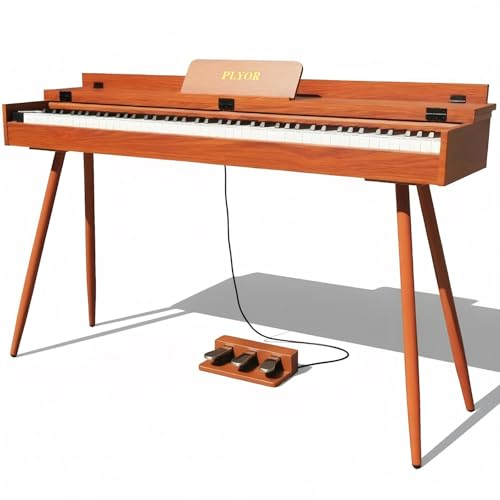
The PLYOR model offers 88-key weighted action with a multifaceted control panel for tone, recording, and duet-ready features. Its weighted action is designed to mimic a grand piano’s feel, appealing to players who value touch responsiveness alongside practical features like recording and dual-mode operation. Best for beginners moving toward intermediate pieces, or players who want a connected practice setup; limitation: some advanced performers may seek more premium keyboard feel than entry-to-mid-range weighted options provide.
Casio CDP-S160 – 88-Key Weighted Digital Piano

The Casio CDP-S160 features scaled hammer-action keys and a slim, portable frame. Its duet mode and built-in tones make it practical for lessons and practice away from home. Best for students and small spaces where portability matters; avoid this if you need a deeper, concert-grade hammer action or a larger keyboard desk setup, as it prioritizes portability over heftier studio specifications.
Vangoa Keyboard Piano 61 Key with Learning Modes

The Vangoa 61-key model includes LED-lit keys and three teaching modes, making it friendly for beginners while still offering USB connectivity and audio output for better sound amplification. Best for learners who benefit from guided practice and visual cues; note that the 61-key format limits repertoire compared to full 88-key models, but its learning features offset this for early-stage players.
Buying Guide: Key Considerations for Choosing a Real-Feel Digital Piano
- Key action: Prefer weighted or hammer-action keys for a realistic touch. The closer the action to an acoustic piano, the better the feel for dynamic expression.
- Sound engine: Look for authentic piano voices (e.g., SuperNATURAL, premium samples) and responsive touch to translate playing into realistic tone.
- Keyboard size: 88 keys are standard for serious playing; 61-key models are suitable for beginners or space-limited setups.
- Speaker system: Built-in speakers should provide clear, balanced tone. Consider external amplification if you plan to perform live.
- Duet and teaching features: Dual-player modes, lesson aids, and recording capabilities help practice and collaboration per family or teacher-student use.
- Portability and setup: Slim, lightweight units aid travel and small living spaces; consider a sturdy stand and pedal setup for realism.
- Connectivity: USB-MIDI, audio outputs, and Bluetooth options can extend practice and recording workflows.
- Durability and materials: Ivory-like key surfaces and anti-yellowing construction improve long-term feel and look.
FAQ
- What is the best digital piano for an authentic key feel? The Roland FP-10 and Alesis Recital Pro offer highly regarded weighted hammer-action keys that closely mimic an acoustic piano’s touch.
- Should I buy an 88-key or 61-key keyboard for realism? For realistic repertoire and technique, an 88-key model is standard. 61-key boards are better for beginners or space-constrained setups.
- Are built-in speakers enough for practice? Many models provide adequate onboard sound; for performance or larger rooms, external speakers or amps improve projection.
- Do duet modes help with lessons? Yes. Duet or split modes allow teacher-student or two players to share the keyboard with independent volume control, enhancing practice sessions.
- What should I consider beyond feel? Consider sound authenticity, durability, portability, and the availability of recording or practice features to support learning and progression.
- Are weighted keys necessary for beginners? Weighted keys provide a more realistic touch, helping form proper finger technique as players advance to more complex repertoire.