
The best digital stereo audio recorder depends on what you need to capture: the Zoom H1 Essential suits portable stereo recording, while the Zoom H1 XLR is better for connecting external microphones. The TASCAM DR-05XP and Zoom H4 Essential offer additional recording options, and the Tonfarb recorder is oriented toward long-duration voice recording. Compare the input types, recording format, and controls before choosing.
| Recorder | Best For | Standout Detail |
|---|---|---|
| Zoom H1 Essential | Portable stereo recording | 32-bit float and built-in X/Y stereo microphones |
| Tonfarb 136GB Recorder | Lectures and meetings | Voice activation and A-B repeat |
| Zoom H1 XLR | External microphones and instruments | Two XLR/TRS combo inputs |
| TASCAM DR-05XP | Handheld field and USB recording | 32-bit float and USB-C interface |
| Zoom H4 Essential | Multitrack recording setups | Four tracks and two XLR/TRS inputs |
Zoom H1 Essential For Portable Stereo Recording

The Zoom H1 Essential is a handheld recorder aimed at musicians, podcasters, and content creators who want a simple way to capture stereo sound. Its listed features include 32-bit float recording, X/Y stereo microphones, USB microphone mode, and accessibility features. The product information also lists up to 10 hours of battery life.
Best for: People who want to record performances, rehearsals, interviews, lessons, or audio for videos without building a setup around separate microphones. The built-in X/Y microphones make it a straightforward choice for capturing a stereo scene, while USB microphone mode gives it an additional role in a computer-based recording setup.
The product is also described for podcast episodes, meetings, lectures, voiceovers, and notes. That range makes it a practical pick for buyers who expect to record different kinds of content with one device.
- Choose this if built-in stereo microphones and portable recording are priorities.
- Consider another model if your setup specifically requires XLR microphone inputs; this model’s listed features do not include them.
Tonfarb 136GB For Voice Recording
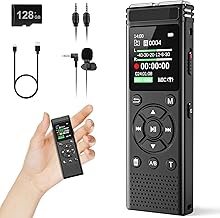
The Tonfarb digital voice recorder is presented as a device for lectures, meetings, classes, and interviews. Its product name lists 136GB of storage and a claimed maximum recording duration of 9,775 hours. It also identifies voice-activated recording, noise reduction, playback, A-B repeat, MP3 player functionality, and password protection.
Best for: Buyers focused on spoken-word recording and reviewing material later. Voice activation is listed as a feature for recording when sound is detected, while A-B repeat can be useful for replaying a selected passage during study or transcription. The built-in playback and MP3 player functions point to a device intended for both recording and listening.
This model is a different kind of choice from the handheld stereo recorders in this list. The provided product information emphasizes voice recording features rather than stereo microphones, XLR inputs, or advanced music recording. The listed recording-duration figure is a product claim, not a guarantee of how much audio fits under every recording condition.
- Choose this if your main needs are lectures, meetings, and speech playback tools.
- Avoid this if you specifically need documented stereo microphone or external XLR input features; those are not listed in the supplied product details.
Zoom H1 XLR For External Microphones
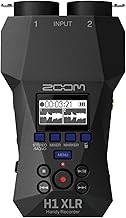
The Zoom H1 XLR is a two-channel recorder for filmmakers, musicians, and podcasters. Its listed features include 32-bit float recording at up to 96kHz, two locking XLR/TRS combo inputs, a 3.5mm stereo mic/line input, and an OLED waveform display. Those connections distinguish it from small recorders that rely mainly on built-in microphones.
Best for: Users who want to connect microphones, instruments, or other sources through XLR/TRS inputs. Two combo inputs make it better suited than the H1 Essential when a recording plan depends on external gear. The waveform display is listed as a way to monitor levels visually.
The product description positions this model for interviews, podcasts, and everyday recording, with 32-bit/96kHz recording for detailed sound. It may suit creators who want a compact two-channel recorder while using their own microphones or instruments.
- Choose this if you need two XLR/TRS inputs or a 3.5mm stereo mic/line input.
- Consider another option if you prefer a recorder whose listed features center on built-in X/Y stereo microphones; that is not the emphasis of this model’s supplied description.
TASCAM DR-05XP For Handheld Field Recording

The TASCAM DR-05XP is described as a 32-bit float portable handheld field recorder and USB-C audio interface. Its listed uses include digital stereo recording of music, sound, voice, audio for video, and podcasting. The product name makes its two main roles clear: recording on location and connecting as an audio interface over USB-C.
Best for: Buyers who want a handheld recorder for varied sound sources and also need a USB-C interface option. Its stated uses span music, voice, field sound, video, and podcasts, so it is a broad-purpose candidate rather than a model presented only for lectures or only for external XLR setups.
The 32-bit float designation may appeal to users considering recording-format options, but the supplied product information does not specify additional controls, microphone inputs, battery life, or storage details. Check the full product listing for those details if they are central to your setup.
- Choose this if a portable field recorder and USB-C audio interface are both relevant.
- Check before buying if you need a particular input type or a specific battery or storage specification, since those details were not provided here.
Zoom H4 Essential For Four-Track Recording
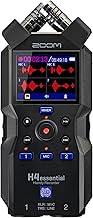
The Zoom H4 Essential is a handheld recorder described for musicians, podcasters, and filmmakers. Its product name lists 32-bit float recording, four tracks, stereo microphones, two XLR/TRS inputs, and USB audio interface functionality. This combination gives it more stated input and track flexibility than the two-channel Zoom H1 XLR.
Best for: Creators who need a recorder with built-in stereo microphones as well as connections for external sources. Four-track recording and two XLR/TRS inputs make it a stronger fit for setups that need more than a basic single-source capture, while USB audio interface functionality adds a computer-use option.
The H4 Essential is the most feature-rich option in this comparison based on the supplied product names. That additional capability may be unnecessary for someone who only wants to record a lecture or make quick voice notes. Product details provided here do not specify battery life, storage capacity, or recording duration.
- Choose this if you want stereo microphones, two XLR/TRS inputs, and four-track capability in one recorder.
- Consider a simpler model if you do not need the additional inputs or track count.
Buying Guide: How To Choose A Digital Stereo Audio Recorder
Do you need built-in microphones or external inputs?
Built-in microphones are convenient for quick recordings and capturing the surrounding sound. The Zoom H1 Essential and Zoom H4 Essential list stereo microphones, making them natural options when you want to record without first connecting an external microphone. The H1 XLR instead emphasizes two XLR/TRS inputs and a 3.5mm stereo mic/line input for users planning to connect other sources.
Think through the actual recording setup before comparing models. A musician recording a rehearsal with a handheld device may prioritize built-in stereo capture. A podcaster using separate microphones may care more about external inputs. If you need both types of recording, compare the H4 Essential’s listed stereo microphones and XLR/TRS inputs.
How many channels or tracks does your recording need?
Channel and track requirements depend on how many independent sources you plan to record. The H1 XLR is listed as a two-channel recorder with two combo inputs. The H4 Essential lists four tracks and two XLR/TRS inputs. Those descriptions are not interchangeable: input count describes available connections, while track count describes a recording capability. Confirm that the specific workflow you want is supported before choosing.
For one voice, a simple stereo recording, or quick notes, a more elaborate multitrack setup may not be necessary. For a project involving multiple sources, having more input and track options can make the recorder a better match.
What does 32-bit float mean for your choice?
Several models in this list identify 32-bit float recording: the Zoom H1 Essential, Zoom H1 XLR, TASCAM DR-05XP, and Zoom H4 Essential. It is a useful specification to compare when reviewing recording formats, but it should not be the only deciding factor. Consider microphone and input needs, portability, track requirements, and whether you want to use the recorder as a USB audio interface.
Do not assume that a format label guarantees a particular result in every recording situation. Microphone placement, the sound source, and the full recording setup still matter. Check the manufacturer’s details for any format or workflow requirements that are important to your project.
Will you record speech, music, or field sound?
For lectures, meetings, and interviews, look for practical speech-focused features such as voice activation, playback, and repeat controls. The Tonfarb product lists those options, including A-B repeat. For music or stereo ambience, compare models with clearly listed stereo microphones, such as the Zoom H1 Essential and H4 Essential. The TASCAM DR-05XP is described for field recording as well as music, voice, video, and podcast audio.
Match the recorder to the content you capture most often, not just the longest feature list. A dedicated voice recorder can be a convenient fit for class notes, while external inputs or stereo microphones may matter more for productions and performances.
Do you need USB connectivity?
USB features vary across this selection. The H1 Essential lists USB microphone mode, the TASCAM DR-05XP is described as a USB-C audio interface, and the H4 Essential lists USB audio interface functionality. These terms point to computer-related uses, but they do not establish every detail of compatibility or setup. Review the product documentation if you need a particular computer, software, or connection workflow.
Which details should you verify before ordering?
Confirm the specifications that are not included in the product information above. Depending on your priorities, check storage capacity, file formats, battery type and runtime, included accessories, dimensions, supported microphones, and computer connection requirements. Do not infer these details from a model name alone.
Also distinguish between a product’s stated maximum recording duration and real-world recording time. Recording settings, file format, available storage, and power conditions can affect how long a device records. For the Tonfarb model, treat the stated duration as a listed claim and verify how it applies to the intended use.
Frequently Asked Questions
What is the best digital stereo recorder for simple portable recording?
The Zoom H1 Essential is a strong match for simple portable stereo recording because its listed features include X/Y stereo microphones, 32-bit float recording, and USB microphone mode.
Which recorder in this comparison has XLR inputs?
The Zoom H1 XLR lists two locking XLR/TRS combo inputs. The Zoom H4 Essential also lists two XLR/TRS inputs.
Which option is aimed at lectures and meetings?
The Tonfarb 136GB recorder is presented for lectures, meetings, classes, and interviews. Its listed features include voice activation, playback, and A-B repeat.
Which recorder also works as a USB audio interface?
The TASCAM DR-05XP is described as a USB-C audio interface. The Zoom H4 Essential also lists USB audio interface functionality, and the H1 Essential lists USB microphone mode.
Should I choose a two-channel or four-track recorder?
Choose based on your recording setup. The Zoom H1 XLR is listed as a two-channel recorder, while the Zoom H4 Essential lists four tracks. Consider how many sources and tracks your project requires before buying.