
A digital-to-coax converter can mean an audio adapter that changes optical digital audio to coaxial digital audio, or a TV modulator that sends video over RF coaxial cable. The PROZOR bi-directional converter is the clearest match for digital audio connections. The other options below serve related but different coaxial needs, including converting digital TV broadcasts or sending HDMI or RCA video to an older TV. Check the signal direction before choosing: these devices are not interchangeable.
| Product | Best For | Signal Conversion |
|---|---|---|
| PROZOR Bi-Directional Optical Converter | Digital audio device connections | Optical ↔ coaxial digital audio |
| PROZOR Digital-to-Analog DAC | Connecting digital audio to analog speakers or equipment | Digital audio → RCA/3.5 mm analog |
| kurtmark HDMI to RF Modulator | Sending HDMI video to an RF-input TV | HDMI → RF coaxial |
| ZJBOX Digital TV Converter Box | Receiving over-the-air ATSC broadcasts | Antenna broadcast → TV output |
| RCA RF Coaxial Modulator | Connecting composite-video equipment to a coaxial TV input | RCA video → RF coaxial |
PROZOR Bi-Directional Optical Converter

Best for: Users who need to connect digital audio equipment with mismatched optical Toslink and coaxial SPDIF ports. This is the closest match to a digital-to-coax audio converter in this selection. A switch selects the input, and the device supports conversion between coaxial and optical digital audio.
It supports LPCM 2.0, DTS, Dolby AC-3, and 5.1-channel formats, with sampling rates up to 192 kHz and 24-bit audio. The listed features also describe coaxial input being sent to coaxial and Toslink outputs, or Toslink input being sent to coaxial and Toslink outputs. The supplied optical cable can help with setup.
Choose this if you need a digital audio format and port conversion, rather than a video signal adapter. Caution: Confirm that your source and receiving equipment use compatible audio formats and select the correct input; this is not a converter for analog RCA audio.
PROZOR Digital-to-Analog Audio DAC

Best for: People who want to connect a digital audio source to analog RCA or 3.5 mm equipment. The DAC accepts coaxial or Toslink digital PCM audio and converts it to left/right RCA and 3.5 mm analog outputs simultaneously. It is useful when the goal is to get analog sound from a digital output, rather than convert optical digital audio into coaxial digital audio.
The listed features include support for sampling rates up to 192 kHz and 24-bit S/PDIF input. The manufacturer also notes an updated audio amplifier chipset and dual-channel operational amplifier. Its stated direction is digital to analog, not analog to digital.
Choose this if your receiving equipment has analog audio inputs. Caution: The source’s audio output should be set to PCM, and the product information says TV volume may need to be adjusted in the TV settings. Do not select it if you need a coaxial digital output.
kurtmark HDMI to RF Modulator

Best for: Connecting an HDMI video source to a television or display that accepts an RF coaxial signal. This product converts HDMI to analog NTSC RF output on channel 3 or 4. It is a video modulator, not a digital audio SPDIF-to-coax converter.
The device accepts HDMI input formats listed as 1080p, 1080i, 720p, 576p, and 480p. PLL control is specified for stable VHF frequency output. The package features include a 1.2-meter HDMI cable and power adapter, with plug-and-play setup and no drivers or software required.
Choose this if you need HDMI video to reach an RF-input TV. Caution: The listed 1080p specification is the input resolution, not the RF output resolution. It only converts HDMI to RF; it does not convert RF or coaxial signals to HDMI.
ZJBOX Digital TV Converter Box
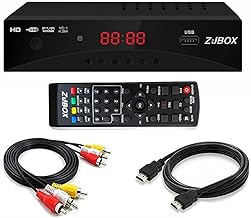
Best for: Viewers who need an ATSC tuner to receive over-the-air digital TV broadcasts through an external antenna and connect the output to a TV, projector, or computer monitor. It is a broadcast tuner and converter box, not a digital audio-to-coax adapter.
Features include 1080p output, TV recording and playback, channel tuning, a favorite-channel list, parental controls, closed captions, and timer settings. The unit can also play or display supported photos, MP3 music, movie files, and recorded programs from USB storage.
Choose this if your main task is receiving antenna broadcasts on a compatible display. Caution: Reception depends on antenna signal quality. The listed features do not establish that this box converts optical or coaxial digital audio formats, so it is not the right choice for SPDIF port conversion.
RCA RF Coaxial Modulator

Best for: Connecting a composite RCA video source to a television or other display with an RF coaxial input. It converts CVBS composite video to analog NTSC RF and includes a channel 3/4 switch. Listed source examples include game consoles, DVD and Blu-ray players, VCRs, set-top boxes, camcorders, and surveillance equipment.
The product has RCA composite inputs and an F-type coaxial RF output. Its feature description also mentions a separate coaxial input for a TV tuner or set-top box, plus an RF output that can connect to a TV or splitter. It is intended for analog video distribution, including to other rooms over coaxial cable.
Choose this if your source has RCA composite video and your TV uses an RF connection. Caution: It does not accept HDMI and does not convert digital optical or SPDIF audio to coaxial digital audio.
Buying Guide: How to Choose a Digital-to-Coax Converter
What kind of coaxial signal do you need?
“Coax” can refer to different connections that carry different kinds of signals. A digital coaxial audio port usually carries SPDIF audio. An RF coaxial connection carries television or video signals. Although both may use coaxial cable, a converter designed for one signal type will not automatically work with the other.
For optical Toslink-to-coaxial SPDIF conversion, choose a digital audio converter such as the bi-directional PROZOR model. For HDMI-to-RF video, choose an HDMI RF modulator. For RCA composite video-to-RF, choose a composite RF modulator. A digital TV converter box serves a different purpose: it tunes over-the-air ATSC broadcasts.
Do you need digital audio conversion or analog audio output?
Identify the input and output ports on both devices before buying. Optical Toslink and coaxial SPDIF are digital audio connections. RCA red-and-white audio and 3.5 mm jacks are typically analog connections. A digital-to-analog DAC changes the signal type; it does not provide a coaxial digital output just because it accepts a coaxial input.
For a source with optical output and a receiver with coaxial digital input, use a converter that explicitly supports optical-to-coaxial direction. For a TV with digital audio and speakers or an amplifier with analog inputs, use a DAC with the appropriate digital input and analog output.
Does the converter support the signal direction you need?
Converters are often directional. “HDMI to RF” means HDMI is the input and RF is the output; it does not mean the device can send RF into an HDMI display. Likewise, the PROZOR DAC’s listed direction is digital audio to analog audio. The bi-directional optical converter is a more suitable option when switching between optical and coaxial digital audio connections.
Check the product’s input and output labels, not just the product title. If your setup requires a particular direction, verify that the features explicitly name that conversion.
Which audio formats and sampling rates matter?
For digital audio, compare the formats supported by the converter with the source and the receiving device. The bi-directional PROZOR converter lists LPCM 2.0, DTS, Dolby AC-3, and 5.1-channel support, with sampling rates up to 192 kHz. The PROZOR DAC lists PCM input support up to 192 kHz and 24-bit.
For a DAC, the source may need to output PCM rather than another audio format. If you are unsure, check the TV, streaming device, or other source settings and the receiving equipment’s supported formats before connecting everything.
Are you connecting an older television?
Check the TV’s available inputs first. If it has an RF coaxial input and the source has HDMI, an HDMI-to-RF modulator may be appropriate. If the source has composite RCA output, an RCA-to-RF modulator is the more direct match. If you are receiving antenna broadcasts, an ATSC converter box is designed for tuning those signals.
Expect these video devices to serve different functions. An HDMI RF modulator changes the connection format, while an ATSC box receives broadcast channels. Neither should be mistaken for a Toslink-to-SPDIF audio converter.
What should you verify before ordering?
- Match the source output to the converter input, and match the converter output to the destination input.
- Confirm whether your coaxial port is for digital audio SPDIF or television RF.
- Check audio format support, including PCM, Dolby, or DTS requirements where applicable.
- For RF video devices, verify the output standard and channel selection. The listed modulators use NTSC output on channel 3 or 4.
- Check what is included. The HDMI-to-RF product lists an HDMI cable and power adapter, while the bi-directional audio converter lists an optical cable.
- Do not assume that a converter works in reverse unless the product features explicitly state that it is bi-directional.
Frequently Asked Questions
What is a digital-to-coax converter?
It may mean a device that converts optical Toslink digital audio to coaxial SPDIF audio. It can also refer to a video modulator that sends HDMI or composite video over RF coaxial cable. Check the signal type before choosing.
Can I use an HDMI-to-RF modulator for digital audio?
No. The HDMI-to-RF model listed here converts HDMI video to analog NTSC RF. It is not specified as an optical or SPDIF digital audio converter.
Can an optical-to-coaxial audio converter work in reverse?
Some models support both directions. The PROZOR bi-directional converter listed here supports optical-to-coaxial and coaxial-to-optical conversion, with input selection by switch.
Is a digital-to-analog DAC the same as a digital-to-coax converter?
No. A DAC converts digital audio to analog outputs such as RCA or 3.5 mm. A digital-to-coax audio converter preserves a digital audio connection while changing the port format, such as optical Toslink to coaxial SPDIF.
Will an RF modulator convert coaxial TV signals to HDMI?
Not unless it explicitly supports RF-to-HDMI conversion. The HDMI-to-RF modulator listed here only converts HDMI to RF, and the RCA modulator converts composite video to RF.