
A double layer pop filter helps reduce plosive bursts from sounds such as “P” and “B” before they reach a microphone. The NEEWER is a straightforward choice for singers and streamers who want an adjustable dual-screen filter; the Aokeo double-layer model is suited to setups needing a rotating clamp; and the LINCO is a fit for buyers who want a stated wide clamp range. The Aokeo three-layer model offers an extra screen, while Riworal specifies a 6-inch filter and an 11.5-inch gooseneck.
| Product | Best For | Standout Detail |
|---|---|---|
| NEEWER Professional Microphone Pop Filter Shield | Singers, streamers, and actors | Dual screens and adjustable steel gooseneck |
| Aokeo Dual-Layer Pop Filter | Flexible boom-arm or stand setups | Rotating clamp and adjustable gooseneck |
| LINCO PF1501 | Buyers checking clamp fit by diameter | V-clamp range of 0.55 to 1.77 inches |
| Aokeo Three-Layer Pop Filter | Buyers seeking three screens | Three-layer screen and 360-degree adjustment |
| Riworal Dual-Layer Pop Filter | Podcast and streaming setups | 6-inch screen and 11.5-inch gooseneck |
NEEWER Professional Microphone Pop Filter Shield

Best for: Singers, streamers, and actors who want a basic dual-screen filter with a positionable arm. This model uses two screens with a gap between them. The first screen blocks air blasts, and the space between the screens disperses remaining air pressure before it reaches the second screen.
The steel metal gooseneck is adjustable, so the screen can be moved to change its angle and distance from the microphone. The listed features also identify reduction of plosives from “B” and “P” sounds and sibilance associated with “S” sounds. The shield can help keep breath and spittle away from the microphone during vocal recording.
Why it was selected: It directly matches the double-layer search and has clear use cases for voice recording. Limitation: The provided product details do not state a clamp diameter range, so check that the mount suits your stand or boom arm before choosing it.
Aokeo Dual-Layer Pop Filter With Rotating Clamp

Best for: Buyers who want a dual-layer screen and a clamp intended for a variety of tubular microphone stands or boom arms. Its first screen blocks air blasts, while the space between the two screens helps disperse the remaining air pressure. This construction is intended to reduce plosive interference in recorded vocals.
The adjustable screw-rotating clamp has a scratch-proof gripper, according to the supplied product features. A steel gooseneck lets users change the filter’s angle and distance from the microphone. That positioning flexibility can be useful when a speaker alternates between sitting and standing or needs to move the screen out of the way between takes.
Why it was selected: The combination of a dual-layer screen, rotating clamp, and flexible arm makes it a practical comparison option for changing recording positions. Limitation: The provided details do not give a specific clamp-size range, so confirm the attachment point fits your equipment.
LINCO PF1501 With Wide V-Clamp

Best for: Buyers who need a stated clamp range to compare with their microphone stand or boom arm. The wide-grip V-clamp is designed for supports from 0.55 inches to 1.77 inches in diameter. Its wide contact area and construction are intended to hold the filter steadily and reduce movement during use.
The PF1501 uses dual-layer precision mesh to minimize “P” and “B” popping sounds and reduce airflow interference. This makes it relevant for spoken-word recording as well as singing. Before buying, measure the diameter of the support where the clamp will attach and compare it with the listed range.
Why it was selected: It provides a specific fit measurement, a useful detail when compatibility is a priority. Limitation: The listed clamp range is limited to supports within the stated diameter; a stand outside that range may not be suitable.
Aokeo Three-Layer Pop Filter
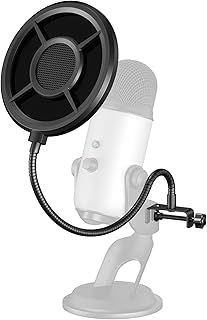
Best for: Buyers who prefer a three-layer design rather than a conventional dual-layer filter. The product features describe the additional screen structure as intended to block airflow and control noise. Its right-angle mount has an adjustable screw-rotation design and a scratch-resistant clamp for attachment to various microphone stands.
The steel gooseneck tube mount and circular filter rotate 360 degrees. This provides flexibility for setting the screen’s position and distance from the microphone. The product is described as suitable for use with various microphone stands, but the supplied details do not identify a specific clamp diameter range.
Why it was selected: It gives shoppers a distinct three-layer alternative among products centered on pop reduction. Limitation: It is not a two-layer filter, so buyers specifically seeking a double-layer construction should choose one of the dual-screen options instead.
Riworal Dual-Layer Filter With 6-Inch Screen

Best for: Podcasters, streamers, and recording users who want a stated screen size and gooseneck length. The 6-inch dual-layer netted gauze screen is designed to reduce harsh “P” and “B” plosives and breath noise. The 11.5-inch flexible metal gooseneck allows 360-degree adjustment to position the screen in front of a microphone.
The adjustable clamp is described as fitting surfaces up to 40 mm, or 1.57 inches, thick. The listed compatible equipment includes microphone stands, boom arms, desk mounts, Blue Yeti, Blue Snowball, and most condenser microphones. Check the clamp’s stated thickness limit against the intended mounting surface before ordering.
Why it was selected: It combines dual-layer construction with specific screen, arm, and clamp measurements. Limitation: Its clamp is specified for surfaces no thicker than 1.57 inches, which may rule out thicker mounting points.
Buying Guide: How To Choose A Double Layer Pop Filter
A pop filter is a screen placed between a speaker and a microphone. Its main job is to reduce sudden bursts of air that can create distracting low-frequency pops in a recording. A double-layer model uses two screens with a gap between them; the gap helps disperse airflow between the screens. These filters do not replace good microphone technique, but they can be a useful part of a vocal recording setup.
Do you need two layers or three?
A double-layer filter is the direct match for buyers comparing products in this category. The NEEWER, Aokeo dual-layer, LINCO, and Riworal options use two layers. The Aokeo three-layer model is an alternative for shoppers who specifically want three screens. The supplied product details describe airflow control for both constructions, but they do not provide standardized comparative test results. Choose based on the construction you want and the practical mounting features that fit your setup.
How should you check clamp compatibility?
Clamp fit is one of the most important practical details. Measure the diameter or thickness of the exact stand, boom arm, or desk mount where the filter will attach. Compare that measurement with the manufacturer’s stated range. LINCO specifies a 0.55-to-1.77-inch diameter range, while Riworal specifies surfaces up to 1.57 inches thick. The other supplied descriptions do not give a numeric range, so verify fit before purchasing.
Also consider where the clamp will sit. A support may have different widths at the base, joints, and upper arm. Measure the intended attachment point rather than relying on a general estimate of the stand’s size. If you use a tubular boom arm, check that the clamp design can grip its shape securely.
How much adjustment do you need?
A flexible gooseneck makes it easier to move a filter toward or away from the microphone and to change its angle. This is helpful when you need to reposition the screen between takes, shift your speaking position, or clear the space in front of the microphone. NEEWER and the dual-layer Aokeo both describe adjustable steel goosenecks. The three-layer Aokeo specifies 360-degree rotation, and Riworal lists an 11.5-inch arm with 360-degree adjustment.
Consider your desk layout before selecting an arm. A longer reach can make it easier to position a screen around a microphone, but the product details provided do not give arm lengths for every model. If reach is essential, compare the stated dimensions or seek confirmation from the seller rather than assuming all goosenecks extend equally.
What screen size and position work for your recording?
The screen should sit between the mouth and microphone, with enough coverage for the direction of airflow. Riworal states a 6-inch screen diameter. The other supplied product descriptions do not list a screen measurement, so do not assume their screens have the same size. A larger screen may provide more positioning room, but it also needs enough space on the desk or recording stand.
Position the filter so it intercepts breath without forcing an uncomfortable speaking posture. Leave room to see notes or a monitor if needed. Keep the filter stable and avoid moving it during a take, since changing its position can alter how much airflow reaches the microphone.
Which filter suits a podcast, stream, or singing session?
For podcasts and streaming, prioritize a clamp that fits the desk mount and a gooseneck that reaches the microphone comfortably. Riworal explicitly names podcasting and streaming among its intended uses and gives both screen and arm measurements. For singing or acting, NEEWER lists singers, streamers, and actors as use cases and describes reduction of plosives and “S” sounds. These are stated product purposes, not guarantees of a particular recording result.
For a setup with changing positions, an adjustable arm and rotating clamp may be more useful than choosing by layer count alone. For a fixed studio position, clamp fit and stable placement may matter more. In every case, speak at a consistent distance and test the filter’s position before recording a full session.
What should you compare before buying?
- Layer count: Choose a dual-layer model for a two-screen design or the Aokeo alternative if you specifically want three layers.
- Clamp measurements: Compare the clamp’s stated range with the exact stand or mount attachment point.
- Arm adjustment: Check whether the listed movement and reach suit your desk layout and recording position.
- Screen dimensions: Riworal lists a 6-inch screen; dimensions are not supplied for every option.
- Intended use: Match the product’s described purpose—such as vocals, streaming, or podcasting—to your recording routine.
- Placement: Leave adequate space to position the screen between your mouth and microphone without obstructing your workflow.
Frequently Asked Questions
What does a double-layer pop filter do?
A double-layer pop filter uses two screens with space between them to reduce airflow bursts before they reach a microphone. It is commonly used to reduce plosive sounds such as “P” and “B” during vocal recording.
Does a pop filter eliminate every plosive?
No product details here promise that every plosive will be eliminated. A filter is designed to reduce airflow interference, but placement and speaking technique also affect the result.
How far should a pop filter be from a microphone?
The supplied product information does not prescribe one universal distance. Use the adjustable arm to place the screen between your mouth and microphone, then test the position while maintaining a comfortable speaking or singing posture.
Will these filters fit any microphone stand?
Not necessarily. Some descriptions say the clamp suits various tubular stands or boom arms, while specific measurements are provided only for LINCO and Riworal. Compare the clamp dimensions with your mounting point before buying.
Is a three-layer filter better than a double-layer filter?
The provided product details do not include standardized tests showing that one layer count performs better than another. Choose a three-layer design if that construction is your preference; choose a double-layer model if you specifically want two screens.
Can I use a pop filter for both speaking and singing?
Yes. The listed use cases include vocal recording, podcasting, streaming, singing, and acting. Set the filter between your mouth and microphone and adjust it for the way you perform.