
A dual 15-band equalizer lets you adjust the sound of left and right stereo channels across 15 frequency bands per channel. The dbx 215s is a straightforward choice for buyers who want a named-brand 15-band model with a bypass switch, while the MIZISNR EQ-215S is suited to shoppers prioritizing low-frequency noise reduction. The EQX-215S adds a low-cut frequency control, and the dbx 231s is a higher-band-count alternative rather than a 15-band model.
| Product | Best for | Standout feature |
|---|---|---|
| dbx 215s | Simple stereo EQ adjustment | Front-panel bypass |
| MIZISNR EQ-215S | Reducing unwanted low-frequency noise | Low-cut switch |
| MIZISNR EQX-215S | Adjustable low-cut frequency | Low-cut rotary control |
| MIZISNR EQ-215 | Home audio and DJ setups | 15 bands per channel |
| dbx 231s | Buyers who want finer frequency control | 31 bands per channel |
dbx 215s Dual Channel 15-Band Equalizer

The dbx 215s is a dual-channel graphic equalizer with 15 frequency bands per channel. Its listed features include constant-Q, one-third-octave frequency bands and switchable boost or cut ranges of 6 or 12 dB. A front-panel bypass switch lets users compare the processed signal with the bypassed signal.
Best for: Buyers seeking a conventional stereo 15-band EQ with a stated bypass control and selectable adjustment range. It is a useful option when matching left and right channel adjustments is central to the setup.
Why it was selected: It directly matches the dual 15-band search and its listed specifications make it easy to compare with the other 15-band models here.
Consideration: The supplied features do not list a low-cut filter. Choose another option if that specific noise-control feature is essential.
MIZISNR EQ-215S 15-Band Stereo Equalizer

The MIZISNR EQ-215S provides 15 adjustable bands on each of its two stereo channels. The product details specify an adjustment range of ±12 dB per band, with gain and decay values adjustable from ±6 dB to ±12 dB. A low-cut switch is designed to attenuate unwanted low-frequency sounds such as wind noise, floor rumble, and electrical hum.
Best for: Home audio listeners or audio operators who want per-channel tone adjustment and a dedicated low-cut switch. The low-cut feature distinguishes it from the listed dbx 215s specifications.
Why it was selected: It combines the requested dual 15-band format with an explicitly described option for reducing unwanted low-frequency noise.
Consideration: The supplied details describe the low-cut switch but do not specify its cutoff frequency or adjustment range. Confirm that the control behavior suits your system before purchase.
MIZISNR EQX-215S With Adjustable Low-Cut
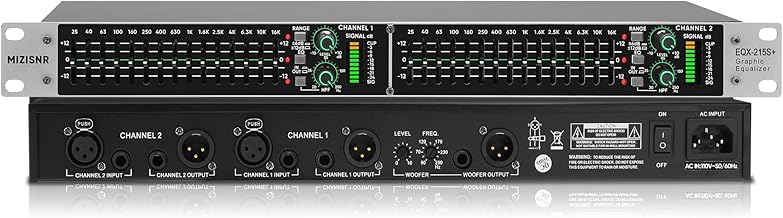
The MIZISNR EQX-215S is a dual-channel stereo equalizer with 15 bands per channel and an adjustable range of ±12 dB per band. Its listed controls include a low-cut feature and a dedicated rotary knob for adjusting the low-cut frequency. The product description also identifies it as a rack-mount equalizer with a subwoofer output.
Best for: Buyers who want more control over low-frequency filtering than a simple on/off low-cut switch may provide. The rotary frequency control is the key listed distinction from the other MIZISNR models in this comparison.
Why it was selected: It suits users balancing stereo EQ adjustments with the ability to set a low-cut frequency for their listening environment or performance needs.
Consideration: The supplied information does not state the low-cut frequency range or describe the subwoofer output’s connection details. Check the full product listing if those specifications determine your setup.
MIZISNR EQ-215 15-Band Stereo EQ

The MIZISNR EQ-215 is described as a dual-channel, 15-band graphic equalizer for home audio and DJ use. Each channel offers a stated adjustment range of ±12 dB per band, with gain and decay values adjustable from ±6 dB to ±12 dB. Its low-cut switch is intended to attenuate low-frequency noise, including wind noise, floor rumble, and electrical hum.
Best for: Buyers who want the listed 15-band stereo controls and low-cut functionality in a model described for home audio and DJ applications.
Why it was selected: It meets the dual-channel, 15-band requirement and gives buyers a second low-cut-equipped option to compare with the EQ-215S.
Consideration: The supplied product details do not identify a variable low-cut frequency control. Choose the EQX-215S if setting the cutoff frequency is important.
dbx 231s Dual Channel 31-Band Equalizer

The dbx 231s is not a 15-band equalizer: it has 31 bands per channel. Its one-third-octave constant-Q bands provide more individual adjustment points than the 15-band models in this article. It also offers switchable boost or cut ranges of 6 or 12 dB and a front-panel bypass switch.
Best for: Buyers who are comparing 15-band equalizers with a finer-grained dual-channel alternative. The extra bands can be relevant when a user wants more frequency adjustment points.
Why it was selected: It offers a useful comparison for shoppers whose search for a dual EQ is motivated by precise stereo tone shaping, even though it does not match the 15-band count.
Consideration: Avoid this option if a 15-band layout is a firm requirement. It has 31 bands per channel, so its control layout differs from the products that directly match the search.
Buying Guide: How to Choose a Dual 15-Band EQ
A dual-channel equalizer processes two audio channels, commonly the left and right sides of a stereo signal. A 15-band design provides 15 frequency controls on each channel. Before choosing a model, identify what you need to adjust, whether noise filtering matters, and how the equalizer will fit into your audio chain.
Do you need exactly 15 bands per channel?
Start by deciding whether the number of controls is a requirement or simply a description of the type of EQ you want. The dbx 215s and the three MIZISNR models listed above have 15 bands per channel. The dbx 231s has 31 bands per channel, so it is a comparison option rather than a direct 15-band match.
More bands provide more adjustment points across the frequency range, but the number alone does not tell you whether a unit fits your workflow. Consider how much detail you expect to adjust and whether you prefer a simpler control layout or more individual bands.
Should you choose an equalizer with a low-cut control?
A low-cut feature can be useful when you need to attenuate unwanted low-frequency content. The MIZISNR EQ-215S and EQ-215 list a low-cut switch. The EQX-215S adds a rotary control for adjusting the low-cut frequency, according to its product details.
The dbx 215s and dbx 231s features provided here do not list low-cut controls. If low-frequency filtering is important, compare the exact controls in the product listing rather than assuming that all graphic equalizers offer the same filter options.
How much boost or cut range should you look for?
The dbx models list switchable boost or cut ranges of 6 or 12 dB. The MIZISNR models list an adjustment range of ±12 dB per band and describe gain and decay values adjustable from ±6 dB to ±12 dB. These specifications help define how strongly each band can be adjusted.
For a modest tonal change, a smaller adjustment may be sufficient. Larger changes can have a more pronounced effect on the signal. Make adjustments carefully, and compare the result with the bypassed signal when the equalizer provides a bypass switch.
Is a bypass switch important?
A bypass switch allows a quick comparison between the equalized and bypassed signal. Both dbx models in this list specify a front-panel bypass switch. The provided feature descriptions for the MIZISNR models do not mention one, so verify the complete listing if bypass operation matters to your workflow.
Bypass is useful for checking whether an adjustment improves the sound in the intended setup. It also helps distinguish changes made by the equalizer from changes caused by other equipment or listening conditions.
What should you check before connecting an EQ?
Confirm the equalizer’s role in your signal chain and verify that its connections match the equipment you plan to use. The product details supplied here do not specify input and output connector types, so check the complete listing or manufacturer information before buying. Do not assume that rack-mount styling alone guarantees a particular connection or system fit.
If you are considering the EQX-215S for its subwoofer output, look for connection and routing details in the listing. The supplied information names that output but does not explain its exact behavior or configuration.
Which model suits home audio, DJ use, or detailed adjustment?
- For a direct 15-band stereo EQ with a bypass switch: Compare the dbx 215s.
- For a 15-band EQ with a low-cut switch: Compare the MIZISNR EQ-215S and EQ-215.
- For adjustable low-cut frequency control: Consider the MIZISNR EQX-215S.
- For more frequency bands rather than exactly 15: Compare the dbx 231s, which has 31 bands per channel.
These distinctions are based on the supplied feature descriptions, not on hands-on testing. Check current product information for details that are not listed here, including connections and control specifications.
Frequently Asked Questions
What does “dual 15-band equalizer” mean?
It means the equalizer has two channels, each with 15 frequency bands that can be adjusted. This layout is commonly used for shaping a left-and-right stereo signal.
Is the dbx 231s a 15-band equalizer?
No. The dbx 231s is a dual-channel 31-band equalizer. It is included as a higher-band-count alternative, not as an exact 15-band match.
Which listed model has an adjustable low-cut frequency?
The MIZISNR EQX-215S lists a low-cut feature with a dedicated rotary control for adjusting the frequency. The supplied details do not state its adjustment range.
Which models list a front-panel bypass switch?
The dbx 215s and dbx 231s list a front-panel bypass switch. The supplied feature details for the MIZISNR models do not mention one.
Can a graphic equalizer reduce floor rumble or hum?
The MIZISNR EQ-215S and EQ-215 descriptions say their low-cut switch is designed to attenuate low-frequency sounds such as floor rumble and electrical hum. The EQX-215S also lists low-cut control. Results depend on the signal and the equipment setup.