
Best Dual Wireless Lavalier Microphone for Clear Audio on the Go
Answering the question “which dual wireless lavalier microphone should I buy?” this guide highlights five top options suited for creators, interviewers, and remote speakers. The best pick depends on whether you value ultra-compact design, long-range transmission, or professional-grade features. This selection covers models ideal for iPhone and Android setups, on-camera use, and live streaming. Each product is explained with who it’s best for, why it’s selected, and practical limitations to consider.
Summary of chosen products:
| Product | Best For | Key Benefit |
|---|---|---|
| Mini Mic Pro (Latest Model) | Mobile creators, TikTok & YouTube | Plug-and-play, cross-compatibility with USB-C and Lightning |
| DJI Mic Mini | On-the-go interviews, field reporting | Extremely light, long battery life, reliable range |
| COMICA BoomX-D2 | YouTube & podcast starters | 650 ft range, strong DSP noise reduction |
| Pufeng Dual Wireless Lavalier | Video conferencing & mobile filming | Dual lavalier, easy setup for iPhone/iPad |
| Shure BLX188/CVL Dual System | Professional events & presentations | Reliable UHF performance, complete dual-set |
The following sections compare these options in detail to help you choose the right system for your typical recording environment, device compatibility, and budget considerations.
Mini Mic Pro — Premium Plug-and-Play Wireless Mic

The Mini Mic Pro is designed for iPhone and Android users seeking studio-like audio in a compact clip-on form. It ships with USB-C and Lightning adapters for immediate use without apps or Bluetooth pairing. Best for creators who value portability and quick setup, including TikTok and YouTube creators, interviewers, and on-the-go reporters. A limitation is that it relies on 2.4 GHz wireless channels, which can be susceptible to interference in crowded spaces.
DJI Mic Mini — Ultra-Light Field Companion

The DJI Mic Mini features a tiny transmitter and a compact receiver with a charging case, delivering detailed, stable audio with up to 400 meters line-of-sight range and 48 kHz sampling. It’s ideal for long shoots, street interviews, or travel vlogs where unobtrusive gear matters. Better for creators who prioritize battery endurance and a discreet on-camera footprint; however, the system’s premium price may be a barrier for hobbyists.
COMICA BoomX-D2 Wireless Lavalier

The COMICA BoomX-D2 offers a robust 2.4G wireless link with up to 650 feet range and two transmitters plus one receiver. It targets YouTube creators and podcast starters who need reliable connections in crowded spaces, along with an instant DSP noise reduction feature. This model is best for multi-speaker setups but may require more setup awareness to avoid interference in busy environments.
Pufeng Dual Wireless Lavalier Microphone For iPhone
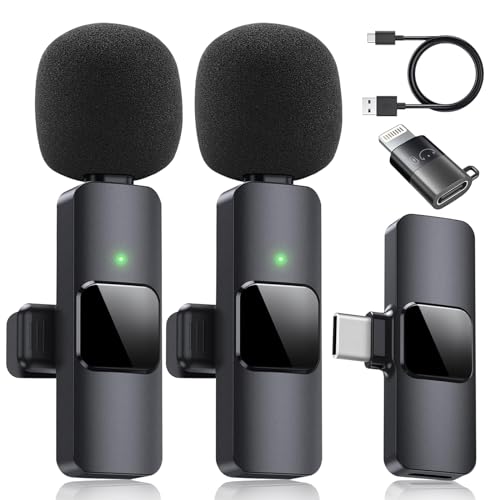
The Pufeng Dual Wireless Lavalier is crafted for iPhone and iPad users who want a simple, dependable setup for video conferencing, interviews, or live streaming. The dual lavalier design supports dynamic presentation and flexible recording options. Choose this if you need easy iOS compatibility and a straightforward plug-and-record workflow; a potential limitation is fewer professional-grade controls compared to higher-end systems.
HOTEC Wireless System with Dual Headset & Lav Mics

The HOTEC system provides a versatile set with dual lavaliers and headset mics plus a mini rechargeable receiver, designed for live performances and on-stage events. It supports 1/4″ outputs and is compatible with phones, laptops, and DSLRs via an included adaptor. Best for live venues where loud environments demand stable, clear amplification; be aware that setup may be more involved than plug-and-play options.
Pyle Dual UHF Microphone System

The Pyle PDWMU211 delivers UHF transmission with a selectable eight-channel frequency range and a plug-in receiver with a 1/4″ output. It is suitable for small to mid-size venues, classrooms, and conference setups where multi-channel options help manage interference. The system’s limitations include the need for careful frequency selection to avoid cross-talk in busy RF environments.
Buying Guide
What should you consider when choosing a dual wireless lavalier microphone?
- Device compatibility: Are you recording with iPhone, Android, or a camera? Ensure the transmitter/receiver supports your primary device and any adapters you need.
- Range and environment: Do you record indoors, outdoors, or in crowded spaces? Longer range and robust noise reduction help when there is ambient noise or RF interference.
- Power and endurance: How long will your sessions run? Look for battery life that matches your typical shoot length and whether a charging case is included.
- Number of transmitters: If you need two speakers, choose a system with two transmitters and a reliable dual-channel receiver.
- Audio quality features: Noise reduction, wind protection, and the ability to switch between mono and stereo recording can affect post-production flexibility.
- Practical budget considerations: Balance price with durability, included accessories, and ease of use for your skill level.
FAQ
- What is a dual wireless lavalier microphone? A system with two wireless transmitters and a single receiver to capture two separate voice sources simultaneously.
- Which microphone is best for iPhone videography? Systems that include Lightning adapters or are plug-and-play with iPhone-compatible receivers, such as Mini Mic Pro, are typically convenient for iPhone use.
- Do these systems require apps? Most listed options emphasize plug-and-play operation without dedicated apps.
- Can I use these with a camera or laptop? Yes, many models include 1/4″ or USB outputs and can connect to cameras, mixers, or laptops with appropriate adapters.
- Are longer ranges always better? Longer range is beneficial in large outdoor environments, but it may increase latency or require careful channel management to avoid interference.
- What should I avoid when choosing a dual lavalier system? Avoid models with limited accessory kits, poor wind protection, or systems that require complex setup for everyday recording.