
The best dynamic microphone for streaming depends on whether you want plug-and-play USB, an upgrade path to XLR, or a complete boom-arm setup. The FIFINE AM8 suits beginner streamers who want USB and future XLR flexibility; the AM8T adds a boom arm and monitoring controls; the FIFINE K688CT is a dynamic kit with a sturdy arm; and the MAONO PD200XS offers USB software controls. The TONOR TC310+ is included as a related gaming option, but its listing identifies it as a condenser microphone, not a dynamic mic.
| Product | Best for | Key distinction |
|---|---|---|
| FIFINE AmpliGame AM8 | USB-first creators | USB/XLR, tap mute, cardioid pattern |
| FIFINE AmpliGame AM8T | Streamers who need a full setup | Boom arm, RGB, headphone monitoring |
| FIFINE AmpliTank K688CT | Voice recording with arm support | Dynamic USB/XLR kit and metal boom arm |
| MAONO PD200XS | Creators who want software controls | USB software features and XLR output |
| TONOR TC310+ | RGB-focused gaming setups | Condenser mic; not a dynamic alternative |
FIFINE AmpliGame AM8 USB/XLR Dynamic Microphone

The FIFINE AM8 is a practical choice for streamers who want to start with USB and retain the option to move to an XLR audio setup. Its cardioid pickup pattern is designed to focus on sound from the front and reduce off-axis noise. The listed frequency response is 50 Hz to 16 kHz, and FIFINE recommends positioning the end-address microphone about 2 to 6 inches from the sound source.
For USB use, it offers plug-and-play connection and a tap-to-mute control with an LED reminder. The XLR connection can be used with an audio interface or mixer, but the separate XLR cable is not included. RGB lighting and the microphone’s function key are available only over USB, not XLR.
- Best for: New streamers who want a straightforward USB microphone with an XLR upgrade path.
- Why it stands out: The listed features combine cardioid pickup, USB mute control, and dual connection options.
- Limitation: XLR use requires a separate cable and compatible audio equipment; USB-only functions do not operate over XLR.
FIFINE AmpliGame AM8T USB/XLR Microphone Set

The AM8T is a better fit than a microphone-only package for a streamer who wants a boom arm and several hands-on controls in one kit. It connects to a computer by USB for plug-and-play use, or to a mixer or sound card through XLR. Its cardioid pattern and listed -50 dB sensitivity are described as helping limit background pickup and keep vocals clear.
The included features also cover a mute button, gain knob, headphone jack for real-time monitoring, and headphone-volume control. RGB settings can be changed with a button or turned off, without dedicated software settings. This makes the kit useful for people who want to position the mic on an arm and adjust common recording controls directly.
- Best for: Gaming streamers who want a boom arm, on-mic controls, and USB/XLR connectivity.
- Why it stands out: The package combines a dynamic microphone with an arm, monitoring connection, and gain and mute controls.
- Limitation: The feature list describes RGB control but does not specify software-based audio processing.
FIFINE AmpliTank K688CT Dynamic Microphone Kit

The K688CT is suited to streamers and podcasters who want a dynamic USB/XLR microphone with a boom arm included. Its cardioid pattern is intended to reduce ambient sound around the mic, while the product listing gives a 130 dB sound-pressure-level specification. FIFINE recommends recording from approximately 2 to 6 inches away for better input volume.
The microphone supports direct USB connection for convenience and XLR connection for use with an appropriate interface or mixer. Its metal boom arm is described as providing secure placement and helping lessen collisions and vibrations. That arm support may be useful for a desk setup where the microphone needs to be moved into speaking position and kept off the work surface.
- Best for: Creators who want a dynamic mic, boom arm, and a choice of USB or XLR connection.
- Why it stands out: Its listed kit pairs dual connectivity with a metal arm and a cardioid pickup pattern.
- Limitation: The supplied details do not list specific mute, gain, or headphone-monitoring controls.
MAONO PD200XS USB/XLR Dynamic Microphone Kit

The MAONO PD200XS is a strong option for a streamer who wants to adjust sound in software while using USB. Its listed frequency response is 40 Hz to 16 kHz, and its cardioid pattern is intended to emphasize vocals and reduce unwanted background noise. The microphone supports both USB and XLR, so it can be used with a computer over USB or connected to compatible recording equipment through its analog output.
In USB mode, MAONO Link software provides audio adjustments that include EQ, limiter, and compressor settings, as well as RGB controls with nine listed colors. The product information specifies that these software features work only in USB mode. The included 8.2-foot USB cable is listed for desktop or laptop connection.
- Best for: Streamers who want software-based voice adjustments and a future XLR option.
- Why it stands out: It combines USB software controls with dual connectivity and a stated 40 Hz to 16 kHz response.
- Limitation: Software functions, including EQ and compressor adjustments, are limited to USB mode.
TONOR TC310+ RGB Gaming Microphone Set
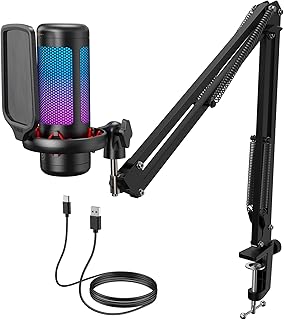
The TONOR TC310+ is a related option for gamers comparing streaming microphones, but it is not a dynamic microphone: its product name identifies it as a condenser microphone. Consider it only if you are open to a different microphone type and prioritize the listed USB gaming features. The supplied details highlight clean sound reproduction, four RGB modes, and brightness adjustment by long-tapping the lighting control.
The lighting choices include static colors, gradients, and a breathing mode. Those features may suit a creator who wants adjustable lighting as part of a gaming setup. However, the supplied feature list does not state USB/XLR dual connectivity or describe a dynamic capsule, so buyers specifically seeking a dynamic microphone should choose one of the four dynamic models above instead.
- Best for: Buyers who want a listed USB gaming microphone with adjustable RGB and are not set on dynamic construction.
- Why it is included: It is a streaming-oriented gaming mic, but it provides a useful point of comparison rather than a dynamic recommendation.
- Limitation: It is a condenser model, so it does not meet a strict requirement for a dynamic microphone.
Buying Guide: How to Choose a Streaming Dynamic Microphone
Start with how you plan to connect and control the microphone. USB is usually the simpler route for a direct computer setup. XLR provides a connection option for compatible audio equipment, but it may require an interface or mixer and, depending on the product, a separate cable. A dual USB/XLR mic can make it easier to begin with USB and consider an XLR setup later.
Do you need USB, XLR, or both?
Choose USB if you want a straightforward connection to a computer and do not already use external recording equipment. The AM8, AM8T, K688CT, and PD200XS all list USB and XLR connections. Check the product details for what is included: the AM8 listing specifically says its XLR cable is not included. XLR use also requires compatible equipment, such as an interface or mixer.
Choose XLR when your streaming setup already uses an interface or mixer, or when you want the connection options associated with that equipment. Do not assume that USB controls work over XLR. For example, the AM8’s RGB and function key are inactive over XLR, and the PD200XS’s software features are specified for USB mode.
How important are mute, gain, and monitoring controls?
On-microphone controls can make live streaming easier because they allow quick adjustments without searching through computer menus. The AM8 lists tap-to-mute and an LED mute reminder over USB. The AM8T lists a mute button, gain knob, headphone jack, and headphone-volume control. The supplied K688CT features do not specify those controls, so compare the complete product listing if they are essential to your workflow.
Will a cardioid dynamic microphone help with background noise?
A cardioid pickup pattern focuses more on sound from the front than sound arriving from other directions. The dynamic models in this comparison describe cardioid pickup as a way to reduce off-axis or ambient noise. This is not a guarantee that a microphone will remove all room sound. Placement, speaking distance, room conditions, and microphone direction still matter.
For the AM8 and K688CT, the supplied information recommends speaking about 2 to 6 inches from the microphone. Follow the positioning guidance for the specific model, and keep the microphone’s intended speaking side aimed toward your voice. Close placement can support a stronger vocal signal, but the listed product features do not establish a universal ideal distance for every room or voice.
Should you choose a microphone kit with a boom arm?
A kit with an arm can simplify positioning and keep the microphone raised from the desk. The AM8T and K688CT list boom-arm support in their packages; the K688CT specifically describes a metal arm intended to provide secure placement and lessen collisions and vibrations. Choose a kit if you need an arm as part of the setup. If you already have a suitable stand, compare the microphone features rather than paying for accessories you may not need.
Do RGB lighting and audio software matter?
RGB is mainly a visual setup feature, while software controls can change audio processing. The AM8T lists button-controlled RGB, and the PD200XS lists MAONO Link adjustments such as EQ, limiter, and compressor in USB mode. The AM8 also lists RGB, but its lighting and function key are available only over USB. If voice processing is a priority, confirm which settings are available in your chosen connection mode.
For a simple setup, prioritize connection type, microphone placement, mute controls, and whether you need an arm. For more adjustment, compare software support and confirm that it works with the connection you intend to use. If you specifically need a dynamic microphone, do not treat the TONOR TC310+ as equivalent: its listing identifies it as a condenser model.
Frequently Asked Questions
What is the best dynamic microphone for streaming?
There is no single best choice for every streamer. The FIFINE AM8 is a USB-first option with an XLR upgrade path; the AM8T adds a boom arm and monitoring controls; the K688CT includes a metal boom arm; and the MAONO PD200XS adds USB software adjustments.
Are these microphones USB or XLR?
The FIFINE AM8, FIFINE AM8T, FIFINE K688CT, and MAONO PD200XS list both USB and XLR connectivity. The TONOR TC310+ is described as a USB condenser gaming microphone in the supplied information, not a dynamic USB/XLR model.
Does XLR work without an audio interface?
The supplied product details describe XLR connection through compatible equipment such as an audio interface, mixer, or sound card. Check the connection requirements for your full setup before choosing XLR.
Which option has software audio controls?
The MAONO PD200XS lists MAONO Link software with EQ, limiter, and compressor adjustments in USB mode. Its product information says these software features are not available over XLR.
Which microphone includes a boom arm?
The FIFINE AM8T set lists a boom arm, and the FIFINE K688CT kit lists a durable metal boom arm. Confirm package contents in the current product listing before purchase.
Is the TONOR TC310+ a dynamic microphone?
No. The supplied product name describes the TONOR TC310+ as a condenser microphone. It may be relevant to gaming and streaming, but it is not a match for buyers who specifically require a dynamic microphone.