
The best effects pedals for harmonica depend on the sound you want and how your microphone signal reaches the pedal. The BOSS PS-6 is best for pitch-shifted harmonies, the FLAMMA FV04 is designed for vocal-style harmony and reverb, and the MOOER GE100 offers a broad collection of effects. The JOYO JF-14 is a preamp option, while the Artesia AP-EX is an expression controller rather than an effects generator. Check your microphone, cables, and signal chain before choosing a pedal.
| Product | Best For | Key Listed Feature |
|---|---|---|
| BOSS PS-6 Harmonist | Pitch and harmony effects | Four pitch-shifting and harmony effects |
| FLAMMA FV04 | Vocal-style harmony | 12 pitches, 11 harmony modes, reverb |
| MOOER GE100 | Trying a range of effects | 66 effects and 80 presets |
| JOYO JF-14 | Preamp and amp-style tone shaping | Built-in cab simulation |
| Artesia AP-EX | Hands-free expression control | Polarity switch and non-slip surface |
BOSS PS-6 Harmonist

Best for: Harmonica players looking for pitch-shifting or harmony effects in a stompbox format. The listed product information describes four distinct pitch-shifting and harmony effects in one pedal, making it a focused choice for players who want to explore those sounds without selecting a larger multi-effects unit.
Why it was selected: Pitch and harmony processing can add a different melodic texture to a harmonica line. The PS-6 is the most directly specialized option in this selection for those effects, based on its listed functions.
Before buying, check how the pedal is intended to connect to your microphone or other equipment. The product description identifies it as a guitar pedal; it does not specify a harmonica microphone connection or microphone preamp. Limitation: Its listed focus is pitch and harmony rather than a broad range of effects.
FLAMMA FV04 Vocal Harmony Pedal
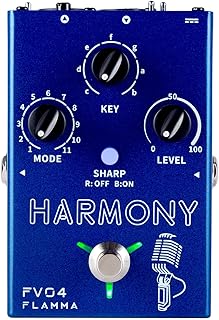
Best for: Players who want to explore vocal-style harmony and reverb with a harmonica performance. The FV04 is described as a vocal harmony pedal with 12 pitches, 11 harmony modes, and reverb. Its listed design is aimed at singers, so it may interest harmonica players working with a microphone-based setup who want those kinds of processing options.
Why it was selected: The combination of multiple harmony modes and reverb gives it a different emphasis from a general guitar multi-effects pedal. The product description also explicitly identifies it as a vocal effects processor, an important distinction when comparing devices for microphone use.
Confirm that the pedal’s connections and signal requirements suit your microphone and rig before purchasing. The provided details do not specify every connection or the exact setup needed. Limitation: Its primary description is for vocals, not harmonica, so harmonica-specific performance is not established by the listed information.
MOOER GE100 Multi-Effects Pedal

Best for: Players who want many effects and practice-oriented features in one unit. The listed specifications include 66 effects, 80 presets, a 180-second looper, 40 drum rhythms, tap tempo, a tuner, a headphone output, and an expression volume/wah pedal.
Why it was selected: The range of listed effects and presets makes the GE100 a flexible option for comparing sounds and saving settings. The looper and drum rhythms may also be useful for practice or building musical ideas, while the headphone output offers a listed private-monitoring option.
Because it is described as a guitar multi-effects pedal, check the signal path needed to connect a harmonica microphone. The product details do not say that a microphone preamp is included. Limitation: Its extensive feature set may be more than necessary if you only want one specific effect, and the listed expression function is for volume and wah.
JOYO JF-14 American Tube Amp Simulator

Best for: Harmonica players considering an amp-style preamp and cabinet simulation as part of their tone setup. The JF-14 is described as an American tube amp simulator and preamp pedal, with six control knobs and a built-in cab sim.
Why it was selected: A preamp-oriented pedal serves a different purpose from pitch, harmony, or general multi-effects units. This option may suit a buyer specifically comparing amp-style tone shaping and cabinet simulation rather than seeking a pedal with many separate effects.
Check the full product specifications and your existing equipment to determine whether the pedal fits your connection and amplification needs. Its listing identifies it for electric guitar and does not provide harmonica-specific setup details. Limitation: The supplied description does not list effects such as delay, chorus, or pitch shifting.
Artesia AP-EX Expression Pedal

Best for: Players who already have compatible effects gear and want a foot-operated expression controller. The AP-EX is described as a universal expression pedal for keyboards, MIDI controllers, synthesizers, and guitar effects pedals. Its listed features include a polarity switch and non-slip surface.
Why it was selected: Expression pedals can provide hands-free control when used with compatible equipment. The polarity switch is a listed feature that may help when matching the pedal to supported gear, while the non-slip surface is relevant to foot operation.
This is a controller, not a standalone effect. Verify that the effects device you plan to use accepts an expression pedal and that its requirements match before buying. Limitation: It does not itself provide pitch shifting, reverb, or other audio effects.
Buying Guide: How To Choose A Harmonica Effects Pedal
What sound do you want the pedal to create?
Start by naming the effect you want rather than choosing by the number of controls. For pitch and harmony processing, compare the BOSS PS-6 and FLAMMA FV04. The BOSS listing focuses on four pitch-shifting and harmony effects. The FLAMMA listing emphasizes vocal harmony, 12 pitches, 11 harmony modes, and reverb. For a wider selection, the MOOER GE100 lists 66 effects and 80 presets.
If you want amp-style tone shaping, the JOYO JF-14 is the option in this group described as a preamp and amp simulator with cab simulation. If you already have an effect unit and need foot control, the Artesia AP-EX belongs in a separate category: it controls compatible gear rather than generating effects on its own.
Will it work with your microphone and signal chain?
Many pedals in this selection are described as guitar effects products, while the FLAMMA is described as a vocal processor. Those labels do not establish that every pedal will connect directly to every harmonica microphone. Before purchase, check the pedal’s input and output requirements against your microphone, any preamp or mixer you use, and the equipment receiving the signal.
Do not assume that a guitar pedal includes a microphone preamp or that a vocal pedal offers the same controls as a harmonica-specific unit. The product details provided here do not establish a universal setup. If specifications are unclear, consult the manufacturer’s documentation or ask a qualified audio retailer about the exact equipment combination.
Do you need one effect or a collection of sounds?
A dedicated pedal can be easier to compare when you know the sound you want. The BOSS is focused on pitch shifting and harmony, while the JOYO is oriented toward amp simulation and preamp functions. A multi-effects unit such as the MOOER offers a broader listed range, which may be useful when you want to experiment with different effects or presets.
Consider the trade-off between breadth and simplicity. More effects do not automatically mean a better fit. A player who wants one specific sound may prefer a focused unit; a player exploring several effects may value a multi-effects pedal’s range. Confirm what each device actually includes rather than assuming it has a particular effect.
Would hands-free control improve your setup?
An expression pedal is useful only when the connected equipment supports expression control. The Artesia AP-EX is listed for guitar effects pedals and other electronic instruments, but buyers should confirm the target device’s compatibility and polarity requirements. Its non-slip surface and polarity switch are listed features, not evidence that it will work with every pedal.
What should you compare before buying?
- Effect type: Match the product’s listed purpose to the sound you want, such as harmony, reverb, multi-effects, or amp simulation.
- Connections: Verify input and output formats, microphone needs, and any equipment required between the microphone and pedal.
- Control method: Decide whether you need a stompbox, stored presets, or an expression controller for compatible equipment.
- Practice features: If useful, compare the MOOER’s listed looper, drum rhythms, tuner, and headphone output.
- Evidence: Treat product descriptions as feature information, not proof of harmonica-specific compatibility or performance.
Frequently Asked Questions
Can I use guitar effects pedals with a harmonica?
Possibly, depending on the pedal, microphone, and signal chain. Check the pedal’s connection requirements and determine whether your setup needs additional equipment. A guitar-pedal label alone does not confirm direct microphone compatibility.
Which listed pedal is designed for harmony effects?
The BOSS PS-6 lists four pitch-shifting and harmony effects. The FLAMMA FV04 lists 11 harmony modes and 12 pitches, along with reverb.
Which option offers the widest listed range of effects?
The MOOER GE100 lists 66 effects and 80 presets. Its description also includes a looper, drum rhythms, tap tempo, tuner, headphone output, and expression volume/wah.
Is the Artesia AP-EX an effects pedal?
No. It is an expression pedal, which is a controller for compatible equipment. It does not generate audio effects by itself.
Does the JOYO JF-14 provide harmony or pitch shifting?
The supplied product description identifies it as an American tube amp simulator and preamp with built-in cab simulation. It does not list harmony or pitch-shifting functions.