
The best electronic crossover for home audio depends on whether you need an active line-level processor for separate amplifiers or a passive crossover board for a speaker cabinet. The MIZISNR and SIKUING models suit systems needing stereo two-way, stereo three-way, and mono four-way modes; Rockville offers a simpler two-way stereo or three-way mono layout. Yoidesu is another multi-mode option, while the HiQltyla passive crossover is intended for speaker-level wiring rather than a rack-style signal chain.
| Product | Best for | Type or configuration |
|---|---|---|
| MIZISNR Professional Crossover | Flexible multi-band routing | Active; stereo 2/3-way, mono 4-way |
| Rockville RX230 | Adjustable crossover frequencies | Active; stereo 2-way, mono 3-way |
| Yoidesu 234XL | Multi-mode sound distribution | Active; stereo 2/3-way, mono 4-way |
| SIKUING 2/3/4-Way Crossover | Per-band controls and low-cut | Active; stereo 2/3-way, mono 4-way |
| HiQltyla 3-Way Speaker Crossover | Passive speaker-cabinet projects | Passive; 3-way, two-pack |
MIZISNR Professional Audio Crossover

The MIZISNR is an active crossover for systems that route a line-level signal to separate amplifiers and speaker bands. Its listed modes are stereo two-way, stereo three-way, and mono four-way, giving it more configuration choices than a basic two-way unit. An LED matrix on the front indicates the selected mode.
Best for: A home audio or PA setup that needs flexible band routing and separate adjustment for each output band. It was selected for its three operating modes and individual output gain controls.
- Separate gain controls and phase-reverse switches are provided for each band.
- A low-cut switch activates a 40 Hz, 12 dB-per-octave Butterworth high-pass filter.
- The manufacturer describes the unit as having XLR inputs and outputs.
Limitation: This is an active processor, so plan for compatible downstream amplifiers and signal connections. The supplied details do not state its adjustable crossover-frequency ranges.
Rockville RX230 Crossover

The Rockville RX230 provides stereo two-way or mono three-way crossover operation. Its listed frequency controls cover 100 Hz to 1 kHz, with an x10 switch extending that range to 10 kHz, plus a separate 30–200 Hz subwoofer crossover range. Balanced XLR inputs and outputs are specified for signal connection.
Best for: Buyers who want clearly stated frequency ranges for configuring a subwoofer and mid/high bands. It was selected because those ranges make it easier to compare its adjustment options with a system’s intended crossover points.
- Supports stereo two-way and mono three-way operation.
- Uses balanced XLR inputs and outputs.
- Its listed applications include powered speakers, amplifiers, subwoofers, live performance, and studio mixing.
Limitation: It does not list stereo three-way or mono four-way operation. Check that its available modes and frequency ranges suit the planned speaker arrangement.
Yoidesu 234XL Multi-Mode Crossover

The Yoidesu 234XL is described as a professional crossover for stage performance and other sound-distribution uses. Its listed modes include stereo two-way, stereo three-way, and mono four-way. The product information emphasizes multi-purpose signal processing and stable operation, but does not provide detailed frequency ranges or specific per-band controls.
Best for: A buyer looking for a multi-mode active crossover and who can confirm the detailed specifications needed for their system before purchase. Its range of operating modes is the main reason it is included.
- Supports stereo two-way, stereo three-way, and mono four-way operation.
- Is described for stage performance and sound distribution.
- The listing highlights stereo crossover processing and stable construction.
Limitation: The supplied feature information does not specify crossover-frequency adjustment ranges, connector types, or individual output controls. Verify those details against your equipment requirements.
SIKUING 2/3/4-Way Crossover

The SIKUING crossover offers stereo two-way, stereo three-way, and mono four-way modes. Its listed controls include independent band gain, phase reversal, and a 40 Hz Butterworth high-pass filter with a 12 dB-per-octave slope. A front LED matrix indicates the active mode, while the product description specifies balanced XLR connections.
Best for: Buyers who want multiple routing modes and per-band adjustments, including polarity controls and a low-cut function. It was selected for the combination of these controls in one active unit.
- Separates a signal into bands for routing to suitable speaker and amplifier sections.
- Includes independent gain controls and phase-reverse switches for each band.
- Is described for live sound, studio, and installation use.
Limitation: The supplied details do not state adjustable crossover-frequency ranges. Confirm that the available frequency settings match the speakers and system design.
HiQltyla Passive 3-Way Speaker Crossover
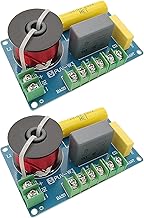
Unlike the other products here, the HiQltyla is a passive speaker crossover board. It is designed for speaker-level installation and uses screw terminals rather than the XLR connections found on active processors. The listing gives a peak power figure of 200 watts, an impedance range of 4–8 ohms, a frequency range of 45 Hz–25 kHz, and division points of 860 Hz and 6,000 Hz.
Best for: A speaker-building or repair project that needs a passive three-way network for a compatible 4–8-ohm speaker system. It was selected to represent the different passive approach to dividing frequencies.
- Sold as a two-pack, according to the product name.
- Uses screw terminals for installation and lists components including an inductor and capacitors.
- Does not require the same separate line-level routing arrangement as an active crossover.
Limitation: Its listed 200-watt rating is peak power, not a stated continuous rating. Confirm speaker impedance, power handling, and crossover points before integrating it.
Buying Guide: How To Choose An Electronic Crossover
Do you need an active or passive crossover?
An active crossover processes a line-level signal before it reaches separate amplifiers. It sends different frequency bands to the appropriate amplifier and speaker sections. The MIZISNR, Rockville, Yoidesu, and SIKUING products are described as active-style units with operating modes and signal connections for system routing. A setup using an active crossover generally needs a suitable signal path and amplification for the bands it separates.
A passive crossover works at speaker level, after the amplifier, and divides the signal among drivers inside a speaker system. The HiQltyla board is the passive option in this selection. It is a component for speaker wiring, not a substitute for an active XLR processor. Choose the crossover type that matches where you intend to divide the signal.
Which mode fits your speaker layout?
Stereo two-way operation separates left and right signals into two bands, commonly used for low and high sections. Stereo three-way operation separates each channel into low, mid, and high bands. Mono four-way operation creates four frequency bands from a mono signal. These configurations are not interchangeable, so match the mode to the number of bands, channels, amplifiers, and speaker sections in the system.
The MIZISNR, Yoidesu, and SIKUING listings specify all three configurations: stereo two-way, stereo three-way, and mono four-way. The Rockville RX230 lists stereo two-way and mono three-way. The HiQltyla is a passive three-way speaker crossover and does not offer selectable active operating modes.
How important are the frequency ranges?
A crossover must divide frequencies at points appropriate for the connected speakers and drivers. Before choosing a unit, check the recommended operating ranges for each speaker component and compare them with the crossover’s available settings. The Rockville listing provides ranges for its main crossover controls and subwoofer crossover. The other active-product details supplied here do not specify adjustable crossover-frequency ranges, so verify those specifications before buying.
For the passive HiQltyla board, the stated division points are 860 Hz and 6,000 Hz. Those fixed points may be appropriate for some speaker designs but not others. A passive network’s suitability depends on the drivers and their electrical characteristics, so compare the listed impedance and crossover points with the speaker project rather than assuming a general fit.
What connections and controls should you check?
Confirm whether your system uses balanced XLR connections, another line-level connection, or speaker-wire terminals. The active units in this list describe XLR inputs and outputs, though the supplied product details vary in how much connector information they provide. The HiQltyla uses screw terminals. Also check whether the crossover will connect before or after your amplifier; the correct position depends on whether the design is active or passive.
Controls can make setup more practical. Independent output gain lets you adjust band levels, and phase-reverse switches can address polarity issues in a system. A low-cut filter can reduce very low-frequency content. The MIZISNR and SIKUING listings specifically describe these controls, including a 40 Hz, 12 dB-per-octave Butterworth high-pass filter. Do not assume another model includes the same functions unless its specifications say so.
What should home audio buyers verify before ordering?
- System layout: Write down the number of channels, frequency bands, amplifiers, and drivers that need separate routing.
- Signal path: Decide whether you need a line-level active processor or a speaker-level passive network.
- Frequency settings: Compare adjustable ranges or fixed division points with the speaker manufacturers’ guidance.
- Electrical limits: For a passive board, check impedance and power specifications. Distinguish peak power from continuous power.
- Controls: Decide whether band gain, phase reversal, a low-cut filter, or mode indicators matter for setup.
- Documentation: When a listing omits connector details or frequency ranges, verify the full specification before connecting equipment.
For a home system built around separate amplifiers and speaker bands, prioritize operating modes, frequency adjustment, and the correct signal connections. For a speaker cabinet project, prioritize passive-network compatibility, driver impedance, crossover points, and power handling. The product category alone does not establish whether a crossover will match a particular speaker system.
Frequently Asked Questions
What does an electronic crossover do?
An electronic crossover divides an audio signal into frequency bands and routes each band to a suitable amplifier or speaker section. This lets different system components handle designated parts of the audio range.
Can I use an active crossover with a home subwoofer?
An active crossover may be used in a system that routes a signal to a subwoofer and other speaker bands, but the connections, frequency settings, and amplification must match the equipment. Check the crossover’s specified outputs and frequency ranges before connecting it.
Is a passive crossover the same as an electronic crossover?
Both divide audio by frequency, but they work at different points in the signal chain. An active crossover processes line-level signals before amplification; a passive crossover divides speaker-level signals after amplification.
What is the difference between stereo three-way and mono four-way?
Stereo three-way splits both left and right channels into low, mid, and high bands. Mono four-way splits one mono signal into four bands. Choose the mode that matches the system’s channel and speaker layout.
Do I need XLR inputs and outputs?
You need connections that match the rest of your signal chain. Balanced XLR connections are specified for several active models here, while the HiQltyla passive board uses screw terminals. Check the exact input and output types before purchase.