
For a flame maple veneer guitar project, choose a veneer sheet if you plan to apply a decorative surface, or a veneered guitar body if you want a pre-shaped starting point. The FPTXR natural bleached sheet is best for a measured, thin surface layer; the Foyarinal three-piece set suits hands-on customization; and the Yinfente body is better for builders who want a guitar body with pickup openings already cut. The Leo Jaymz is a complete guitar rather than a veneer material, so it is relevant mainly to shoppers comparing finished instruments.
| Product | Best suited for | What to know |
|---|---|---|
| FPTXR Natural Bleached Maple Flame Veneer | Measured surface applications | 51 x 35 cm; 0.5 mm thick |
| Foyarinal Tiger Flame Maple Veneer, 3 Pieces | DIY finishing and customization | Described as workable and easy to process |
| Fish Scale Maple Veneer, 3 Pieces | Quilted or fish-scale appearance | Listing gives limited technical details |
| Yinfente Flame Maple Veneer Guitar Body | Body-based custom builds | Unfinished body with humbucker openings |
| Leo Jaymz Echophantom Electric Guitar | Buyers seeking a complete guitar | Roasted maple neck; not a veneer sheet |
FPTXR Natural Bleached Maple Flame Veneer

This is the clearest choice for a buyer who needs a thin, dimensioned veneer sheet. The listing specifies a 51-by-35-centimeter sheet at 0.5 mm thick, making it easier to plan a surface application than a listing without measurements. The natural bleached maple flame appearance is intended for guitar building, luthiery, and instrument decoration.
Best for: Builders who want to measure a project around a stated sheet size and thickness. The veneer can be cut or spliced to suit different needs, according to the product details.
The seller recommends wood-compatible adhesives. It also notes that natural maple can vary in color and grain from piece to piece, and advises ordering the material for a project together to reduce differences between pieces. For use on painted or melamine surfaces, the listing says to sand deeply first.
Limitation: At 0.5 mm thick, it is a thin surface material, not a replacement for a solid guitar top. Natural grain and color variation means the pictured appearance should not be treated as a guaranteed match.
Foyarinal Tiger Flame Maple Veneer, 3 Pieces

Foyarinal’s three-piece set is aimed at guitar makers and repairers who want a tiger-flame look for a custom body or replacement project. The product description highlights natural grain, a smooth polished surface, and wood described as lightweight and workable. It says the sheets can be cut, sanded, polished, dyed, and glued.
Best for: DIY builders who expect to shape or finish the veneer themselves. The stated range of processing options makes this a practical fit for customization work, while the three-piece quantity may be useful when planning more than one surface or a project that needs spare material.
The listing also describes the material as having good toughness and a stable structure, with processing intended to help resist warping, cracking, or deformation. These are seller-provided product claims; careful storage, surface preparation, and appropriate adhesive remain important in woodwork.
Limitation: The supplied product details do not state sheet dimensions or thickness. Confirm that the pieces are large enough for the intended guitar area before planning a layout.
Fish Scale Maple Veneer, 3 Pieces

This three-piece product is described as fish scale or quilted maple veneer for electric guitar body projects. It is the most pattern-specific option in this selection for shoppers who want a scale-like figure rather than a conventional straight or tiger-stripe look. The product name also positions it for luthier work, repairs, and custom builds.
Best for: Buyers whose main selection criterion is a fish-scale visual pattern. It may suit decorative guitar-body work where appearance is a priority and the builder is prepared to assess the material before cutting.
Limitation: The provided listing information does not specify dimensions, thickness, wood preparation, or detailed installation guidance. Do not assume that the sheets match another veneer’s size or are ready for a particular body shape. Check the full listing and measure the intended surface before buying.
Because veneer patterns can vary, plan the final layout around the actual sheets rather than relying on a product image to predict an exact grain match. This is especially important when the visual figure needs to appear continuous across a guitar top.
Yinfente Flame Maple Veneer Guitar Body
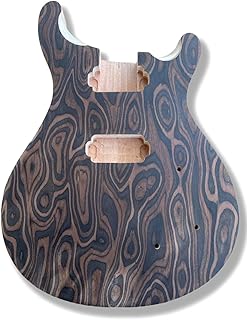
Unlike loose veneer, this Yinfente product is an unfinished solid-wood electric guitar body with a flame maple veneer and pre-drilled humbucker pickup holes. Its product details describe a tiger-stripe appearance and a pickup pocket approximately 55–56 mm wide and 18–19 mm deep. That makes it a different kind of purchase from the sheet materials above.
Best for: A builder who wants a body-based starting point for a custom instrument rather than raw veneer to apply. The pre-drilled humbucker openings are a relevant feature for buyers planning that pickup configuration.
Compare the stated pocket measurements with the intended components before committing; the listing says the dimensions allow a range of pickup configurations, but it does not establish compatibility with every pickup or hardware setup. Also check whether the unfinished body meets your intended routing and finishing needs.
Limitation: This is not a standalone veneer sheet. Choose another product if you need veneer material to apply to a body you already own.
Leo Jaymz Echophantom Electric Guitar

This is a complete electric guitar, not a flame maple veneer product. It is included as a comparison for shoppers who are considering a finished instrument instead of building or modifying one. Listed features include a mahogany body, roasted maple neck, SSH pickup arrangement, built-in multi-effects, and vintage tremolo system.
Best for: Buyers who want a ready-made guitar with a maple neck and built-in effects rather than a veneer sheet or unfinished body. The SSH layout is described as covering clean tones through higher-gain sounds, while the onboard effects offer additional sound options.
The product description states that it comes with 09–42 gauge strings and a 43 mm-thick solid mahogany body. It also describes a heavy-duty metal backplate on the tremolo system. These features make it a finished-instrument alternative, not a substitute for selecting and applying figured maple veneer.
Limitation: The listed maple feature is the roasted maple neck; the product details do not identify a flame maple veneer top. Avoid this option if the goal is specifically to buy veneer or a guitar with a stated flame maple veneer surface.
Buying Guide: Choosing Flame Maple Veneer For A Guitar
Flame maple veneer is a thin decorative wood surface with a figured grain pattern. It can change a guitar’s appearance without requiring the buyer to source a thick, solid figured-wood top. Product listings vary, however: some sell loose sheets, some sell prepared guitar bodies with veneer, and some sell complete guitars that may not have a veneer top at all. Identify which type of product you need before comparing patterns.
Do you need a veneer sheet, a body, or a complete guitar?
Choose a loose veneer sheet when you already have a body or surface to cover and are prepared to cut, fit, bond, and finish the material. A veneered body is a better starting point when you want the body form and some routing already completed. A complete guitar is intended for playing, not as a veneer supply. This distinction prevents a common mismatch between a search for a “flame maple veneer guitar” and the actual item being sold.
Which dimensions and thickness should you check?
Confirm the sheet’s length, width, and thickness before planning the project. Among these options, the FPTXR listing provides specific measurements: 51 by 35 centimeters and 0.5 mm thick. The Foyarinal and fish-scale listings do not provide those specifications in the supplied product details, so check the current listing or contact the seller if size is critical. Allow for trimming and layout rather than assuming the nominal sheet size will cover the finished area without adjustment.
Which grain pattern fits your design?
Tiger flame and fish-scale figure are different visual directions. Tiger-flame descriptions suggest a stripe-like grain, while the fish-scale listing is presented as quilted or scale-like. Natural wood is not mechanically uniform, so figure, color, and symmetry can vary. If a matched appearance across two sections is essential, inspect the actual material or ask for confirmation about the pieces being supplied instead of relying only on a representative photograph.
What should you know about glue and surface preparation?
Use an adhesive intended for wood bonding and follow its instructions for application, clamping, and curing. The FPTXR listing specifically recommends wood-compatible adhesives. It also advises deep sanding before applying veneer to painted or melamine surfaces. Surface condition matters: an uneven or poorly prepared substrate can affect the bond and final appearance. If you are new to veneering, practice on scrap material before working on a guitar body.
Should you choose unfinished material or a ready-made body?
Loose veneer offers control over the substrate, layout, and finish, but requires more fitting work. An unfinished body can reduce some shaping steps, yet its pickup openings and body dimensions still need to match the build plan. The Yinfente listing gives approximate humbucker pocket measurements, so compare them with the intended components and routing requirements. Do not assume that a product described as versatile will fit every build without checking measurements.
How should beginners compare the options?
Start with the amount of information available. A listing with stated dimensions and thickness is easier to assess for a specific surface than one without measurements. Next, compare the listed pattern, number of pieces, and preparation claims. Finally, decide whether you have the tools and experience to cut, sand, bond, and finish the material. If not, a pre-shaped body or finished instrument may be more suitable, although neither is interchangeable with raw veneer.
Frequently Asked Questions
What is flame maple veneer on a guitar?
It is a thin maple wood layer with a figured, flame-like grain used as a decorative surface on a guitar or guitar body. It is different from a solid maple top and from a maple neck.
Can guitar veneer be cut and sanded?
Some listings describe their veneer as cuttable and sandable. The Foyarinal product details specifically list cutting, sanding, polishing, dyeing, and gluing. Use care because thin veneer can be damaged by excessive sanding or poor handling.
Does every product called a flame maple guitar include veneer?
No. A product may be a loose veneer sheet, a guitar body with veneer, or a complete guitar with a maple component. Read the product description to confirm exactly what is included.
Is 0.5 mm veneer a solid guitar top?
No. A 0.5 mm sheet is a thin surface layer, not a thick solid top. It needs a suitable substrate and an appropriate bonding process.
Will every piece have the same flame pattern and color?
No. Natural maple varies in grain and color. The FPTXR listing explicitly notes variation between pieces, so the exact pattern may differ from the product image or another sheet.
What should I verify before ordering veneer?
Check the sheet dimensions, thickness, quantity, grain style, and intended application. Also confirm the substrate preparation and adhesive requirements. If a specific body shape or matched pattern matters, verify those details before purchase.