Best Four-String Tenor Banjo for Versatile Bluegrass and Irish Ttones
Answering the shopper’s question: these four-string tenor banjos are ideal for players seeking bright, intricate melodies with classic, old-time character. The top picks in this guide were chosen for tone, playability, and stability, making them suitable for beginners through intermediate players who want a reliable instrument for bluegrass, folk, or Irish tunes. Each product section explains who it’s best for, plus a practical caveat to consider before you buy. Below is a quick summary of the selected models to help you compare at a glance.
| Product | Best For | Key Benefit |
|---|---|---|
| Gold Tone AC-4 Composite 4-String Tenor Banjo | Players seeking durable composite construction | Composite 11″ rim with Remo head for consistent tone |
| Gosila 4 String Banjo | Beginner to intermediate players valuing stability | Geared fifth tuner for accurate tuning |
| Kmise Tenor Banjolele 4 String | Players who want a 26″ banjo-ukulele hybrid | Detachable backboard and bright sound |
| Gold Tone CC-Irish Tenor Cripple Creek | Irish and Celtic repertoire | Removable resonator with traditional maple construction |
| Gold Tone CC-Tenor Cripple Creek | Classic four-string tenor tone with modern hardware | Two-way truss rod and covered geared tuners |
Gold Tone AC-4 Composite 4-String Tenor Banjo

The Gold Tone AC-4 offers a durable composite 11″ rim paired with a Remo head, designed to produce a stable and bright tone suitable for frequent practice and gigging. This model is best for players who value low maintenance and consistent setup, along with a wide dynamic range for traditional Irish and bluegrass tunes. A note of caution: composite rims may feel slightly heavier than wooden rims, which can affect response for players who prioritize featherweight feel.
Gosila 4 String Banjo

The Gosila model emphasizes stability and tone through a solid back construction with a high-quality Remo drum head. It features a PURPLE HEART fingerboard and bridge and a geared fifth tuner for reliable intonation across blues, folk, country, and light rock repertoire. Choose this if you want a robust beginner-to-intermediate option with a touch of tonal depth. Caution: some players may prefer a lighter bridge setup for ultra-fast fingerpicking.
Kmise Tenor Banjolele 4 String Banjo Ukulele
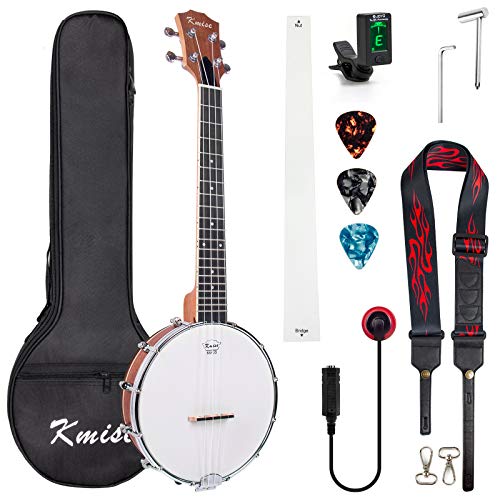
The Kmise banjolele blends a 26-inch tenor scale with a detachable backboard to yield a bright, resonant tone suitable for beginners and casual players seeking an approachable, lightweight instrument. The drumhead construction supports a pleasing, plucky timbre when strummed or picked. Best for players who want a hybrid instrument that travels well and offers quick-start playability. Limitation: the backboard detachability may require occasional re-tightening to maintain resonance.
Gold Tone CC-Irish Tenor Cripple Creek

This Irish tenor model includes a removable resonator and rolled brass tone ring, offering a clear, bright voice with traditional maple construction. It’s well-suited for players pursuing Celtic tunes or classic four-string tenor tones. Best for players who want a recognizable Cripple Creek sound with a touch of projection. Caution: older finishes may require careful handling to maintain gloss and avoid scratches on the resonator edge.
Gold Tone CC-Tenor Cripple Creek

The CC-Tenor Cripple Creek delivers a classic four-string tenor experience with robust hardware, including two-way adjustable truss rod and covered geared tuners. It’s a strong choice for players who want stable neck adjustment and reliable tuning across performances. Best for traditionalists who value durability and precise setup. Caution: some players might prefer lighter weight options for travel or long practice sessions.
Gold Tone AC-4 Acoustic Composite 4-String Openback Irish Tenor Banjo Bundle
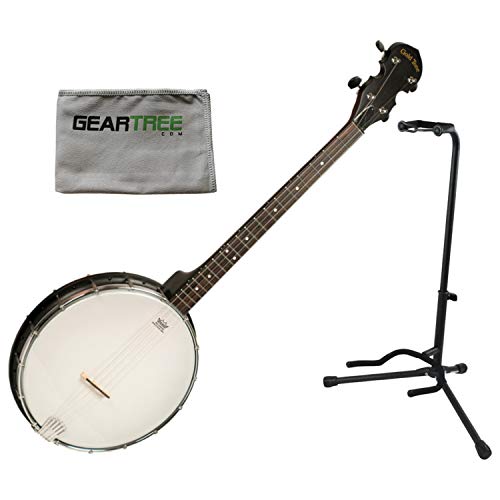
This bundle focuses on the Irish tenor version with a Nato neck and satin black finish, featuring strings in the .040w, .030w, .020w, .013 gauge set. It’s well-suited for players who want a traditional Irish tenor setup with straightforward maintenance. Caution: bundle configurations vary; verify included accessories before purchase.
Buying Guide: Key Considerations For Four-String Tenor Banjos
- Purpose and repertoire: Decide if you primarily play bluegrass, Irish trad, or folk. Some models emphasize bright projection, others emphasize mellower warmth.
- Construction materials: Composite rims are durable and stable; solid wood rims can offer a warmer, more nuanced tone. Consider weight and playing style.
- Hardware and tuners: Geared tuners and truss rods aid stability and intonation, especially for beginners. Check tuning stability during setup.
- Neck and scale: Longer 26″ or similar scales suit banjo-ukulele hybrids, while shorter scales may feel more comfortable for beginners.
- Resonator and openback: Openback models are lighter and more suitable for indoor practice; resonators add volume and projection for stage use.
- Maintenance: Remo heads vs. drumheads influence tone and longevity. Consider the ease of changing strings and adjusting the truss rod.
Frequently Asked Questions
- What defines a tenor four-string banjo?
A tenor banjo has four strings typically tuned in a G tuning, longer scale and is designed for midrange to bright tonal balance. - Is a resonator important on a tenor banjo?
It affects projection; resonators increase volume, while openbacks are lighter and easier to handle in small spaces. - What should I consider when buying a geared fifth tuner?
Geared tuners improve tuning stability and accuracy, especially for players practicing intonation across complex chord shapes. - Are tenors suitable for beginners?
Yes, models with stable necks, clear intonation, and manageable action suit new players well when paired with proper setup. - Do Irish tenor banjos differ from bluegrass tenors?
Some Irish tenors prioritize brighter timbres and traditional head tunings; bluegrass tenors may emphasize different attack and sustain. - What maintenance is needed for a four-string tenor banjo?
Regular string changes, neck adjustments as needed, head tension checks, and proper humidity control help preserve tone and playability.