
The best fuse for a guitar amp is the exact type, current rating, voltage rating, and physical size specified by the amplifier maker. These five options include a 3-amp slow-blow fuse, individual fast-acting fuses, and assortment kits. The Bussmann slow-blow set is best for a replacement when its rating matches the amp; the small-value Bussmann fast-acting fuse suits equipment that specifically calls for a 1/4-amp fuse. Assortments are better for repair benches that need several listed ratings and sizes.
| Product | Best suited for | Type or selection |
|---|---|---|
| Cooper Bussmann MDL, 3 Amp | Matching a specified slow-blow replacement | Five 250V fuses |
| 15-Value, 250-Piece Kit | Broad selection of fast-blow ratings and sizes | 5x20mm and 6x30mm |
| BOJACK 15-Value, 200-Piece Kit | Organizing common fast-blow replacements | 5x20mm and 6x30mm |
| Bussmann AGC-1/4-R | Replacing a specified 1/4-amp fast-acting fuse | Five 250V glass fuses |
| 24-Value, 240-Piece Kit | Having more listed current ratings available | 5x20mm and 6x30mm |
Cooper Bussmann MDL 3-Amp Slow-Blow Fuse
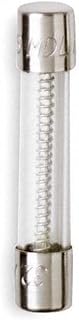
This Cooper Bussmann set contains five MDL slow-blow fuses rated at 3 amps and 250 volts. It is the most direct choice in this group for someone whose amp specifies an MDL, 3-amp, 250V slow-blow fuse.
Best for: A targeted replacement when the amplifier’s documentation or the original fuse confirms all of those specifications. A pack of five also provides additional matching replacements.
Why it was selected: Unlike the assortment packs, this product is a clearly identified slow-blow fuse with one stated current rating. That makes it easier to compare against an amp’s specified replacement.
Limitation: Do not choose it just because the amp needs a fuse. The 3-amp rating, slow-blow behavior, voltage rating, and physical fit must all match the manufacturer’s requirement.
15-Value Fast-Blow Glass Fuse Assortment

This 250-piece assortment lists 250V fast-blow glass fuses in two sizes: 5x20mm and 6x30mm. The listed ratings include 1A, 2A, 3A, 5A, 6A, 7A, 8A, 10A, 15A, and 20A, with the product title assigning different selections to each size.
Best for: A repair workspace that needs a selection of fast-acting fuse ratings and both listed dimensions on hand. The assortment can be useful when the exact required rating is known and appears in the kit.
Why it was selected: It offers a wide range of listed current ratings and separates them across two common glass-fuse dimensions, rather than focusing on a single replacement.
Limitation: This kit is identified as fast-blow. It is not a substitute for a slow-blow fuse, and the assortment’s dimensions and ratings may not include the exact fuse required by a particular amplifier.
BOJACK 15-Value Fast-Blow Fuse Kit

The BOJACK kit contains 200 fast-blow glass fuses in 5x20mm and 6x30mm sizes. Its listed current ratings include 1A, 2A, 3A, 5A, 6A, 7A, 8A, 10A, 15A, and 20A, with the product description listing different ratings for the two dimensions.
Best for: Technicians or amp owners who want several fast-blow ratings and sizes available for equipment that specifies one of the kit’s listed fuses.
Why it was selected: The product title clearly identifies the fuse action, quantity, two physical sizes, and a broad group of current ratings. Those details support a straightforward comparison with a replacement specification.
Limitation: The listed assortment is fast-blow only. Confirm the exact rating and size for the amp; a similar-looking fuse with a different response type is not necessarily an appropriate replacement.
Bussmann AGC 1/4-Amp Fast-Acting Fuse

This Bussmann AGC Series fuse is a fast-acting, 1/4-amp glass-tube fuse rated at 250 volts. The listing specifies a 1/4-inch by 1-1/4-inch size and a pack of five.
Best for: Replacing a fuse when the amp’s requirements specifically call for a 1/4-amp fast-acting fuse with the listed physical dimensions and voltage rating.
Why it was selected: It is a single, specific low-current option rather than a broad kit. The stated action, rating, voltage, and dimensions make it possible to check against an amp’s fuse label or service information.
Limitation: A 1/4-amp fuse is not a general-purpose guitar-amp fuse. Do not use it in place of a fuse with a different required current rating, size, or action.
24-Value Fast-Blow Glass Fuse Assortment

This 240-piece assortment lists 250V fast-blow glass fuses in 5x20mm and 6x30mm sizes. Its stated ratings range from 0.5A to 20A, including options such as 0.5A, 1A, 1.6A, 2A, 3A, 4A, 5A, 6.3A, 8A, 10A, 15A, and 20A across the two sizes.
Best for: A repair bench that benefits from having a broader selection of listed current ratings, including some smaller values, in both stated dimensions.
Why it was selected: Compared with the other assortment kits here, its product title lists 24 values and includes 0.5A and 1.6A options, which may be relevant when those exact specifications are required.
Limitation: It is a fast-blow assortment, not a universal amp repair kit. Check the required rating, dimensions, voltage, and fuse action before using any fuse from it.
Buying Guide: How To Choose A Guitar Amp Fuse
How do you identify the correct fuse?
Start with the amplifier’s owner’s manual, rear-panel label, or manufacturer service information. Look for the required current rating, voltage rating, fuse action, and physical dimensions. If the original fuse is intact and its markings are readable, use those markings as a comparison point, but confirm them against the amp’s documentation when possible.
Fuse markings may show the current rating and voltage, as well as a code or description for fast-acting or time-delay behavior. A product name that matches only the amp’s current rating is not enough to confirm suitability. The dimensions must also fit the holder, and the fuse action must match the stated requirement.
What is the difference between fast-blow and slow-blow?
Fast-blow and slow-blow describe how a fuse responds to current above its rating. They are not interchangeable labels. This product list includes fast-blow glass fuses and a 3-amp slow-blow fuse, so identify the required action before selecting a replacement.
Do not install a slow-blow fuse simply because a fast-blow fuse opens, or use a fast-blow fuse in place of a slow-blow type. A fuse is a protective component. Changing its type or rating to stop repeated failures can defeat the intended protection and may put equipment at risk.
Does the fuse size matter?
Yes. The assortment kits in this list identify 5x20mm and 6x30mm fuses, while the Bussmann AGC listing states a 1/4-inch by 1-1/4-inch size. A fuse that is too long, short, or wide may not fit or make proper contact in the holder. Compare the listed dimensions with the fuse specified for the amplifier, not just with a picture.
Should you buy a single rating or an assortment?
Choose a single-rating pack when the amp’s exact fuse specification is known and matches that product. The Cooper Bussmann MDL set, for example, is specifically listed as 3-amp, 250V, slow-blow. The Bussmann AGC set is a specific 1/4-amp, 250V fast-acting option.
An assortment is more practical for a workshop or for maintaining equipment with different documented fuse requirements. It does not make an amp compatible with every included rating. Select only a fuse that exactly matches the equipment’s requirements, and keep the remaining values clearly organized.
What should you check before replacing a fuse?
- Current rating: Match the amp’s specified amperage. Do not increase it to prevent a fuse from opening.
- Voltage rating: Confirm that the replacement’s voltage rating meets the amplifier’s specification.
- Fuse action: Verify fast-acting or slow-blow behavior as specified.
- Dimensions: Check the physical size and type required by the holder.
- Cause of failure: If a correctly specified replacement opens again, stop and seek qualified service instead of repeatedly replacing it.
Unplug the amplifier before inspecting or replacing an accessible fuse, and follow the manufacturer’s safety instructions. Tube amplifiers can contain hazardous voltages even after they have been switched off or unplugged. Do not open the chassis unless you are qualified to work safely on the equipment.
Frequently Asked Questions
Can I use any 250V fuse in a guitar amp?
No. A 250V rating alone does not confirm that a fuse is suitable. The current rating, fuse action, physical size, and any other specifications must also match the amplifier’s requirements.
Can I replace a slow-blow fuse with a fast-blow fuse?
Not unless the amplifier manufacturer specifies that replacement. Fast-blow and slow-blow fuses respond differently, so use the action type required for the amp.
What does 3A mean on a guitar amp fuse?
It identifies a 3-amp current rating. It does not indicate the fuse’s physical size or whether it is fast-blow or slow-blow, so check those details separately.
Are 5x20mm and 6x30mm fuses interchangeable?
No. They are different physical sizes. Use the dimensions specified for the amplifier and confirmed by its fuse holder or documentation.
What should I do if a replacement fuse blows again?
Stop using the amplifier and have the underlying cause checked by a qualified technician. Do not install a higher-rated fuse or repeatedly replace fuses to keep the amp running.