
Best Guitar Speaker Wiring Harnesses for DIY Projects and Replacements
Looking for a reliable guitar speaker wiring harness to simplify a DIY amp cabinet build or replacement? This guide highlights five top options that balance ease of use, durability, and compatibility. The best choice depends on your cabinet size, wiring needs, and whether you prefer pre-wired jacks or flexible harnesses. The following picks suit different buyers—from beginners wiring a 1×12 cab to players upgrading 2×12 configurations or seeking vintage-style electronics.
| Product | Cabinet Type | Best For | Key Benefit |
|---|---|---|---|
| PLADANG 1×12 Guitar Speaker Wiring Harness Kit | 1×12 | DIYers new to wiring | Pre-wired mono jack for solder-free hookup |
| CMGEGDR 1×12 Guitar Speaker Wiring Harness Kit | 1×12 | Simple upgrades | Standard jack, fast-on connectors |
| KEIDHDU 2×12 Guitar Speaker Wiring Harness | 2×12 | Dual-speaker setups | Stable dual-speaker connection |
| WXWBGH 2×12 Guitar Speaker Wiring Harness | 2×12 | Flexible layouts | 0.8mm copper wire, neat wiring |
| Musiclily Pro LP STD Vintage 50s Wring Harness Kit | LP-style 50s | Tone upgrade | Vintage components and shielding for reduced EMI |
PLADANG 1×12 Guitar Speaker Wiring Harness Kit

Best for first-time builders or replacement projects where a simple, solder-free hookup is desired. The PLADANG kit is compatible with 1×12 guitar cabinets and comes with a pre-wired 1/4″ mono jack for speaker-level input. Fast-on connectors (0.205″ or 0.250″) enable quick, clean connections without soldering. Use this when you want a straightforward install and quick testing during cabinet assembly.
- Best for: beginners and lightweight DIY builds
- Why selected: minimizes soldering, speeds up assembly
- Limitation: may be less flexible for non-standard layouts
CMGEGDR 1×12 Guitar Speaker Wiring Harness Kit
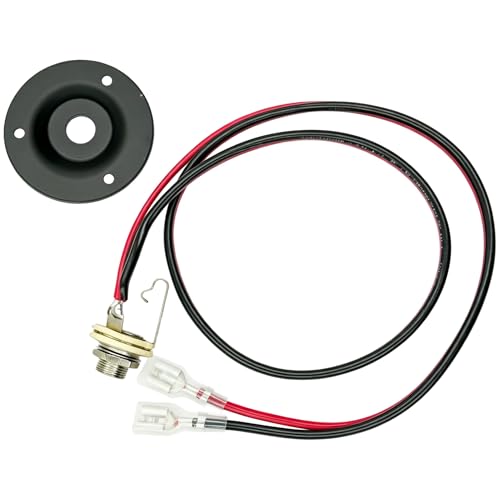
Ideal for single 12-inch enclosures and DIY builds or replacements where a standard jack is required. The CMGEGDR kit uses fast-on connectors for quick hookup and supports compatibility with most guitar amps. It’s a solid pick when you want an easy, solder-free upgrade that preserves signal integrity for a clean, reliable signal path.
- Best for: single 12″ cabs and quick replacements
- Why selected: reliable, solder-free installation
- Limitation: fewer advanced shielding features
WXWBGH 2×12 Guitar Speaker Wiring Harness

This harness is designed for 2×12 cabinets, providing a stable dual-speaker wiring connection for consistent audio performance. With a 23.6-inch cable, it supports flexible layouts while keeping wiring neat. Built with 0.8mm high-conductivity copper wire, it reduces signal loss and enhances overall sound transmission efficiency. Choose this when wiring a larger cabinet where tidy routing matters.
- Best for: 2×12 cabinets needing neat routing
- Why selected: durable copper wire and flexible length
- Limitation: longer cable may require careful routing in tight enclosures
Anyqinsog 10-pin Power Speaker RCA Harness

Although broader than a guitar wiring harness, this 10-pin power harness is useful for installations requiring power, remote, and signal inputs with a clear color code. It features a long power run and a dedicated fuse—helpful in complex builds or rack setups where multiple channels share a common power source. Best for: more complex DIY systems or cabinet rigs that integrate power and signal lines in one harness.
- Best for: more complex builds needing power and signal wiring
- Why selected: color-coded wires reduce miswiring risks
- Limitation: may be overkill for simple speaker-only cabinets
Musiclily Pro LP STD Vintage 50s Wring Harness Kit

The LP Vintage 50s wiring kit is well-suited for upgrading Epiphone LP-style guitars or similar ELECTRONIC configurations. It features a 3-way LP-style pre-wired pickup selector, metal braided wires for shielding, full brass potentiometers, a 1/4″ output jack, and Orange Drop capacitors. This kit is best for players seeking a premium vintage tone with improved shielding to minimize EMI noise. Consider this when the goal is a classic tone with tighter signal integrity.
- Best for: tone upgrade and EMI shielding
- Why selected: vintage components enhance tonal range and feel
- Limitation: may require more skill to install than basic harnesses
Buying Guide: How To Choose The Right Guitar Wiring Harness
Key questions to guide your selection:
- What cabinet size do I have? Choose 1×12 for compact cabs or 2×12 for fuller, louder configurations.
- Do I want solder-free installation? Look for fast-on connectors and pre-wired jacks for quick setup.
- Is shielding important? Vintage or high-gain tones benefit from braided wires and EMI shielding.
- What level of durability is needed? Copper wire thickness and connector quality impact long-term reliability.
- Do I require power and signal in one harness? Complex rigs may benefit from multi-wire or power-enabled harnesses.
- How neat should wiring be? Longer cable lengths help with diverse layouts but require tidy routing.
Product Comparison Snapshot
- Best for beginners with 1×12 cabs: PLADANG or CMGEGDR
- Best for dual-speaker 2×12 layouts: KEIDHDU or WXWBGH
- Best for vintage tone and shielding: Musiclily LP STD Vintage 50s
FAQ
- What is a wiring harness for guitars? A wiring harness bundles the electrical components and connections needed to route signal from pickups to the output jack or to power stages in an amp or cabinet.
- Do I need a pre-wired mono jack? Pre-wired jacks simplify installation and reduce the need for soldering, making them ideal for beginners.
- Can these harnesses improve tone? Some harnesses include shielding and high-quality capacitors that can reduce noise and improve clarity, especially in vintage-style kits.
- Are 2×12 harnesses necessary for all cabinets? Not always; choose 2×12 if your cabinet has two speakers to ensure balanced wiring and consistent output.
- Should I worry about wire gauge? Higher conductivity copper wire (e.g., 0.8mm) reduces signal loss and can improve overall sound transmission.
- Is shielding important for gigging players? Yes, shielding helps minimize EMI and hum in environments with many electronic devices.