
Best Guitars With Wider String Spacing for Easy Playability and Comfort
For players seeking wider string spacing, comfort and easier finger placement can make a big difference, especially for beginners, players with larger hands, or those transitioning from classical to electric guitars. This guide highlights five well-suited options and explains who each is best for. You’ll find clear reasons to choose one over another, plus practical notes on potential limitations.
Summary table of selected models:
| Product | Best For | Why It Stands Out | Potential Limitation |
|---|---|---|---|
| Fender CN-25 3/4 Nylon String Acoustic Guitar for Kids | Beginners and kids | Nylon string comfort, beginner-friendly features, includes Fender Play | Smaller body size may limit projection for adults |
| Wilkinson M Series 52mm Wide Style Tune-o-matic Bridge | Electric players seeking wider spacing | Wide string spacing suitable for LP-style guitars | Bridge component only; needs compatible guitar body |
| Fender FA-25N 3/4 Nylon String Acoustic Guitar | Beginner players who want nylon feel | 3/4 size with nylon strings and learning support | String spacing specifics not explicit in listing |
| Zager Easy Play Acoustic Guitar Strings | Players needing lighter touch | Soft-metal core reduces finger pressure, anti-soreness | Strings alone; overall guitar feel may vary by instrument |
| Rosen Solid Top Dreadnought Acoustic Guitar | Full-size players seeking better resonance | Solid spruce top with reinforced bracing for crisper tone | Standard spacing; not explicitly wider, but action can be adjusted |
Fender CN-25 3/4 Nylon String Acoustic Guitar for Kids

The Fender CN-25 3/4 size nylon string guitar is designed for young beginners and players with a smaller hands footprint. It emphasizes nylon string comfort, a familiar beginner-friendly FA Series design, and an included Fender Play subscription for guided lessons. Best for kids or adults with smaller hands who want a wider than typical first-step spacing without bending steel strings.
Who it’s best for: beginners and kids starting on nylon strings; players who value integrated learning support. Why selected: combines approachable playability with a supportive learning ecosystem.
Caution: nylon strings inherently feel different from steel; players should expect a mellower tone and slower attack than steel-string guitars.
Ernie Ball Regular Slinky Nickel Wound Electric Guitar Strings 3-pack

These nickel-wound strings are a standard choice for many electric guitars, offering balanced tension and reliability. While not a guitar itself, they can influence string spacing feel by changing tension and playability on your instrument. Best for players who want a familiar, widely supported electric-string feel with standard gauge options.
Who it’s best for: electric guitarists seeking dependable, widely used strings. Why selected: widely adopted by professionals across genres for consistent performance.
Limitation: sizing is standard; it does not widen string spacing by itself but can affect perceived playability when paired with a suitable guitar neck and nut setup.
Zager Easy Play Acoustic Guitar Strings
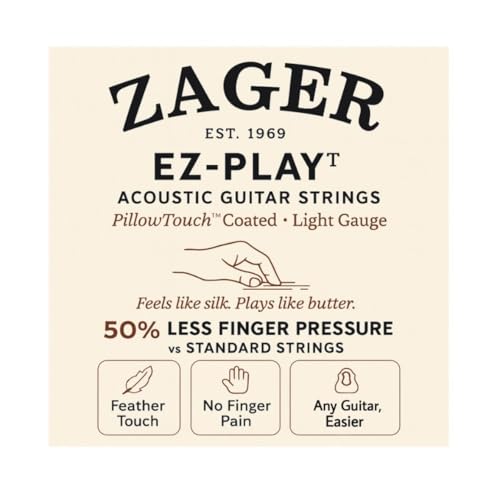
Zager Easy-Play strings are noted for a softer feel, with a patented soft-metal core and ultra-smooth coating to reduce finger pressure. This can help players who require a lighter touch or have finger fatigue, making it easier to navigate wider string spacing on many acoustic guitars. Best for players with sensitive hands or those returning to guitar after a break.
Who it’s best for: players seeking comfort and reduced finger fatigue. Why selected: explicit focus on ease of playing with less pressure helps when spacing feels challenging.
Limitation: string material and feel can vary by guitar body and nut setup, so testing with your instrument is advised.
Rosen Solid Top Dreadnought Acoustic Guitar

The Rosen solid-top dreadnought offers a high-quality build with a spruce top and reinforced X-bracing for robust tone and sustained resonance. The full-size design is a good match for players who want a traditional acoustic experience with stronger projection. Best for players seeking richer volume and more dynamic range from a standard-width neck.
Who it’s best for: players comfortable with standard or slightly wider spacing and who want a full, balanced dreadnought voice. Why selected: solid top construction contributes to tone stability and long-term playability.
Caution: as with many full-size acoustics, players with smaller hands may benefit from a slightly adjusted action or a nut filing to optimize playability.
Buying Guide: Wider String Spacing Guitars And Accessories
- What wider string spacing means for playability – Wider spacing can reduce string contact with fingers, easing fretboard navigation, especially for beginners or players with larger hands.
- Body size vs. spacing – Smaller bodies (like 3/4 size nylon guitars) can be easier to handle, but spacing is not always wider by default. Look for instruments designed with comfortable necks and nut widths.
- String type and feel – Nylon strings typically feel softer than steel and often come with a higher action, which can affect perceived spacing. Steel-string guitars can be adjusted with nut and saddle work for more comfortable spacing.
- Action and neck profile – Lower action reduces finger effort but may increase buzz; a comfortable neck with a smooth fretboard is crucial when spacing is wider.
- Hardware and components – Bridges and tuners affect string alignment. Wider bridges or posts can help maintain comfortable spacing on certain electric guitars.
- Learning aids – Beginners may benefit from lesson subscriptions or step-by-step guides to adapt to spacing changes, as with Fender Play included in some Fender models.
- Maintenance considerations – Anti-rust coatings, string tension, and regular setup help preserve spacing comfort over time.
Frequently Asked Questions
- Do nylon-string guitars have wider spacing than steel-string guitars? Some nylon-string models offer comfortable necks and wider per-string spacing, but spacing varies by model. Nylon strings are often chosen for their softer feel regardless of width.
- Is a 3/4 size guitar suitable for adults with wide spacing needs? Yes, for smaller players or those seeking lighter handling. Confirm neck width and string spacing per model before purchase.
- Can I widen string spacing on an existing guitar? Widening spacing typically requires nut work, bridge adjustments, or string-thru modifications and should be done by a professional luthier.
- What should I look for if I want easier playability? Prioritize neck profile, nut width, overall action, and string type. A comfortable neck and accessible fretboard are as important as spacing.
- Are there budget options with comfortable spacing? Yes. Some beginner models offer user-friendly feel and learning support at accessible prices, though spacing specifics vary by model.
- What about bridge spacing on electric guitars? For electric guitars, look for models with a wider Tune-o-matic or bridge spacing, or consider Wilkinson-style bridges designed for wider spacing where compatible with your guitar body.