
The best headless bass string adapter depends on the bass’s string count, mounting layout, and string spacing. For a four-string bass, the OVSAL brass lock is a strong measurement-focused option, while the Guyker bridge string lock is a replacement-part choice and the zinc-alloy locking nut sets offer an alternative at the nut end. A six-string guitar locking nut is included for comparison, but it is not a bass-specific choice.
| Product | Best suited for | Key detail |
|---|---|---|
| OVSAL Brass 4-String Lock | Buyers prioritizing stated dimensions | 10 mm string spacing |
| Guyker 4-String Bridge Lock | Replacing a headless bass bridge lock | Check the parameter drawing |
| Four-String Zinc-Alloy Locking Nut Set | Buyers comparing a nut-end replacement | About 31 mm string spacing |
| Bnineteenteam Headless Bass Nut | Buyers wanting included installation pieces | Two wrenches and two screws |
| Walfront Six-String Guitar Locking Nut | Guitar applications, not typical bass use | Made for six-string guitar |
OVSAL Brass Four-String Headless Bass Lock

This four-string headless bass string lock is made from solid brass and CNC machined. Its listed dimensions are 38 × 20 × 10 mm, and its string spacing is 10 mm, or 30 mm across three gaps. Those measurements make it easier to compare against an existing nut or locking assembly before ordering.
Best for: Bassists replacing a four-string locking part who can verify the stated dimensions against their instrument. The product listing describes it as suitable for most four-string headless electric basses and identifies corrosion and rust resistance as material-related features.
Why it stands out: The product information provides specific overall dimensions and spacing, which are essential when choosing a part that must align with existing strings and hardware.
Limitation: Its 10 mm spacing may not match every four-string bass. Measure the instrument rather than assuming a “most basses” description guarantees fit.
Guyker Four-String Headless Bass Bridge Lock

The Guyker part is described as a four-string headless bass bridge string lock. It is intended as a replacement component for a headless bass bridge, rather than a general-purpose adapter for every instrument or mounting arrangement. The listing says it is easy to install and use.
Best for: Players who need a four-string bridge-side string-locking component and have confirmed that its layout matches the existing hardware. It is a relevant option when replacing a bridge lock, rather than shopping for a nut-end part.
Why it was selected: The product is explicitly identified for a four-string headless bass and a bridge string-lock application, making it more directly relevant than guitar-only hardware.
Limitation: The supplied product information does not state precise dimensions or spacing. The listing specifically advises checking its parameter drawing before ordering. Do not rely on the product name alone to confirm compatibility.
Four-String Zinc-Alloy Locking Nut Set
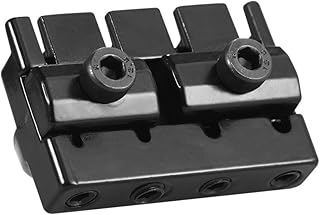
This four-string headless bass locking nut set is made from zinc alloy. Its listed body size is 39.2 × 26 mm, and the stated string spacing is approximately 31 mm. The set includes two wrenches and two screws, according to its product name.
Best for: Buyers looking for a four-string locking nut set with approximate spacing and overall size provided. The measurements can help with an initial comparison to an existing part, while the included tools and screws may be useful during installation.
Why it was selected: It is explicitly made for a four-string electric headless bass and provides more fit-related information than a generic locking nut listing.
Limitation: Its approximately 31 mm spacing is not identical to the 30 mm spacing listed for the OVSAL part. Small dimensional differences can matter, so check the instrument’s actual string alignment and mounting dimensions before choosing.
Bnineteenteam Headless Bass Nut With Tools

This headless bass nut is described as a zinc-alloy part with two wrenches and two installation screws. Its listing emphasizes a portable design and straightforward installation. It is presented for bass use, but the supplied information does not give a precise body size or string-spacing measurement.
Best for: Buyers who want a bass-nut replacement set with basic installation accessories included and can confirm fit through the product listing or by comparing the part directly with the instrument.
Why it was selected: It is specifically described as a headless bass nut and includes hardware that may be relevant to installation. The material and accessory details make it a useful alternative to the dimension-focused options.
Limitation: The available product details do not list dimensions or string spacing. That makes this a less certain choice when exact fit is the main concern; verify those details before buying.
Walfront Six-String Guitar Locking Nut

This zinc-alloy locking nut is identified as a six-string headless guitar part. The listing says it is designed to hold strings tightly and describes it as portable and easy to install. It also includes two wrenches and two screws according to the product name.
Best for: A buyer shopping for the stated six-string headless guitar application, not a typical four-string bass replacement. It is included here to clarify an important distinction among parts that may appear similar in online searches.
Why it was selected: The keyword “headless bass string adapter” can surface guitar locking hardware. Comparing this item highlights why instrument type and string count need to be checked before purchase.
Limitation: This product is specified for a six-string guitar, not a bass. Do not choose it for a bass merely because the part is called a headless locking nut; confirm that the dimensions and application match your instrument.
Buying Guide: How To Choose A Headless Bass String Adapter
“Headless bass string adapter” can refer to different pieces of hardware. Some buyers mean a locking part at the bridge, while others mean a string-locking nut or replacement clamp at the opposite end of the instrument. Identify which component you need before comparing products. A bridge lock and a nut-end lock are not automatically interchangeable.
Is the part made for a bass or a guitar?
Start with the instrument type and number of strings. A four-string bass part is a more relevant starting point for a four-string headless bass than a six-string guitar nut. Similar names do not establish that parts share dimensions, string spacing, or mounting layouts. Treat guitar-specific hardware as unsuitable unless its product details and measurements explicitly match the bass.
What measurements should you compare?
- String count: Confirm the part is intended for the same number of strings as the instrument.
- String spacing: Compare the stated distance between adjacent strings, not just the total width of the component.
- Overall size: Check length, width, and height against the existing hardware and available mounting space.
- Mounting details: Compare screw positions and the way the part attaches to the bass. The provided product details may not include every measurement.
- Position: Determine whether you need a bridge-side lock or a nut-end locking component.
Use the instrument’s existing part or a manufacturer’s diagram as a reference where possible. Measure carefully and compare like with like: overall body width is not the same as string spacing. If a listing provides a parameter drawing, use that drawing rather than inferring fit from a product photograph.
Which material and construction details matter?
The products here include zinc-alloy and brass options. The zinc-alloy listings describe the parts as durable or wear-resistant, while the OVSAL listing identifies its brass part as CNC machined and gives specific dimensions. Material descriptions can help compare construction, but they do not prove that a part fits a particular bass. Fit and function should come first.
Should you choose a set with tools and screws?
Included installation pieces may be convenient, but they do not guarantee compatibility with the bass’s existing mounting points. Check whether the set includes the accessories you need and whether its screw arrangement suits the instrument. If fit information is missing, ask the seller or consult a qualified repair technician before ordering, especially when the replacement could require changes to the instrument.
When is an adapter the wrong solution?
A locking nut or bridge lock is not necessarily a universal adapter. If the current hardware has a different mounting pattern, spacing, or string count, a part that looks similar may not align correctly. Do not force a mismatched part into place. When the required component is unclear, identify the original hardware or consult a bass technician before purchasing.
Frequently Asked Questions
What does a headless bass string adapter do?
The term commonly describes hardware that secures strings on a headless instrument, where the usual tuning-machine arrangement at the headstock is absent. Listings may refer to a bridge-side string lock or a locking part at the nut end, so check the component’s stated position and purpose.
Can I use a six-string guitar locking nut on a four-string bass?
Do not assume it will fit. The Walfront listing identifies its part as a six-string guitar nut, not a four-string bass part. String count, spacing, dimensions, and mounting layout must all match the bass.
Are 30 mm and 31 mm string spacing interchangeable?
Not automatically. The OVSAL listing states 30 mm across three gaps, while the zinc-alloy set lists approximately 31 mm spacing. Compare the instrument’s actual spacing with the product’s measurement and confirm how each listing defines that figure.
Which listed product provides the clearest fit measurements?
The OVSAL brass lock provides overall dimensions and a stated 10 mm spacing, while the zinc-alloy set provides its body size and approximate 31 mm spacing. These details make comparison easier, but neither set of measurements guarantees fit without checking the bass.
What if a listing does not provide dimensions?
Do not guess from the product image. Check the attached parameter drawing, contact the seller for measurements, or compare the part with the instrument’s original hardware. The Guyker listing specifically recommends checking its parameter drawing before ordering.