
Best Headphone Amp With Multiple Outputs for Group Monitoring
Looking for a headphone amplifier that can drive multiple listeners from a single audio source? This guide highlights five reliable multi-output headphone amps, each suited to different setups—from small studios and practice rooms to live sessions and podcasting. The top picks balance independent volume control, durable build, and clear audio distribution. The buyer is best served by choosing based on output count, impedance compatibility, and portability.
| Product | Output Channels | Best For | Why It Stands Out |
|---|---|---|---|
| Mackie HM-4 | 4 | Small studios, classrooms | Independent level control for each listener; compact |
| FIFINE N6 | 4 | Budget setups, live sessions | Solid metal build, minimal distortion at high volumes |
| HSCLPM HA400 | 4 | Stage and studio on the go | High-power stereo amplification with low-noise design |
| ELZONYX 4 Channel | 4 | Home studios, classrooms | Independent volume per channel with low-noise JRC4580 |
| Bolanle PH400 | 8 | Band rehearsals, multi-person monitoring | Eight outputs; mono/stereo switch for versatile use |
Note: Each product section below includes clearly defined who it’s best for, why it was selected, and a practical caveat to consider before purchase.
Mackie HM-4 Headphone Amplifier

The Mackie HM-4 provides four independent outputs with dedicated level controls, allowing every listener to adjust their volume without impacting others. This makes it a strong fit for small recording sessions, teaching labs, or collaborative music projects where multiple performers need individual monitoring. It supports both 1/4-inch and 1/8-inch headphone jacks, offering broad compatibility with common audio interfaces.
Best for: Small studios, classrooms, and collaborative sessions where independent headphone levels are essential.
Why selected: The four separate outputs and per-listener level control streamline group monitoring and reduce unwanted channel interaction.
Limitation: It lacks built-in advanced DSP or USB input options, so it relies on an external source for signal distribution.
FIFINE N6 4-Channel Headphone Amplifier
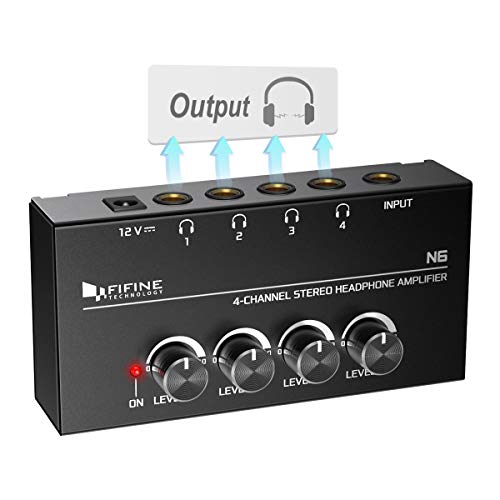
The FIFINE N6 offers four independent channels with each output having its own volume control and high-output capability. It is ideal for small recording sessions, broadcast monitoring, or a family or classroom setup where multiple listeners must monitor a shared mix without signal loss. Its compact, metal chassis adds durability for mobile setups.
Best for: Simple multi-monitoring in a budget-friendly, portable package.
Why selected: Independent volume controls per channel with low distortion at high volume; supports simultaneous listening without audible crackle or signal loss.
Caution: Input and output connections rely on 1/4″ TRS cables; cables are not included, so plan for accessory needs accordingly.
HSCLPM HA400 4-Channel Amplifier
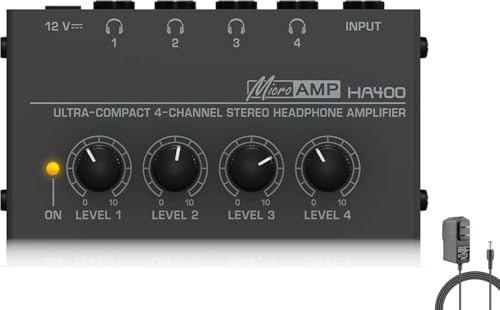
The HSCLPM HA400 emphasizes a compact design paired with high-power stereo amplification. With four independent outputs, it aims to deliver strong, clean sound even at higher listening levels. The device targets stage musicians and studio engineers who need reliable performance on limited space.
Best for: Stage or mobile studio setups needing robust power and clear distribution.
Why selected: High power across all channels helps maintain consistent volume for loud headphone models, reducing the risk of dropouts in busy environments.
Limitation: The description highlights power and noise considerations but provides limited details on input/output impedance compatibility, so verify with your headphones before buying.
ELZONYX 4 Channel Headphone Amplifier

The ELZONYX 4-channel amplifier provides four independent outputs with individual volume control. It uses a low-noise JRC4580 operational amplifier to minimize hiss and deliver clean stereo sound, making it suitable for studio monitoring, rehearsal spaces, and group listening scenarios. The compact form factor supports easy transportation between rooms or venues.
Best for: Home studios, classrooms, and multi-person monitoring needs where noise reduction matters.
Why selected: Independent channel control and a focus on low-noise performance help ensure a stable listening environment for several listeners.
Caution: Being a compact device, it may have limitations on maximum output volume for high-impedance headphones, so test with your favorite models.
Bolanle PH400 4-Channel Headphone Amplifier

The Bolanle PH400 provides four channels in a compact form, with eight outputs totaling four 3.5mm and four 6.35mm jacks. It supports versatile monitoring by offering a mono/stereo switch to match different usage scenarios, including small bands, home studios, and podcast setups. This device is well suited for users who need flexible headphone assignments and simple operation.
Best for: Small bands, homeschool or classroom monitoring, and versatile studio setups requiring mixed headphone compatibility.
Why selected: The mono/stereo switch and mixed output types enable diverse configurations without extra adapters.
Caution: With multiple output types, ensure your cables are configured correctly to prevent phase issues or channel misalignment.
Buying Guide: How to Choose the Right Multi-Output Headphone Amplifier
Key considerations help ensure the selected model fits your use case and gear lineup.
How many outputs do you need?
For four listeners, four-channel amps like Mackie HM-4 or FIFINE N6 are ideal. For larger groups, Bolanle PH400’s eight outputs offer greater flexibility, while some models with more channels exist if needed.
What headphones will you use?
Check impedance compatibility. Many hobbyist and studio headphones operate in the 32–100 ohm range. Ensure the amplifier can drive your typical headphone impedance without distortion at the desired listening level.
Independent volume control per channel?
If independent control per listener is important, choose units explicitly listing “independent volume control” for each channel, such as Mackie HM-4 and ELZONYX models.
Portability and setup
Compact designs are easier to transport for gigs or classes. Consider the power source (AC adapter included or not) and whether you need balanced or unbalanced inputs/outputs.
Signal quality and isolation
Low-noise op-amps (like JRC4580) and solid build quality help minimize hiss and crosstalk when multiple listeners are involved. Look for models that advertise independent channel amplification with minimal interference.
Compatibility and cables
Many amplifiers rely on 1/4-inch TRS or TS connectors. Plan for suitable cables, adapters, and the potential need for balanced inputs if your source gear supports them.
Special features to consider
- Mono vs. stereo monitoring options for different use cases.
- Built-in power adapters for mobile setups.
- Durable chassis for touring or classroom environments.
Frequently asked questions
- What is a headphone amplifier with multiple outputs used for?
It distributes a single audio source to several listeners, each with individual volume control, improving group monitoring in studios, classrooms, and live settings.
- Do I need a separate power supply for these amplifiers?
Many models include a power adapter, but some compact units may require external supplies or batteries for portability; check the product specs.
- Can I use consumer stereo receivers as multi-headphone splitters?
Not typically recommended; dedicated headphone amplifiers provide better isolation, gain control, and output impedance handling for multiple headphones.
- What headphones are best with these amps?
Headphones with 32–100 ohm impedance are common; verify the amplifier’s maximum output power and impedance compatibility with your preferred models.
- Is independent volume control per listener important?
Yes, it prevents one listener’s loudness adjustments from affecting others and helps maintain a balanced group mix.
- Are there drawbacks to a higher-output amplifier?
Higher output can drive louder headphones but may require careful gain staging to avoid clipping or excessive loudness for sensitive ears.